


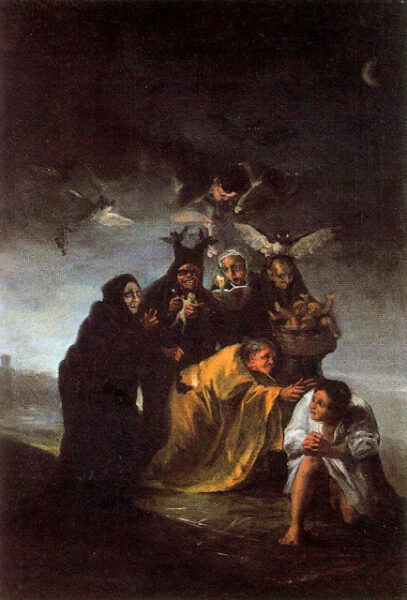
On the fourteenth of August, Saint Maximilian Maria Kolbe, the Virgin, when he was a child, offered him two crowns: “That night I asked the Mother of God what would become of me. She came to me holding two crowns, one white, the other red. She asked me if I was willing to receive either of those crowns. The white one meant persevering in purity. The red one meant that I would be a martyr. I said that I would accept both.” His life is well known as a great fighter against Freemasonry and also for his death in a concentration camp.
The Pontifical Historical Sciences.
The Pontifical Committee of Historical Sciences has three new members. Pope Leo XIV appointed three new historians: Umberto Longo, Francesco Cesareo and Anna Barańska, of Italian, American and Polish nationality, respectively. The origins of the Committee date back to the nineteenth century. Leo XIII, through the apostolic letter Saepenumero considerantes of 18 August 1883, created the Cardinal Commission for Historical Studies, which in 1954 gave rise to the present Pontifical Committee of Historical Sciences. For seventy years, this body has promoted research on the Church’s archival heritage, with special attention to the Vatican Archives, and publishes the series of Acts and Documents. Since September 2023, its direction has been in the hands of the Polish Jesuit Marek Andrzej Inglot, who succeeded the French Premonstratensian Bernard Ardura, who had presided over the body for fourteen years.
Umberto Longo teaches medieval history at Sapienza University of Rome, where he directs the master’s programme in Historical Sciences. Since February 2024, he has directed the Italian Historical Institute of the Middle Ages, founded in 1883 and considered one of the oldest historical research institutions in the country. Francesco Cesareo brings extensive professional experience spanning historical research and the management of American Catholic institutions. Born in New York to a family of Italian origin, he studied at the Cathedral College of the Immaculate Conception and at Fordham University. Since 2013, he has chaired the National Review Board, the lay body created by the American bishops in 2002 to oversee the implementation of laws against sexual abuse in the Church. He has repeatedly and publicly urged greater transparency on the part of the episcopate, calling for oversight to be extended to bishops and denouncing the risk that the system might be reduced to a situation in which “bishops oversee other bishops”.
Anna Barańska was born in Lublin in 1965. She graduated in History from the Catholic University of Lublin Jana Pawła II in 1989, where she obtained her doctorate in 1996 with a thesis on women in the November Uprising of 1830-31, and her habilitation in 2009 with a study on relations between Church and State in the Kingdom of Poland between 1815 and 1830. Since 2020, she has held the chair of Nineteenth-Century History at the Institute of History of the same university, where she has been teaching since 1995. The Catholic University of Lublin, which bears the name of John Paul II, remains one of the most clearly Catholic universities in Poland.
Pope Leo and the religious sisters.
Pope Leo XIV addressed the participants of the annual assembly of the Conference of Religious in a video message delivered at the Rosen Centre in Orlando, Florida, from 11 to 14 August. More than 1,300 major superiors, justice promoters, congregational communicators and guests attended. Founded in 1956, the Conference today brings together approximately two-thirds of the nearly 35,000 active religious sisters in the United States and remains the most representative association of women’s consecrated life in the country. This year’s assembly marks the seventieth anniversary of its foundation, under the motto “Many charisms, one spirit, one vocation”.
The core of the message is a call to unity capable of preserving plurality. The participants, Leo XIV states, come from communities with diverse histories and apostolates, yet they are called to cultivate communion within their own institutes, among the institutes themselves and within the Church as a whole. The Pope calls for synodality, recalling his opening address at the Extraordinary Consistory of 26 June: every Christian is called to build the communion of Christ in a synodal Church in which each one collaborates in the same mission according to his or her own charism and ministry. In this context, religious are described, using a formula already employed by Leo XIV in his meeting with participants of the Jubilee of Consecrated Life last October, as natural “experts in synodality”, thanks both to their communal life and to the structure of their congregations.
He thanks the Institutes represented for their historic contributions in the fields of evangelisation, education and care for the poor and marginalised, and invites them, starting from the theme chosen for the anniversary, to rediscover the specific charisms that God entrusted to their founders and foundresses. “The Church needs you” and the whole variety of forms of consecration represented at the assembly, useful for addressing together what he defines, taking up a formula much appreciated by the magisterium of Francis, as the globalisation of indifference and powerlessness, countering it with the remedy of the love and mercy of Christ.
It is interesting to note his request for the promotion of vocations. The Pope defines it as an essential condition for the authentic flourishing of consecrated life and recalls how the vows of poverty, chastity and obedience, lived with an upright heart, generate joy, peace and personal fulfilment. While he acknowledges the advance of secularisation, he points to a growing thirst for God, recalling what he observed during his recent apostolic visit to Spain, at the prayer vigil of 9 June: many young people and adults, he said, are rediscovering the Christian faith after periods of estrangement. For this reason, he asks the religious sisters to intensify their bond with the younger generations, helping them to recognise the Lord’s voice within themselves and encouraging them to have the courage to respond to his call.
Between 2012 and 2015, the organisation underwent a doctrinal review promoted by the Congregation for the Doctrine of the Faith under the pontificate of Benedict XVI, who questioned certain theological deviations detected in the association and ordered its reform under the supervision of the delegate archbishop, Peter Sartain. The mandate concluded in 2015, under the pontificate of Francis, with a joint report considered satisfactory by both parties, but problems remain, vocations are few and the membership is increasingly ageing.
The ecological garden.
In the Vatican Gardens, next to the monastery Mater Ecclesiae, there is a small garden whose history dates back to the Middle Ages. In short, what has always been a garden is today called ecological and sounds more modern. It was Pope Nicholas III Orsini who, when he transferred the papal residence from the Lateran to the Vatican between 1277 and 1280, also wished to create a fruit garden and a viridarium proper, surrounded by the new walls: a productive space that would contribute to the needs of the papal table. Next to the monastery commissioned by John Paul II and built between 1992 and 1994 so that a community of cloistered nuns dedicated to prayer for the Pope might always live in the heart of the Church. It was the nuns themselves who originally worked that land directly: “To cultivate the field is a prayer made with the hands.” Among those same flowerbeds, from 2013 to 2022, Benedict XVI, as Pope Emeritus, also enjoyed walking during his days of prayer and study.
The Church as mediator in the Venezuelan transition.
Since 1 August, dialogues have intensified, with the support of the Trump administration, between the majority and the opposition in Venezuela to achieve national unity as soon as possible and to call democratic elections. The Catholic Church has offered its support as guarantor of the decisions taken and facilitator in the search for common solutions. The Trump administration had promoted and welcomed the start of talks between the Chavista government of Venezuela and an opposition group in Caracas from 18 June. These hopes and commitments were reiterated by the U.S. Department of State itself on 6 August, in a statement that also urged the acceleration of the search for tangible results. “The talks seek to provide a timely and effective response to priority social and political issues. We believe that this objective (…) requires the participation, in an appropriate and gradual manner, of various institutions and organisations, to make effective contributions to a unified national project.”
Euthanasia: the end of natural death.
Brigitte Stegemann, 83, died on 10 July in a nursing home in Ontario: she was euthanised without her consent or that of her family. The chilling account of her last days is a warning of what could become normality tomorrow. Brigitte’s family recounted her last days. “About two months before GG’s death” a meeting was held to discuss the possibility of resorting to assisted euthanasia. At that meeting, GG clearly stated that she did not wish to proceed. As a devout Christian, she explicitly affirmed that assisted euthanasia conflicted with her personal beliefs and faith.” Despite her opposition, the doctors, even in the absence of her niece, her legal representative, repeatedly attempted to obtain her consent to euthanasia. On the day GG was to be put to death, Dr K, in accordance with the law, asked her if she wished to die. GG remained silent. According to the law, anyone requesting euthanasia must confirm their wish verbally and expressly. Despite GG’s silence and, therefore, the lack of consent, the doctors performed euthanasia on her.
Toward a state church in the USA?
On 31 July, Florida Attorney General James Uthmeier sent a letter to the Florida Catholic Conference of Bishops, urging them to comply with state law granting religious exemptions to school vaccination policies. Uthmeier, a practising Catholic, has chosen to base his arguments on theology. He explains to the bishops of Florida what he considers the correct interpretation and application of the Church’s authoritative doctrine. Uthmeier argues that such doctrine would oblige the bishops to apply state law, which provides for a religious exemption from compulsory vaccination, without exception. The attorney general acknowledges that local churches could invoke a religious exemption from the requirement under state law, but expects them not to do so.
Most commentators defended or criticised Uthmeier’s legal theology. Only an article in the Jesuit magazine America focused on the central issue: a public official who used theology and Catholic doctrine to compel the bishops of Florida to comply with the law. Uthmeier paved the way for what could become a state theology, or at least the legitimisation of political power as an authorised interpreter of religious doctrine, while reminding the bishops that this coincides perfectly with state law.
The Catholic and pro-abortion governor.
Abortion with no gestational-age limit in Massachusetts; the new law permits abortions up to the ninth month of pregnancy. It was signed by Governor Maura Healey, a Democrat and Catholic who was invited to speak at the Vatican in 2024. The name of the new law: “Act Providing Priority Access to Health Care for Patients.” And who would oppose treating a patient? Yet on the official website of the government of Massachusetts, we read something clearer: “Under the previous law, physicians were required to determine whether a patient’s circumstances fit a limited list of legal exceptions before performing an abortion at an advanced stage of pregnancy. The new law replaces that regulatory framework with a standard that allows physicians to exercise their professional judgment in accordance with accepted standards of care, providing greater clarity to health-care providers treating patients with complex medical needs.”
Abortion in the United States.
To date, eight U.S. states (Oregon, Colorado, New Mexico, Minnesota, Michigan, Maryland, New Jersey and Vermont), in addition to the District of Columbia (the capital), permit late-term abortions without establishing gestational limits. Other states, such as Massachusetts, New York, California, Pennsylvania, Ohio, Illinois, Wisconsin and many more, had significantly extended this limit, up to the twenty-sixth week of pregnancy or, as in the case of Virginia, the “third trimester” (that is, practically until birth). Their local governments, led by Democrats, removed all limits as a kind of “pre-emptive strike” during the first Trump administration and especially after the 2022 Supreme Court ruling that effectively overturned Roe v. Wade (the 1973 precedent that legalised abortion at the federal level), transferring decision-making power to the states.
The bishops of Massachusetts did not remain silent. “As Catholic bishops, we have the moral responsibility to present and defend Catholic doctrine and the sacred dignity, granted by God, of all human life from conception to natural death,” wrote the Massachusetts Catholic Conference while the bill was still approved in the House of Representatives but not in the Senate. “Let us open our hearts to the most vulnerable among us,” the statement said. “Let us remember and put into practice the words of the Lord: ‘Whatever you did for one of these least brothers of mine, you did for me.’”
Europe’s dilemmas.
Marian Eleganti, Bishop Emeritus of Chur, Switzerland, responds to the dilemmas of contemporary Europe: illegal immigration, Islamisation and materialism, as well as the role of the Church. “Personally, I am convinced that Islam cannot be integrated into our political systems, shaped by Christianity. There is no apolitical Islam, of a purely religious interiority. It is a system of domination. And the more convinced its followers are of this, the less integrable it will be. The result is parallel worlds.”
Eleganti presented his resignation at only 65 years of age, ten years before the mandatory retirement age. He has not taken refuge in silence. Since 12 July, he has also been among the founders of the lay association Pro Fide Ecclesiae, created to “defend the faith from heretical interpretations and falsifications,” to counter the attempts of the German Synodal Way to alter Catholic doctrine. Today he is one of the most lucid figures regarding one of the crises facing Europe: the migratory crisis. “The Catholic Church must not adopt an idealistic stance on this problem. By this I mean that it must not preach a moralism detached from reality, ignoring the concrete social problems linked to unrestricted immigration, which can only be resolved with political common sense. The ecclesial project of universal fraternity fails to combine truth and love.”
“Under the pontificate of Pope Francis, this alliance with the political world has been taken to the extreme. Globalism no longer meets the needs of the people. It only benefits the financial elite, that is, that small percentage of elitist circles that control universal monetary flows and possess unimaginable wealth. They are the ones who determine politics.” “The Church must turn to young people, who will form the Christian and non-Christian families of tomorrow. Young people need role models; a young priest, with an almost holy appearance, exerts an enormous attraction on them. We need holiness. It motivates and attracts. It can be found continually in the Church. And where it is lived, good fruits soon follow. And one more thing… We need answers, well-founded and reasonable answers to the questions that concern people. Teresa of Ávila preferred formation to devotion in her confessors.
Exorcism at Jeffrey Epstein’s ranch.
The Texan family that purchased Jeffrey Epstein’s Zorro Ranch in New Mexico had a traditional Catholic priest perform an exorcism on the property. “We brought in an exorcist from Ohio, a Latin Mass priest, and it took him three days to exorcise every corner of the property.” Devin is one of the five children of Don Huffines, the Dallas real-estate magnate who bought the property: “We are devout Roman Catholics. The spiritual aspect of this is real for us: demons and devils.” Devin said that some members of his family were initially reluctant to the idea of acquiring the ranch of the well-known sex trafficker and financier. “All the girls and my mother said no, outright. No way. It can’t be done. It’s disgusting.” “In the end, we saw it as a once-in-a-lifetime opportunity, an unrepeatable deal,” he said.
Don Huffines purchased Zorro Ranch in 2023 and renamed it San Rafael Ranch. In an interview with One America News Network, Huffines explained that he chose that name because Saint Raphael is known as the angel of healing. His name literally means “God heals.” “From the very beginning, the first time I saw this place, the question came to my mind: Has something happened here?” “But the land is not evil. Real estate is not evil. It does not commit crimes. It does not sin. It is just real estate. It is just land. It is just buildings, and this is a first-class building.” Huffines stated that his family plans to use the ranch as a Christian retreat centre, where “much light will shine in the darkness.” The retreat centre will include “cabins for prayer and fasting,” as well as opportunities for fishing, hunting, target shooting and horseback riding. The Huffines are planning to install a new entrance gate at the ranch that will read: “All who come in the name of the Lord are welcome.”
The exhausted progressive modernism.
It is dead; it costs too much to bury it. Old, obsolete and conceptually exhausted: progressive modernism now finds itself in a state of therapeutic obstinacy, worn out by its service to the powers that be. The result of ecclesial modernism is measured not only in the emptying of the nave or the collapse of vocations, but in its dramatic cultural subordination. After presenting itself for decades as an intrepid vanguard capable of liberating the faith from the “ravines of the past,” clerical and theological modernist progressivism has ended up taking the most predictable path: uncritical conformity with the architecture of predatory capitalism. Stripped of the metaphysical rigour of the philosophia perennis, of the universal scope of the Church Fathers and of the subversive force of Grace, pastoral discourse has been transformed into the sacred version of corporate memoranda.
The evolution of the contemporary ministerial priesthood is part of a process of profound reconfiguration that has transformed the very perception of the Church and its function. When the figure of the priest is stripped of its spiritual foundation and redefined in purely functional terms, a chain reaction is triggered that affects the entire ecclesial edifice. The progressive replacement of the sacramental dimension by tasks of social animation, coordination or administrative management does not represent a simple pastoral evolution, but a true transformation of nature.
The most dramatic consequence of the loss of the priest’s identity is reflected directly in the vocational crisis: a young man does not renounce his life, his family and his professional autonomy to become an auxiliary social worker or parish administrator. The radical nature of the priestly choice must be nourished solely by the promise of a unique experience of communion with the Lord. When the priest carefully cultivates his Christian life and his priestly identity, nourishing his interior life through the Liturgy of the Hours, Marian devotion, assiduity in the confessional and the daily and dignified celebration of the Eucharistic Mystery, a natural force of attraction is generated that continues to demonstrate the fruitfulness of the sacred. Stripped of its supernatural horizon, Christian charity is inevitably reduced to a generic and immanentist philanthropy, perfectly assimilated to the public discourse of predatory capitalism.
“No one has greater love than this, to lay down one’s life for one’s friends.”
Good reading.