


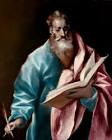
Today is the feast of Saint Matthew, apostle and evangelist, the tax collector whom Jesus called from his counter with a single word. A fitting day for a column that once again brings accounts: the salaries of the Curia, the two hundred fifty million of the Padre Pio hospital and, in between, an archbishop of Milan who wonders aloud whether the synodal path might not be a failed enterprise. Fourteen topics and another long day, good reading.
The law of love interrupts the law of calculation
Il Papa: abbandonare le vie distorte, davanti a Dio non c’è spazio per invidia e divisione. In yesterday’s Angelus the Pope commented on the parable of the workers in the vineyard, those of the first hour and those of the evening paid the same, and paused on a detail that is almost always overlooked: the owner orders payment “beginning with the last until the first.” The complaint of those who had worked all day could easily have been avoided; instead it is provoked, because God’s goodness must be seen, and seen by all. The phrase that sums up the catechesis is one that lingers: we all gain joy, intelligence and future when the law of love interrupts the law of calculation, the experience of mercy broadens that of merit and the gift of peace suspends rivalries. For a week we have devoted to salaries, bonuses and lost biennial increases, the parable could not have come at a better time.
After the appeal for Somalia, where violence and extreme weather phenomena worsen already precarious living conditions, especially for women and children, and the call for a “generous commitment” from the international community. And a blessing in Pescantina, near Verona, gathered before the monument to the deportees and prisoners of the Second World War: not to forget, he said, but to learn from history so as not to repeat the mistakes of the past.
Salaries, for the last time
The week begins as it ended, with the motu proprio of the 14th. Vaticano, Leone XIV cancella i tagli agli stipendi voluti da Francesco adds the only nuance missing from our tally: the freeze on biennial increases affected all serving personnel, but in the case of lay staff only from the fourth level onward. The rest we have already said: there is no raise but a return to the previous situation, what was underpaid is not returned, the frozen biennials are not recovered, and the Pope promises sustainability “with different instruments” without saying which. One clarification remains worth fixing because it circulates poorly: the change did not come at five months of pontificate but at sixteen, after a first step in June 2025. And the money continues to be provided by an impossible budget that closed 2024 with a recognized operating deficit of forty-four million.
Two hundred fifty million in San Giovanni Rotondo
Perché Papa Leone XIV ha commissariato la Casa Sollievo della Sofferenza. The story is from May, but it remains alive and is one to keep in the accounts file. On May 27 the Pope signed a chirograph establishing a Commission of Direction and Oversight over the Fondazione Casa Sollievo della Sofferenza, the hospital founded by Padre Pio in San Giovanni Rotondo, Vatican property, with some 2,700 employees. The Commission replaces the board of directors, is chaired by Maximino Caballero Ledo, prefect of the Secretariat for the Economy, coordinated by Fabio Gasperini, secretary of APSA, and includes Substitute Paolo Rudelli, APSA president Giordano Piccinotti and the archbishop of Foggia-Bovino Giorgio Ferretti. Neither Cardinal Parolin nor the archbishop of Manfredonia, Franco Moscone, who presided over the Foundation, are on it.
The figures dance and not by chance, because the Foundation’s balance sheets are not public: more than two hundred twenty million are mentioned at the end of 2024 and today about two hundred fifty. The general director maintains that the actual debt with suppliers is around one hundred eight million and that it must be read together with the thirty-two million the Foundation claims from the Apulia Region for unpaid services. On August 31, in Castel Gandolfo, the Pope received the Commission and four fronts were set: stabilize relations with staff, strengthen collaboration with Italian public institutions, seek resources and progressively reduce liabilities. A hospital of the Holy See with a hole of that size is, by far, the largest figure of all we have handled this month. And this hospital does not publish its accounts either; we note the dance of figures and their low credibility.
Rupnik: each sanctuary on its own
Confermata la decisione: i mosaici di Rupnik a Lourdes coperti per sempre. Since September 18 not a single mosaic remains visible on the façade of the Basilica of the Rosary, and it will stay that way after the visit. Bishop Jean-Marc Micas wants to clear any ambiguity: the decision “is not a request from the Vatican”; the visit accelerated it, but it is part of a process that began in 2023, with the commission on the future of the works, continued in 2024 by turning off their illumination in the nighttime procession and in March 2025 by covering those on the doors. The Knights of Columbus did the same in 2024 in Washington and New Haven; Vatican News withdrew the images from its publications in 2025.
On the other side of the scale, Aparecida, which on September 12 inaugurated its fourth façade with fireworks, six days before Lourdes finished covering its own, and which thanked those who will remain “preserved forever behind these mosaics”. Rupnik has work in more than two hundred places of worship, including the Redemptoris Mater Chapel in the Apostolic Palace, and remains incardinated in the Slovenian diocese of Koper with the canonical process open. There is no common criterion because no one has given one; another case that continues, and promises to continue, mired in deliberate confusion.
Nine months without a response
No Response to Traditional Pilgrimage’s Papal Audience Request. The organizers of the Ad Petri Sedem pilgrimage, from October 23 to 25, requested a papal audience in a letter signed by two lay members of the organization that Bishop Athanasius Schneider delivered by hand to the Pope in December, when he was received at the Vatican. In the same letter they asked to celebrate the pontifical Mass at the altar of the Chair of Saint Peter, as last year with Cardinal Burke. On August 7 the Secretariat of State denied the Mass, without giving reasons, and the celebration moves to Santa Maria Maggiore on October 24. Nothing is known about the audience, and this despite the pilgrimage bringing together thirty-three associations and last year bringing some three thousand faithful to Rome.
The letter of denial was signed by Substitute Rudelli and states that “this year” is not authorized, which does not close the door for subsequent years. Pentin also recalls that the Pope said last year that he would like to meet these groups. In the same period he has received the perpetual adorers, the Society of Saint Vincent de Paul and groups from Oxford. Nine months later, the question is no longer whether there will be an audience, but why it is so hard to say no.
Delpini wonders whether the Synod is a failed enterprise
Mons. Delpini fa i conti con il Sinodo, il card. Repole continua a camminare. The news is of the first order and has gone almost unnoticed: the archbishop of Milan, who turned seventy-five on July 29, in his pastoral proposal for the year makes an assessment of the synodal path promoted by Pope Francis that no other Italian bishop of his stature had allowed himself. He speaks of “evident fatigue and problems,” of a plurality of voluminous documents that must be kept in mind at the same time, of repeated insistences that practice belies, of skepticism in part of the clergy; of pastoral councils and assemblies with a hesitant start, uncertainty about their task and isolation from the parishes, which produced vague and abstract notions without effect on the life of the communities.
And two more things, which are what make history. An unusual defense today in the mouth of a bishop, of his own clergy: in these years, using the commonplace of “clericalism,” the ministry that Ambrosian priests offer admirably even to the point of sacrifice has been dismissed with a single stroke. And a question no one expected from the one who was to lead the process in the largest diocese in Europe, formulated in the first person: whether the synodal path is a reform that renews the mission or “a complication of life, a confusion of relationships and responsibilities, a call to participation for a Church that no longer exists and a failed enterprise.” And whether it will not be necessary to assume the responsibility of having taken the wrong path, of changing it or even of interrupting it. In Turin Cardinal Repole continues walking with the useless synod.
Hollerich: one can live the Church without money
Kardinal Hollerich: Synodalität nicht mehr rückgängig zu machen, interview with the Austrian daily Kurier reported by Kathpress. The cardinal of Luxembourg, sixty-eight, general relator of the Synod, maintains exactly the opposite of Delpini and on the same weekend: synodality is irreversible, one must move from a Church “from above” to a Church of Christians where the bishop is among them. He explains Leo XIV’s prudence by his concern for unity, because in the pre-conclave he saw the harshness of the criticisms of Pope Francis, and adds that now a preventive war can no longer be disguised as a defensive war. On Europe, the phrase of the day: a process of contraction that is also a process of healing, because “one can live the Church even if there is no money.” Said in the week in which we have counted three pension holes and a hospital with two hundred fifty million in debt, the thesis deserves to be taken literally.
Leo XIV returns home
«León XIV vuelve a casa»: documental muestra preparativos para la visita del papa al Perú. Fifty-one days before his arrival, the Archdiocese of Lima premiered yesterday on YouTube a five-episode documentary series, one each Sunday, on how the four cities of the Peruvian stage are preparing: Chiclayo, Pucallpa, Cusco and Lima. The first is dedicated to Chiclayo, the diocese the Pope governed. The Pope will be in Peru from November 11 to 16, after Uruguay and Argentina, on the first trip to Latin America of the pontificate. It will be the first time a pontiff sets foot in Chiclayo and Pucallpa; a pope had not reached Cusco since John Paul II in 1985. And the possibility circulates that the Lord of Miracles will come out for the Lima Mass on the 16th. The director of communications of the archdiocese, Juan José Dioses, speaks of pastoral preparation; in Chiclayo, where a million people are expected, the preparation is also of infrastructure and security.
A “bishopess” in Galicia
Una vescova contro la Chiesa Cattolica, interview by Rivista Studio with Christina Moreira Vázquez, Galician, theologian trained in Strasbourg, who presents herself as the first woman publicly ordained bishop in Spain. The ordination took place on June 24, 2025, near Compostela, presided over by American Bridget Mary Meehan, of the association of “Roman Catholic women priests,” as Religión Digital reported at the time. She directs the small Comunidade do Home Novo in A Coruña, which meets in the chapel of a fourth-floor apartment, uses ordinary bread instead of hosts and defines itself as horizontal and democratic; she calls herself dissident and rebel, and says she is not clerical because “no bishop imposed a diocese on us.” In the interview she acknowledges the automatic excommunication and calls it a judgment without right to defense. What should be added is the canonical datum: the ordination is invalid, and the attempt to confer sacred order on a woman is a delict reserved to the Dicastery for the Doctrine of the Faith that carries with it excommunication latae sententiae, today in canon 1379 after the 2021 reform. One can call oneself bishop and whatever one wants, but not Catholic.
Gaza: one hundred six Catholics remain
Padre Gabriel Romanelli: «Anche Gaza è Terra Santa». E martoriata. «I cattolici sono rimasti 106». The pastor of the Holy Family, the only Catholic parish in the Strip, Argentine of the Institute of the Incarnate Word, spoke by videoconference at the Communion and Liberation meeting in Cesena, with a connection that cut out every few minutes because, he explained, for three years there has been no electricity grid: they had three generators, one was bombed, another does not work and only the last remains. His description is that of a tsunami without subsequent aid: houses, streets and buildings destroyed, shops turned into dwellings, sand mixed with wastewater. A liter of diesel costs ten euros and a liter of gasoline, thirty. The Christians who numbered some three thousand before the war are today some five hundred, and the Catholics, one hundred six.
He himself was wounded in the leg in the Israeli attack on the church of July 17, 2025, in which three people died; then he already described a war economy, eighteen euros per kilo of flour, twenty-three per kilo of tomatoes, up to fifteen for an onion. He had been left outside Gaza on October 7, 2023 and could not return until May 2024, with Cardinal Pizzaballa. He celebrates Mass every day and sums it up in a phrase: the only thing that keeps them united is prayer.
A bishop who does not want to be an administrator
Il Vescovo lazzarista Markos Gebremedhin: «guardare al ministero episcopale con occhi rinnovati». The apostolic vicar of Jimma-Bonga, in southwestern Ethiopia, Lazarist and bishop since 2010, has passed through the course organized by the Ad Gentes center in Nemi for bishops with more than ten years of ministry, with sessions on evangelization, pastoral governance, economic sustainability, conflict and reconciliation, communication and synodality. And he asks the question that suits any bishop: how to exercise the ministry not as an administrator or person in charge, but as a servant of the communion that guides, listens and accompanies. To move from asking how the vicariate is administered to how it is led toward a more missionary Church. It is, said from an African mission of non-Christian majority, the same thing Mutsaerts wrote yesterday about strategic plans.
The holy door of the prisons
La aplicación estricta de la ley penal, según Francisco. He proposes designing the entrance of juvenile penal institutes around a “holy door” as a symbol of redemption, as opposed to the prison door the inmate experiences as entry into hell, and he does so from the gesture of Francis: on December 26, 2024 he opened in Rebibbia the second Holy Door of the Jubilee, the first in history inside a prison. The words he cites, to open wide the doors of the heart and hope as an anchor even though the rope hurts the hands, are from that improvised homily of Francis, not of his successor.
Greeks, Romans and trees
Mario Lentano, Vissero i boschi un dì: «L’antica Roma e gli alberi? Storia di sesso e religione». The essay by the Latinist from the University of Siena, published by Carocci in 2024, on the cultural life of trees in ancient Rome, with a title taken from a verse of Leopardi, is circulating again. His thesis is the continuity the ancients saw between the human and the vegetal world, without idealizing it: the same peoples who thought with trees felled entire forests for economy and war, and their sources knew it. A whole lesson for contemporary environmentalism.
Maritain’s third way
Contro l’assolutismo delle ideologie: la terza via di Maritain. He rereads Jacques Maritain’s Letter on Independence of 1935, a minor text of sixty-six pages in which he claimed freedom of judgment against belonging to a side. Maritain’s and Mounier’s personalism presented itself as a third way between individualism and collectivism, and Galeazzi insists on distinguishing it both from the “third way” of fascism and from the socioliberal ones of the late twentieth century, Giddens at the head: it is not a midpoint, but a prior critique of the idolatry of power, profit, prestige and possession. It serves to read today’s polarization, in the Church as well.
Happy feast of Saint Matthew.
“Go then and learn what this means: ‘I desire mercy, not sacrifice.’ For I have not come to call the righteous, but sinners” (Mt 9:13).