


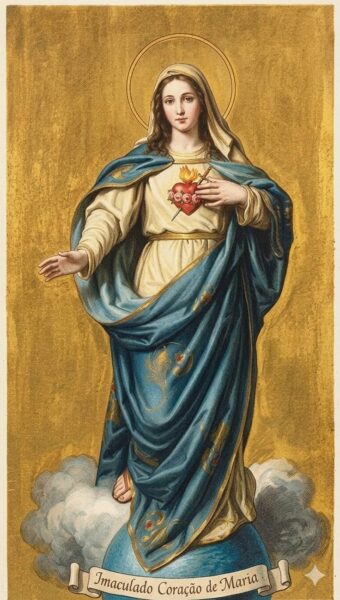
Today, Saint Anthony of Padua, who was from Lisbon, and the Immaculate Heart of Mary. The news in all the media is the technical failure suffered by the Iberia plane carrying Pope Leo to Rome. A very poor image for the former Spanish airline. Iberia ceased trading as an independent company after its merger in 2011 and today belongs entirely to the airline group International Airlines Group (IAG), with a majority stake held by the group Qatar Airways.
The technical failure on the Pope’s plane.
On board the aircraft, in addition to the Vatican delegation accompanying the Pope, there were approximately 80 operators, journalists and photographers—one of the busiest flights of Leo’s trip—who were already preparing for the press conference. A few moments later, several people begin to notice a certain commotion, with the unusual boarding of King Felipe, who had just bid farewell to the Pontiff at the official departure ceremony. The King and the Pope exchange a few words, inaudible to the rest of the plane, and questions immediately arise. This uncertainty dissipates a few minutes later with the captain’s announcement: the onboard systems have detected a technical failure. A problem that forces the crew to test the aircraft against the wind on the runway before certifying whether the plane will take off or not. However, not with the Pope on board. So Leo disembarks, accompanied by King Felipe himself, and heads to the airport’s VIP lounge. Several more minutes pass before an official announcement is made.
Iberia announces that the fault cannot be repaired quickly. Therefore, the plane will not be able to take the Pope back to Rome. The Spanish royal family immediately finds a solution: Leo accepts the King’s offer and will travel to the Italian capital on his Falcon. Minutes later, the Vatican also makes an official announcement: “Pope Leo will return to Rome on the King of Spain’s plane, kindly offered by His Majesty. The Holy See staff and the journalists traveling on the papal flight will return in the coming hours on another aircraft provided by Iberia.” After a long wait in the VIP area, he was personally accompanied by Felipe to the Falcon’s boarding stairs.
Upon leaving Spanish soil, Leo XIV sent the following telegram to Felipe VI: His Majesty Felipe VI – King of Spain – Madrid. As I return to Rome after concluding my apostolic journey, I wish once again to express my gratitude to Your Majesty, the authorities and the people of Spain for the warm welcome and generous hospitality extended to me during this visit. Assuring you and all Spaniards of my continued prayers for the peace and unity of the nation, I cordially invoke upon each of you an abundance of divine blessings. Leo PP. XIV
A very poor image for Iberia, the former Spanish airline, now privately owned. An international disgrace for the Spanish national airline, forced to watch the Pope being transferred to a Royal Falcon due to a fault on its plane. An image that will remain etched forever. Iberia deserves recognition for one thing, and it is no small thing: having spared the Pope the now unbearable end-of-trip press conference. Tornielli stayed on the ground and missed the return press conference, a magnificent ending to a trip that could hardly have been better.
Meeting with ‘migrants’ at a reception center
At “Las Raíces,” on his second day in the Canary Islands. “The migrant saints and missionaries knew how to give what they had and, at the same time, gladly welcome the new things offered to them.” I invite you to offer the treasure of humanity, dreams and culture that you have brought to these islands, and to be open to receiving what is offered to you.” “We must approach this exchange responsibly, thinking of the future of the generations to come, to whom we wish to pass on the heritage of a civilization of love, where migration has an important meaning, because it can become—adds the Pope, citing his recent encyclical Magnifica Humanitas—an opportunity for encounter and mutual enrichment between peoples.”
“All of us are migrants in some way; we are all pilgrims on a journey.” “Let us help make this journey a more human event for everyone, offering what is within each person’s reach. In this sense, I thank the government, the various institutions and the many men and women of good will for their cooperation, which makes this concrete humanitarian assistance possible, restoring hope and dignity to so many people.”
“Integration does not mean erasing the history of those who arrive or requiring them to leave behind everything that forms part of their memory. Nor does it mean creating parallel worlds, closed off from one another, where people coexist without truly meeting. Integration is a shared path: those who arrive learn to inhabit a new land, and those who welcome them learn to enlarge their home without diluting their own identity or closing their hearts to encounter.” And addressing the migrants directly, he said: “You, dear migrant brothers and sisters, have a noble and necessary role on this path: to open yourselves with confidence to the community that welcomes you, learn its language, respect its laws, know its customs, participate in common life and offer your gifts with gratitude.”
Peace and the ‘migrants.’
In this case, to speak properly: peace and immigrants; in Spain there are also emigrants seeking a better professional and personal future outside Spain, but we do not speak of them. In Barcelona, to inaugurate the tower of Jesus Christ at the Sagrada Família, he addressed the issue of war: “We cannot believe in Jesus and wage war. We cannot believe in Jesus and kill the innocent. We cannot believe in Jesus and abandon those who suffer, those who weep, those who flee from poverty.”
The tragedy of emigration: “ must become an examination of conscience: for the countries of origin, which must create the conditions for peace, justice and development; for the transit countries, called to protect and not leave the weak in the hands of criminal networks; for Europe, which cannot proclaim human dignity and become accustomed to the Mediterranean and the Atlantic being cemeteries without headstones; for the international community, called to effective and persevering cooperation.” “Human dignity demands safe and legal pathways, assistance and protection, genuine cooperation against traffickers, effective protection for victims, serious processes of reception and integration, and policies that allow every person to live with dignity in their own country. If there is a right to seek refuge when life is in danger, there is also the right not to have to migrate: the right to remain in one’s own home without hunger, without war, without persecution, without violence, without the land becoming uninhabitable, without corruption depriving the poor of their livelihood, without weapons destroying the future of children. We cannot become accustomed to counting the dead. Human dignity has no passport, nor does it lose value when crossing a border.”
In Tenerife, the warning to human traffickers was not lacking: “Stop! Convert! The tears and blood of these brothers and sisters cry out to God, and their suffering reaches Him! Money taken from the vulnerability of the poor will bring neither peace, nor honor, nor future.”
Respect for all human life.
In the address to the Spanish Parliament: “Every human life must be recognized and protected from conception to its natural end, in all circumstances of its existence. When this certainty is clouded, the most vulnerable are the first victims, and the law loses its deepest meaning: to serve and protect every person.” We already know that we are dealing with governments and parliaments that listen, pay homage, applaud and do not change a single comma of their unjust and immoral policies and laws. “What does the human heart long for? How can we respond to its thirst without deceit? How important it is, especially for those guided by the Gospel, not to reduce everything to commerce and profit!”
The G7 bishops.
The presidents of the G7 Episcopal Conferences in the document “Building bridges for peace, justice and human dignity,” published on the occasion of the summit in France, which recalls Pope Leo XIV’s encyclical “Magnifica Humanitas.” They call on G7 leaders and technology companies to “establish clear international standards so that new technologies are placed at the service of the human person and the common good.” The bishops point out that artificial intelligence should not be understood simply as a set of tools to be regulated, but as “an environment that already shapes human relations, access to knowledge, the exercise of freedoms and democratic participation.” The bishops support the Holy See’s calls for “ethical governance of artificial intelligence” and “special vigilance regarding the military use of autonomous systems.”
Funeral of Osório Citora in Mozambique.
Bishop Osório Citora, Bishop of Quelimane, Mozambique, was murdered on the night of June 5–6. The motives are unknown. Among the most chilling suspicions, it is suggested that he may have been killed on the orders of a parish priest from his diocese, or by the government. The Episcopal Conference of Mozambique announced that the vigil and funeral Mass for Bishop Osório Citora Afonso will be held on June 13 at the Cathedral of Our Lady of Fatima in Nampula. The diocese of Bishop Osorio, Quelimane, in Zambezia province, bid farewell to its bishop on June 12 at the Cathedral, presided over by the Apostolic Nuncio to Mozambique, Archbishop Luis Miguel Muñoz Cárdaba.
His lifeless body was found on the morning of June 6 in his episcopal residence, in a pool of blood. Ordained a priest in 2002, he was 54 years old, a member of the Consolata Missionary Institute (IMC) and secretary of the Episcopal Conference of Mozambique. He was the fourth bishop of the Diocese of Quelimane, established in 1954, which has 29 parishes and missions, approximately 1,930 communities, a total of 1,366,593 faithful, and whose patroness is Our Lady of Liberation. He was assigned to Quelimane by Pope Leo XIV at the end of 2025, and in April he was also entrusted with the apostolic administration of the Archdiocese of Beira following the resignation of Father Claudio della Zuanna for health reasons.
Day of Priestly Sanctification.
The Pope’s message to priests around the world on the occasion of the Day of Priestly Sanctification coincides with the Solemnity of the Sacred Heart of Jesus. Leo XIV writes a brief text structured in three passages that revolve around a single image: the pierced side of the Lord. The starting point is the mandate of Leviticus, taken from the First Letter of Peter: “Be holy, for I, the Lord your God, am holy.” The holiness is not “one option among many” nor an abstract ideal, but something that challenges the very identity of those who wish to participate in the life of the Risen One. For the priest, this requirement becomes “particularly radical.” He then speaks of the “great paradox” of priestly life: we are called to share in God’s holiness, but we carry this treasure “in earthen vessels.” Limited men, marked by weaknesses, fatigue and wounds, from whom a supreme response is demanded. The solution the Pope suggests is not ascetic effort in itself, but a specific place where we can find peace: the open side of Jesus.
In the second passage, Leo XIV emphasizes a point of great pastoral importance: union with the Heart of Christ is not an experience reserved for a few, but a sacramental and Eucharistic path that unfolds in daily life. The configuration with Christ received in Ordination must be rekindled daily through the Eucharist, prayer, meditation on the Word and humble service. There are no “separate compartments” in the priest’s humanity; prayer, ministry, relationships, work, joys and failures—even time seemingly lost and love seemingly wasted—become spaces where God reveals Himself. The Pope thus outlines the figure of the “contemplative priest in the midst of action,” whom the world, he writes, urgently needs: not someone who offers “words or programs,” but the testimony of a reconciled heart.
The third point Leo XIII, is manifested in a “humble and courageous closeness,” in being “of all and for all,” keeping the door of the enclosure open. A relationship with God is required that does not distance the person from others, but enables them to be compassionate and to listen. “The priest who isolates himself slowly fades away; the priest who walks with his brothers grows.” The message concludes with the entrustment of all priests to the Virgin Mary, “Mother of Priests.”
The Immaculate Heart of Mary.
The Holy Fathers had already reflected on the heart of the Mother of the Savior, but it would be later that cordimarian devotion would appear. The first testimonies date from the eighth century. Saint John Eudes (1601–1680) would be the great promoter of devotion to the Sacred Hearts of Jesus and Mary. On the object of devotion to the latter he wrote: “We desire to honor in the Virgin Mother of Jesus not only a mystery or an action, such as the birth, the presentation, the visitation, the purification; not only some of her prerogatives, such as being the Mother of God, daughter of the Father, spouse of the Holy Spirit, temple of the Most Holy Trinity, queen of heaven and earth; nor only her most worthy person, but we desire to honor in her above all and principally the source and origin of the holiness and dignity of all her mysteries, of all her actions, of all her qualities and of her very person, that is, her love and her charity, since according to all the holy doctors love and charity are the measure of merit and the principle of all holiness.”
Around 1643 the feast of the Heart of Mary began to be celebrated; years later it was approved by numerous bishops, despite the opposition of the Jansenists, and in 1668 it was confirmed by the cardinal legate for France. In Rome the request to establish the feast was denied, as it presented certain doctrinal difficulties. In 1805 the celebration was granted to all who expressly requested it, and in 1855 the Congregation of Rites approved new texts, but with the same restriction. On October 31, 1942, on the 25th anniversary of the apparitions of Fatima, Pius XII consecrated the Church and the human race to the Immaculate Heart of Mary. […] On May 4, 1944, the Pope extended the liturgical feast of the Immaculate Heart of Mary to the entire Latin Church, setting the date for August 22, the octave of the Assumption.
“Go into all the world and preach the Gospel to every creature.”
Happy reading.