


It is Sunday, July, and we are in Castelgandolfo for the Angelus; it is always a few degrees cooler than in Rome. It is a pleasure to savor porchetta or suckling pig, washed down with the fresh wines of the Castelli. The new aesthetic of the Apostolic Palace is being refined: the upper balcony has been set aside, and the Pope prays from the main door. A structure has already been prepared and the heraldic tapestry hung to frame the Pope’s appearance. The covered inner courtyard has become too small, and the square is overflowing—not St. Peter’s, by any means, but a good number of the faithful have come to the papal villa this morning.
Concert in Castelgandolfo.
The Palace is coming back to life; yesterday a concert was held with limited attendance by strict invitation in the covered central courtyard. Leo XIII, improvising at the end of the classical music concert: “Through beauty we can rise toward God; we lift our eyes to heaven” thanks to “music, art, and beauty” in order “to feel what God has willed to give us all.”
«Too many words at this moment would truly be disappointing. It is better to say two or three very brief but sincere words.» «We live in a world where beauty is conspicuously absent: so many problems, wars, conflicts, hatred, violence, unemployment, and much more. Having the opportunity to gather for an occasion like this is a true gift, because it reminds us that there is something better and that men and women, when we so desire, together can offer beauty that, from the heart, helps us rise toward God. And he recalled the apostolic journey to Spain: “the motto of the journey was Lift up your gaze.” Let us lift our eyes, our gaze, toward Heaven. Music, art, and beauty are truly a tool that helps us look toward God, in a movement that is undoubtedly one of the finest aspects of being human. So once again, I sincerely thank you for giving us this opportunity, this evening, to experience beauty and truly encounter what God has willed to give us all.” He concluded with a blessing for those present.
The loss of the sacred.
Until not long ago, spaces set aside for prayer were respected in the Vatican; now there are fewer and fewer. The irreparable loss of the celebrations at all altars from seven to nine in the morning is noticeable. Many days there used to be more than five hundred celebrations; today they have been reduced to a few by superior order. Anyone could celebrate, with few formalities, in any authorized rite with their group of pilgrims; prayers before the tomb of Peter were continuous during those hours, as were pious visits to the tombs of the popes. Today all of this is a memory, and the Basilica is gradually turning into a museum-like space where worship has been reduced to the Chapel of the Chair, the main apse, and the Chapel of St. Joseph. Crowds pass curiously in front of the tombs of the most recent popes, and groups peer into the sacred spaces. The tomb of Peter, which gives meaning to the entire Basilica, has become invisible and unknown to the vast majority of visitors. Small souvenir shops have sprung up in every corner that lends itself even minimally, and by September, unless God prevents it, the Bistrot restaurant will open on the roof of St. Peter’s. The enormous terrace above the Basilica will now include spaces for leisure. We have not yet reached the point of dancing on the tomb of the deceased, but we are eating there; one has to start somewhere.
Attempting to interpret a nascent pontificate.
Pope Leo XIV’s visit to the residence of the United States ambassador to celebrate the 250th anniversary of the country’s independence was deeply significant. In statements to Italian media, U.S. Ambassador Brian Burch said the Pope feels frustrated because his actions are often interpreted in purely political terms, or worse, as conflicts with the U.S. administration. It is not that disagreements do not exist—the ambassador has not denied them—but in reality, not everything revolves around Trump and the United States.
Pope Francis had a predilection for details and symbolic gestures that made clear which side he was on. He demonstrated this, for example, with his “cardinals of reparation,” the cardinals appointed to remedy past situations in each of his nine consistories. Or with his visit to the Russian embassy when the war in Ukraine broke out. Or his letter appointing Fernández prefect of the former Holy Office, an act completely outside protocol but intended to build a precise narrative.
Leo XIV does not seem to dwell on reactions, much less on specific ones. He seeks to remain steadfast in his principles and apply them in various ways, sometimes even pragmatically, but without ever deviating from the general idea or allowing it to degenerate into particular issues. The story of Ambassador Burch is not limited to recounting a detail; it allows us to understand how we can interpret the pontificate of Leo XIV.
An article today points to three criteria to consider. The first criterion is that the Pope does not answer specific questions and, in fact, takes great care not to do so. The most striking example of this attitude is the “urbi et orbi” address last Easter. For many decades it was a geopolitical speech—often called the “State of the World Address.” Leo XIV adopted a different style; he directed specific appeals to the world powers but did not delve into the details of any region of the world. The Pope chose not to focus on details but on principles. Ambassador Burch also noted that the Pope feels deeply American but wishes to show that he is a Pope for everyone, not only for the United States. The Pope has decided not to return to his country of origin immediately but to plan first a series of trips that demonstrate his concern for the entire world.
The second criterion is that of normality. This week Leo XIV’s vacation period began; he is spending it in Castel Gandolfo, in the Apostolic Palace, which has regained its function as a papal residence. The return to the Apostolic Palace of Castel Gandolfo, which probably also marks the end of impromptu press conferences, at least for a time, represents a return to papal normality of great importance, together with Leo XIV’s decision to live in the Apostolic Palace of the Vatican rather than in the Domus Sanctae Marthae, which was Pope Francis’s preferred option.
He is not a pope attached to the immediate past and in fact does not follow it in many respects; he does not disdain the symbols of the past. One perceives that the Pope wishes to return to normality: liturgical normality, normality of papal audiences, historical normality. Even the decision to convene a consistory to deliberate at least once a year is a clear sign of the search for normality and a return to the past. In the end, it will no longer be the Curia of the past; it will be a new Curia, with new prefects.
Leo XIV recently appointed two prefects, and they are two women. These two appointments provide us with a third criterion for interpreting the Pope: he cannot be labeled either conservative or progressive. Leo XIV is not a pope who is easy to classify. On many issues he takes a healthy step back; on others he continues despite all controversies, beginning with the inappropriate use of the title “pro-prefect.” We are at the beginning of a pontificate that offers us much to reflect on and still leaves much for us to understand.
The World Cup in the Roman Curia.
A part of the Roman Curia has never hidden its passionate support for its national team, Argentina, beginning with Cardinal Leonardo Sandri, former prefect of the Congregation for the Oriental Churches and current vice-dean of the College of Cardinals, originally from Buenos Aires: “Without a doubt I will be in front of the screen tomorrow evening.” At the Argentine Church on Via Tagliamento, the person in charge of cheering on the Argentines among the clergy and Argentine faithful residing in Rome will be Msgr. Guillermo Karcher, a long-serving papal master of ceremonies and official of the Vatican Secretariat of State: “We will watch the final in our church.” Even the poster inviting people to watch the match in the hall of the Argentine National Church reads: “Toward the fourth star.” The Spanish curial officials are much more discreet; the match promises to be exciting, and tomorrow we will have a champion.
The Orlandi case continues in Verano.
It threatens to be endless, and these days we have many reports; according to investigators, Emanuela fell into a network that recruited minors to photograph or film them. Former photographer Marco Accetti was questioned by the Carabinieri. Six hours in which he supposedly answered all the questions. A face and a name already known in the investigation into the disappearance of Emanuela Orlandi, now back in the news. Marco Accetti, a 71-year-old former photographer, was questioned as part of the new investigation—the third—into the disappearance of the 15-year-old Vatican citizen. Thirteen years ago, Accetti appeared before the Prosecutor’s Office, confessing his participation in the (simulated) kidnapping of Mirella Gregori and Emanuela Orlandi, who disappeared in 1983. He was investigated for defamation and self-injury, but his version was deemed unreliable, leading to the dismissal of the case.
The recent analysis of several anonymous letters has placed him back at the center of the Rome Prosecutor’s investigation. The hypothesis points to a lead related to pedophilia and child sexual abuse. It is believed that Emanuela became involved in a network in which Accetti was called upon to recruit children to photograph or film them. Pietro Orlandi: “We learned everything from the press. From what we have read, my family and I believe that he, together with others, abused children, but on behalf of third parties. I hope someone will soon provide us with information.” Accetti’s ex-partner and sister were also heard at the prosecutor’s office.
Luca Casarini with the popular movements.
Luca Casarini, synodal father of Pope Francis, as head of mission and founder of the NGO “Mediterranea,” is in the United States for the World Meeting of Popular Movements, a platform created in 2014 by Pope Francis to bring together the demands of the movements with the support of the Church. Currently in Minneapolis: “It is no coincidence that, on the anniversary of the G8, I find myself here, where Genoa continues its struggle against the Italian Trade Commission (ICE), against institutional violence, against the creation of fear as a method of government, and against inequality as an economic system.”
“The left, like Tony Blair, believed it could design a better society by placing the market at the center, according to the ‘trickle-down’ theory that would bring prosperity from the rich to the poorest. But the opposite happened. We were right: the ideology of the global market, of financialization, of turbo-capitalism, has caused an acceleration of inequality. Today it is evident to everyone; we were already saying it 25 years ago in Genoa. (…) The world has been plunged into a global civil war. The conflict consists of two elements. The first is the external one: the war between states, which can be cold or hot, as is happening now as we gradually move toward a Third World War. The second is the internal dimension: an unequal world can only be governed through war; it is too unequal to allow peaceful government. I still see it in the struggle against the ICE squads that murder workers. Injustice elevated to the category of a system can only generate permanent war.”
Mattia Ferrari on tour in the United States.
In connection with this, several media outlets reported on a very particular tour that Mattia Ferrari, an Italian priest and coordinator of the World Meeting of Popular Movements (WMPM), will undertake from the end of June through 21 cities in the United States, beginning in California and reaching New York, passing through the states of Washington, Texas, Colorado, Pennsylvania, Minnesota, Indiana, Michigan, Louisiana, Washington D.C., and New Jersey. The tour is expected to conclude in early August. The ultimate goal of this tour is to receive and listen to the various immigrant families, understand their suffering and the difficulties of integration, and raise awareness not only among the public opinion of the cities visited, but above all among the bishops of the respective dioceses, so that they become more sensitive to the problem.
Ferrari is not traveling alone: he is accompanied by two figures whose profiles are very revealing. The first is Luca Casarini, an Italian activist in favor of migrants, an anti-globalization activist, and co-founder of the NGO “Mediterranea Saving Humans.” Although Casarini has stated that he “rediscovered himself as a Christian among the migrants at sea,” his profile does not precisely correspond to that of a Catholic. The Remnant has already spoken of Casarini and his relationship with Zuppi, Sant’Egidio, and, above all, with Pope Francis. Ferrari was accompanied by another figure, this time a friend of Leo XIV from the days in Chiclayo, Peru. He is César Piscoya Chafloque, a prominent consultant to the Center for Pastoral Action Programs and Networks of the Latin American Episcopal Conference. A collaborator of Prevost for many years, when he was still the “bishop of the peripheries.” Ferrari is the coordinator of the WMPM, the “World Meeting of Popular Movements.” As indicated on the presentation page of the website, it was founded at the initiative of Francis in 2014 to promote dialogue between the Catholic Church and popular movements.
What are the popular movements?
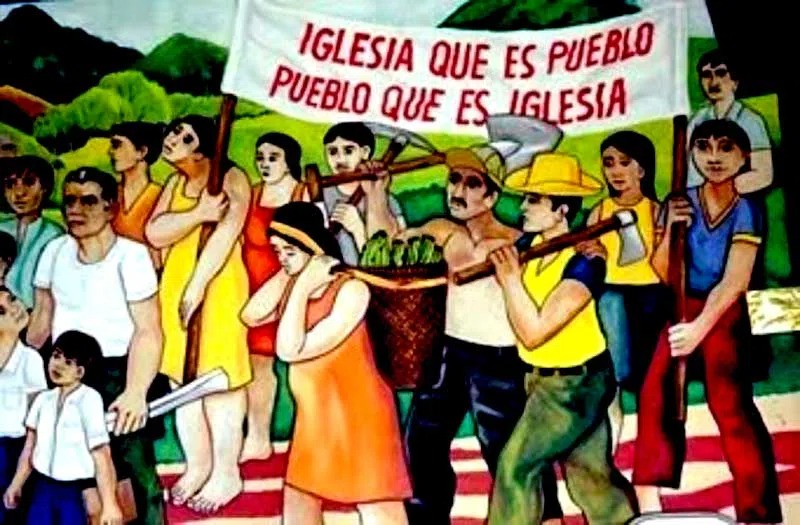
This expression is simply an alternative way of referring to what in Spanish is known as base communities. These are small groups of Christians that emerged in Latin America between the 1960s and 1970s, especially in Brazil, in response to the perceived distance between the institutional Church and the poorest sectors of society. Inevitably, these communities became—especially after the Medellín Conference (1968)—the heart of liberation theology, a heterodox current of Catholicism that seeks to reconcile Marxism and the Gospel, interpreting Christianity as a form of liberation from economic, political, and social injustices.
Liberation theology (let us recall: officially condemned by the Church in 1984 with the instruction Libertatis Nuntius) gave rise to the theology of the people, a more moderate variant that differs from the former not so much in doctrine as in method: it is no longer about class struggle or an openly conflictual relationship with the Church, but rather about a gradual awakening of consciousness and an ambivalent relationship with the hierarchy. Among the creators and founders of the theology of the people is Juan Carlos Scannone, a Jesuit and teacher of Jorge Mario Bergoglio.
Liberation theology continues in the Vatican.
With the creation of the Dicastery for the Service of Integral Human Development, the theology of the people has in fact become the official framework of the social doctrine of the post-Bergoglian Church. The recent magisterial documents of Pope Leo XIV confirm this, as is logical: it suffices to read the apostolic exhortation Dilexi te and the encyclical Magnifica humanitas.
The base communities fight for three principles very dear to Pope Francis: land, housing, and work. These are, obviously, sacred rights of every individual. The problem does not lie in the rights themselves, but in how they should be guaranteed, according to the communities and according to Francis, and it seems that Leo XIV continues this line. They seek redistribution policies with direct state intervention, that is, pure socialism.
There is a direct, organic, and structural link between the World Meeting of Popular Movements (WMPM) and the Roman Curia. In fact, the Dicastery for the Service of Integral Human Development, conceived and created expressly by Pope Francis, supports, coordinates, and in part promotes the activity of the so-called Popular Movements throughout the world. This relationship is explicitly documented in the official sources of the Holy See.
Ferrari’s trip to the United States is not presented as an isolated pastoral initiative, but as the coherent expression of a precise orientation. The issue of immigration is not addressed as a political, legal, or prudential matter, in which different solutions may legitimately be opposed, but as a moral imperative, ideological, that tends to prevail over other priority demands of the common good. Leo XIV speaks of the right to emigrate; sometimes the right not to emigrate is also recalled; rarely is the duty of migrants to respect the laws of the country in which they reside mentioned. Never is there talk of the rights of those who welcome migrants, rights that should be a priority and that today are systematically and daily trampled upon.
We are faced with a curious moral asymmetry and a grave omission on the part of the Catholic Church: the migrant is presented as the sole holder of rights, while the host community is reduced to an amorphous collection of duty-bearers and moral debtors, a mass deprived of any legitimate right to security, identity, cultural continuity, and political order.
In November 2016, on the occasion of the Jubilee of Mercy dedicated to “socially excluded” persons, Pope Francis shook the hand of a Rwandan immigrant, reiterating that the poor and migrants are “more inclined to be artisans of peace” and inviting the Church to “welcome, accompany, support, and integrate” those who come from other countries. That man was Emmanuel Abayisenga. After moving to France, on July 18, 2020, he set fire to the Gothic cathedral of Nantes, destroying the great historic organ, numerous stained-glass windows, and a 19th-century canvas, as well as severely damaging the building. After spending a few months in detention, the immigrant received hospitality from the parish priest of Saint-Laurent-sur-Sèvre, Father Olivier Maire. In 2021, Abayisenga considered it appropriate to thank him by taking his life in a brutal manner. It was not until January 2026 that French justice sentenced him to thirty years in prison, followed by expulsion from the country.
Some die, others grow.
The new course is taking shape, and by now the fish has all been sold. We all know in our dioceses and religious orders how many candidates enter seminaries and novitiates; the result is very little or nothing, except for honorable exceptions that we all know where they are headed. Empty novitiates and increasingly aging communities have pushed some institutes toward marketing, while others have retreated into inertia. We know that the future of consecrated life does not depend on quantity but on fidelity to Christ, even when that fidelity diminishes. Many dioceses languish with no solution in sight; abundant priests continue to die, and there is no one to fill the vacancies they leave. The bishops have forgotten that their principal obligation is to ensure that their faithful do not lack spiritual care and, above all, the sacraments. Today they do not; they are much more interested in empty synodalities and laboratory ecologies. They do not stop stirring up everything that is left, increasingly scarce, and they continually convene meetings and encounters caught in a sterile spiral. They resign themselves to being the last and are incapable of recognizing that perhaps the problem is themselves. It is sad to see good priests and religious struggling to survive and clandestinely attending to the faithful, always with prudence and discretion to avoid the jealousy of the bishop of the moment. There are green shoots; there always are; they cannot be publicized much, but they continue to grow and work. We are burying a Church that is already dead; something new is being born, in silence, with discretion, but with all the strength of life and the future in its hands.
“…the good seed are the children of the Kingdom; the weeds are the children of the Evil One.”
Good reading.