


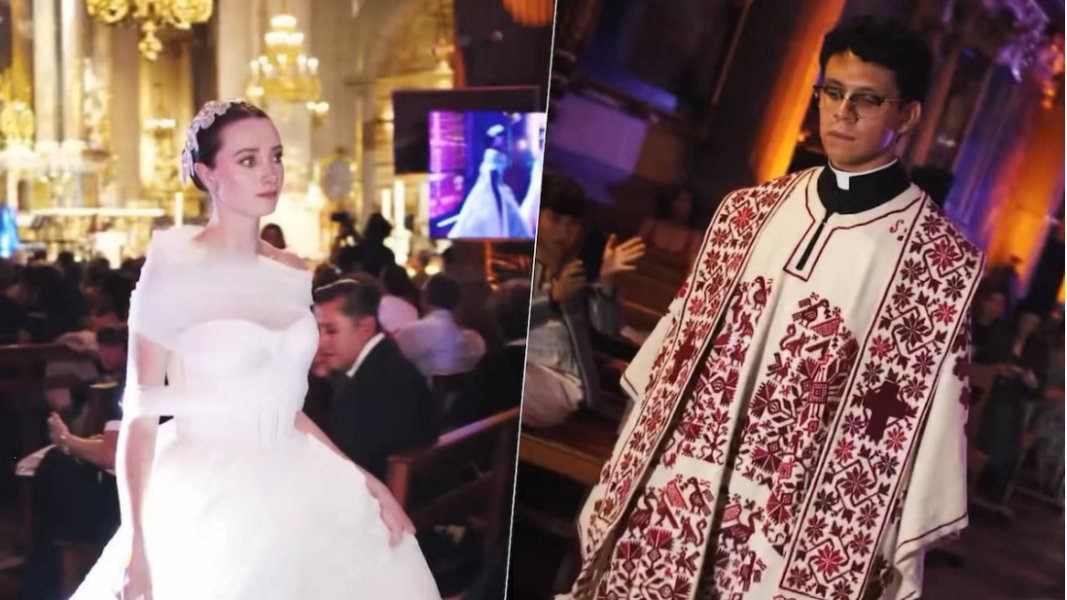
On November 5, 2026, Puebla Cathedral, an emblematic temple in the Historic Center and a UNESCO World Heritage Site, hosted the private event “México Monumental 2026”.
What the organizers presented as a cultural gala with a charitable cause was perceived by broad sectors of the Catholic community as a fashion show inside a liturgical space. Images and videos of models walking down the central nave, with stage lighting and haute couture garments, sparked a wave of outrage and accusations of confusion or even profanation. Three days later, the Archdiocese of Puebla issued a statement expressing regret, offering apologies, and defending the event by citing the presence of “catechetical moments.”
The event was organized by the Valora México platform, led by Ana Montero (of Grupo Tribuna Comunicación) and Jorge Maceda, with the express authorization of the Archdiocese under Apostolic Administrator Víctor Sánchez Espinosa. Its stated goal was to raise funds for equipping the Casa de la Maternidad of the State DIF System (SEDIF) in Puebla; the organizers reported a donation close to one million pesos. The private evening, with paid admission, was backed by sponsors such as Mercedes-Benz Puebla and attended by figures from the political, business, and academic spheres, including federal deputy Rosario Orozco Caballero and the rector of the Benemérita Universidad Autónoma de Puebla (BUAP), Lilia Cedillo Ramírez; Apostolic Administrator Sánchez Espinosa was also present.
The program combined three textile exhibition blocks with musical performances. First, original liturgical vestments from the Archdiocese’s historical collection were shown—chasubles, copes, and stoles, some dating back to the 19th century. Next came pieces created by artisans from San Andrés Hueyapan (Sierra Norte de Puebla), from the Tamachij Chihuatl collective, using traditional techniques from indigenous communities. The finale featured contemporary bridal wear and Mexican haute couture, with creations by Jalisco designer Benito Santos, known for dressing figures such as Thalía, and Puebla designer Denisse Kuri. Between the displays, titular organist Daniel Angulo performed on the cathedral’s monumental organ; soprano Mariana García-Crespo and baritone Lean Flores del Valle performed, and a concert was given by the BUAP Symphony Orchestra and Choir.
For many faithful, the dominant format was that of a runway show, with models parading down the central aisle of the church, colored lights, screens, and a gala atmosphere that clashed with the sacred function of the space. Criticism focused on the fact that the cathedral is not a neutral venue but the liturgical heart of the local Church. Catholic organizations and voices, including CitizenGO, described the event as an act of confusion or disrespect for the sanctity of the space and called for gestures of reparation. The Blessed Sacrament was moved to a side chapel during the event, a measure that did not calm the reactions.
In response to the controversy, the Archdiocese published a statement on November 8 titled “On the event ‘México Monumental’ held at Puebla Cathedral”. It reads: “The Archdiocese of Puebla regrets and apologizes to those who felt wounded in their faith and for any confusion that may have been caused.” The institution clarified that the event “included catechetical moments.” It detailed the three exhibitions—historical, artisanal from Hueyapan, and contemporary bridal—and specified that “for each of these displays, a catechesis was given on the importance, dignity, and sacredness of the various vestments of ministers: of priests as ministers of worship; and of the bride and groom, who are the ministers of the sacrament of holy matrimony.”
The statement invokes the Catechism of the Catholic Church (1145), which teaches that “the sacramental celebration is woven from signs and symbols that express spiritual realities.” From this, it argues that “the beauty, dignity, cleanliness, and decorum of liturgical vestments help to manifest that we are in the presence of a holy and supernatural reality. It is not about luxury, ostentation, or vanity, but about recognizing that what we celebrate deserves the best of us and is for Christ the Priest.” The Archdiocese concludes by affirming that “the Angelopolitan Church will continue to seek ways to safeguard the sacredness of its liturgical spaces and avoid any act that leads to confusion.”
The organizer also issued public apologies and maintained that it was a cultural exhibition rather than a commercial fashion show, emphasizing the charitable purpose and the solemnity of the music. However, the distinction between “exhibition” and “runway” failed to convince those who saw in the images a temporary transformation of the church into a fashion venue.
The episode occurs during a pastoral transition as Sánchez Espinosa bids farewell to the see and Jorge Carlos Patrón Wong assumes the position on November 19. The controversy raises a fundamental question about the limits of using sacred spaces, even when invoking a social cause or catechetical intent. The sacredness of the Cathedral does not depend solely on the purity of the organizers’ intentions, but on the perception of the faithful and the coherence between the place, the gesture, and the meaning that the Church itself proclaims. The apology acknowledges the harm and confusion; the remaining challenge is whether this awareness will translate into clearer criteria to protect, going forward, the properly liturgical and sacred character of the temple—or whether it will continue to dilute the meaning of sacred spaces by turning them into venues for spectacles and celebrity, cloaked in the aura of mystery that once defined the encounter with the “wholly other.”