


By: Yousef Altaji Narbón
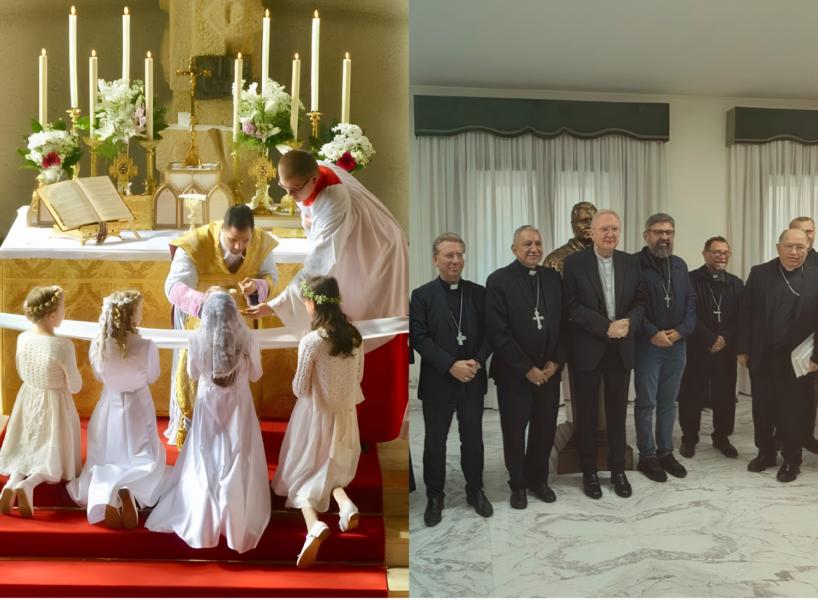
The bishops of Panama recently made their ad limina apostolorum visit, where they went to the Holy See to meet with Pope Leo XIV. On social media, some of the prelates made statements filled with joy, general satisfaction, and hope after having shared moments with the Roman Pontiff. The Dicastery for Divine Worship and the Discipline of the Sacraments published an official summary on October 21, 2026, of what was discussed between itself and the Panamanian Episcopal Conference.
Reading what the Vatican printed about the discussion at the meeting between the two causes not only indignation, but also a bit of amusement, given how truly absurd the statements made by the country’s bishops are. There is no point in the meeting minutes that is free from error or completely detached from reality. It says a lot about the things expressed as reasons for concern or what the problems in Panama are that they are supposedly shepherding God’s flock through. The most pointed and truly concerning thing is the kind of assessment the bishops make of what is wrong and what is right. Herein lies the crux of the matter.
Things Backwards
It is curious the apparent interest of the bishops in the liturgy; no one expected or imagined it, given that the national reality is an absolute disaster—I dare to use the word absolute with all the weight of its meaning—being this a matter of vital relevance in the life of Catholics. In any case, if they went to the Dicastery for Divine Worship, it was to report, seek advice, or devise plans to directly combat things that are erroneous or condemned by the bimillennial Tradition of the Holy Church; the opposite was argued by the members of the Episcopal Conference, to the point of criticizing as extremism those practices that are supported by two thousand years of the Church. Their criterion or assessment clearly turns things upside down while they wish to advance the agenda of insidious synodality, destroying every obstacle or resistance in their path.
Labeling good as evil and exalting evil as good is characteristic of the current crisis within the structure of the Church. It is from the poor formation of a liberal and modernist nature that a hatred is born against everything that breathes or seems to be something prior to the questionable Second Vatican Council. In other countries, a faster process of destruction has been seen compared to others due to the policies of the bishop of the moment based on the most violently modernist thinking possible; in the case of Panama, from border to border, the unstoppable advance of the revolution since the 1960s was drastic and swift. The little opposition in defense of the truth was suppressed with threats of canonical sanctions and the psychological violence of false obedience. Since then, the faithful have been given a formation distant from what is authentically traditional, learned, and in line with the doctrine of always.
Extremisms and Incongruities
Liturgical extremism. Thus have the pious faithful defenders of the practices, customs, and traditions that have been carried and developed over the centuries through the help of the Holy Spirit been labeled. Let us focus our attention on this. Let us understand well what was said. Not only said, but labeled with such a term. Seeking to do things right now is a form of extremism; it is a way of falling into apparent rebellion; apparently, it symbolizes a challenge to authority.
The line to follow, the daily rule, the rhythm of the dance imposed on the entire ecclesial structure of Panama has been emphasized to the utmost. It consists of the following: Rampant synodality, absolute obedience, liturgical improvisation without the need for rubrics, feeling the impulses of the Spirit (which serves as justification for anything), exalting religious ignorance to present ignorance of the faith as something virtuous (knowing doctrine is apparently dangerous), and little importance given to flagrant moral problems at the national and global level. There we have the rule by which they judge what is good and what is bad, only to later frighten people to generate rejection or encourage them to accept without hesitation.
The degree of concern of the Panamanian bishops must be such that they saw it necessary to go before the competent authority in the Vatican to express the enormous problem in the country. Why did they do this? Someone will ask. The answer is raw and straightforward: they cannot tolerate any questioning or obstacle to their diocesan agenda. They know of the stone in their path; that stone is the perennial and unalterable Tradition of the Catholic Church. They see as a grave problem the existence of laypeople devoted to the Most Holy Sacrament of the Altar with all its pomp and splendor as it deserves; they look down on devout women with their beautiful veils, being modest in the most holy temple of the Lord of Lords (this may raise the question: if modesty bothers them so much, then do they desire the opposite of modesty?…).
Reviewing the summary of the meeting between the prelates, the enormous incongruities in the concerns of the Panamanian bishops come to light. Incongruities? Which ones? Let us list the most common:
They see as extremist the desire for Communion on the hand and on the knees, but there is a considerable number of «ministers of Communion» who carry Jesus in the Blessed Sacrament everywhere without record or care, keeping the Most Holy in their homes without any dignity, without saying anything to their pastors.
They say that the topic of sacred music was addressed with the Dicastery because it is a relevant issue for maintaining exemplary sacredness, but one enters any parish nationwide and encounters a myriad of worldly music: the Hallelujah from Shrek at weddings, the Glory to God in the Highest with the tone of a typical Carnival tamborito, the nefarious A People Who Walk Through the World which raises the question of whether one is praying or present at a forum promoting class struggle.
They point to an instrumentalization of the Eucharistic celebration by some groups of believers as conduct worthy of reprimand; on the other hand, one frequently sees in so many churches the Afro Masses, the Masses of Healing and Liberation, the Masses of Praise with songs from the Charismatic Renewal, Masses celebrated in the homes of certain people with political influence, among many other Masses with distinctive labels.
They warn about having caution regarding incorrect practices in Eucharistic adoration, an assertion that implies the maximum orthodoxy upheld in all temples; when we recall a bit, we glimpse the bishops in October 2022 publicly worshiping in a Mayan rite dedicated to God mother and father, as well as the execrable Pachamama. During the event in question, they bowed to the sun, a gesture proper to the worship due only to God.
Sobriety proper to the Roman rite the prelates assert; they see it as a primary characteristic that must be safeguarded. Now, turning our attention to what the panorama is in our days, going to a church while the Novus Ordo Missae (the New Mass) is being celebrated is anything but sober. Applause by the celebrant himself, dialogues between those present and those at the table, moments of giving the peace similar to a five-minute social conversation to catch up with a friend or neighbor, slogans like: Who lives? Jesus! —identical to being in a sports stadium.
They present as inciters of division and confusion those who emphasize receiving Holy Communion as it alone and exclusively should be, but if one recalls a few years ago, one will remember when they imposed the dubious sanitary measures where the faithful were forcibly obliged to receive the Lord Jesus, living and true, unworthily, with alcohol on their hands, the crude mask, with senseless distancing, and blatantly discriminating against those who claimed their indisputable right to receive Communion on their knees and on the tongue.
They claim to maintain communication and listening with the people of God; the reality demonstrates absolute silence in the face of complaints presented to the authority when liturgical abuses occur, erroneous doctrines are professed, some kind of transgression of the norms of worship happens, or when sacrileges of all kinds occur (a very common thing in the country). In the face of such complaints, what prevails is a mere acknowledgment of the complaint; leaving that problem to sleep and carrying it into oblivion over time.
They insist on the question of the Missal and other liturgical books as something they claim to maintain in its integrity; turning our gaze to the marked behavior of the same in their dioceses, we see how for decades they have trampled the sacrosanct Traditional Missal of Pope Saint Pius V, protected in perpetuity by the Bull Quo Primum Tempore, waging war on it in a fulminating manner because this rite is the antithesis of the humanism promoted by them.
Dissuading from Knowing the Truth
As a final blow of insinuation together with their desire to avoid any leak within the environment dominated and carefully created by them, they alleged the following: “The bishops also highlighted the importance of formation, especially in relation to the parallel information circulating in blogs and opinions of various kinds…” The existence of articles, writings, websites like this one generates fear in them for making the truth known, as the faithful have the right to receive it. These resources exist due to the lack and suppression for the ears of the laity of traditional doctrine on the topics they claim are extremisms; they launch these epithets to dissuade the innocent from obtaining the appropriate tools to know the fullness of the faith. It becomes clear in broad daylight where the current program is heading, where bitter fruits are reaped such as young people abandoning the church after Confirmation or the elderly receiving Extreme Unction from laypeople (yes, it has happened).
It is our duty to speak clearly when what is most sacred in the holy religion is violated. The liturgy is primarily an act of justice toward God in giving Him the worship He deserves; one cannot give Him, under the pretext of false obedience, something foreign to what He merits. Let us pray for our pastors, but also live the faith as it should be, not in the way forced by innovators with ideas foreign to the Magisterium reiterated through the centuries.