


By Stephen P. White
October is quickly drawing to a close, and as often happens in the federal capital at this time of year, the weather has turned sublime. Cool, clear mornings give way to deep-blue skies and pleasantly mild afternoons. For some reason, the light always seems golden. We haven’t had a hard frost yet, but it can’t be far off. At night, the scent of wood-burning fireplaces drifts through my neighborhood. I think it’s been weeks since I last saw a cloud.
Halloween is quite an event in my neighborhood. For about a decade now, we’ve hosted an annual potluck at our front door. We grill a few dozen sausages and bratwursts; the other families bring their costumed little ones and a side dish. This year, Halloween falls on a Saturday. Between that and the magnificent weather we’ve been having, I’m expecting a particularly lively party.
Our yard and front door serve as base camp for the roaming hordes going door-to-door for treats, and my job is to keep an eye on the beer cooler and tend the grill. If there’s a World Series game to listen to on the radio, so much the better. The kids think we do it all for them; I let them think that.
The truth is, I take part in the Halloween festivities somewhat grudgingly. Costumes aren’t my thing. (I tell my children, “This year I’m dressing up as a middle-aged dad.”) I generally dislike the trend of over-the-top Halloween house decorations: giant plastic skeletons, inflatable pumpkins, polyester cobwebs stretched across the yard, and other “decorations” of a more genuinely macabre sort. I understand that, among a certain younger generation, Halloween celebrations have taken a somewhat crude and lascivious turn in recent years. No, thanks.
There is a fundamental difference between a party guided by a spirit of transgression and a night when mischief is more tolerated.
My idea of a good All Hallows’ Eve resembles the one portrayed in Vincente Minnelli’s Meet Me in St. Louis (1944), in which bands of wild children run through the neighborhood committing all manner of minor, previously approved and socially accepted acts of vandalism. The mischief is summed up in this brief exchange as the younger Smith daughters prepare for their evening escapades:
Mrs. Smith (the mother): “Well, girls, when people open the door, don’t throw too much flour. Just a handful right in the face.”
Agnes Smith (the daughter): “Mother, it was Mrs. Wilkins. She says she’s going to leave the hammock on the porch and please, girls, return it… when you’re done stealing it.”
In the film, the neighborhood children build a bonfire in the middle of the street with old furniture (and deliberately derail a streetcar), so not everything translates well to today’s suburbs. The point is that there are certain forms of mischief that are healthier than depraved, and it takes a solid, healthy society to distinguish one from the other and treat each justly. A less healthy society will favor the wrong kind of mischief or condemn both equally.
Be that as it may, our own Halloween celebration is something I’ve learned to love, as I said, a bit grudgingly. It was my wife’s idea, and I confess that at first I didn’t think it was a good one. I’m happy to say she was right. The dozens of friends and neighbors who end up at our front door every October 31 would tell you the same, I think. The gathering provides enough social cohesion (and a critical mass of adult supervision) that the little revelers can be granted more freedom—and perhaps a bit more candy-fueled mischief—than they would be allowed on any other night.
And that is an important part of Halloween. The macabre side of the holiday, even down to the pseudo-pagan trappings that sometimes accompany it, is not about celebrating darkness. Nor is it simply an opportunity to let off steam and eat a lot of sugar. Halloween, when celebrated in the context of the great feasts that follow it—All Saints’ and All Souls’—serves as an annual reminder that the inbreaking of the Kingdom into this fallen world must not be taken for granted.
Many Catholic elementary schools invite their students to dress up as saints for All Saints’ Day. It’s a wonderful tradition. But it is not really a substitute for Halloween, though I think it is sometimes treated as such.
Children benefit from encountering both the ghosts and specters of Halloween night and the shining example of the saints on their great feast. It is foolish to expose children unnecessarily to real evil. And an obsession with dark things is unhealthy, even dangerous, for anyone. But naïveté is not innocence. God’s grace keeps all manner of evil things at bay, and an annual reminder of that spiritual reality is no bad thing.
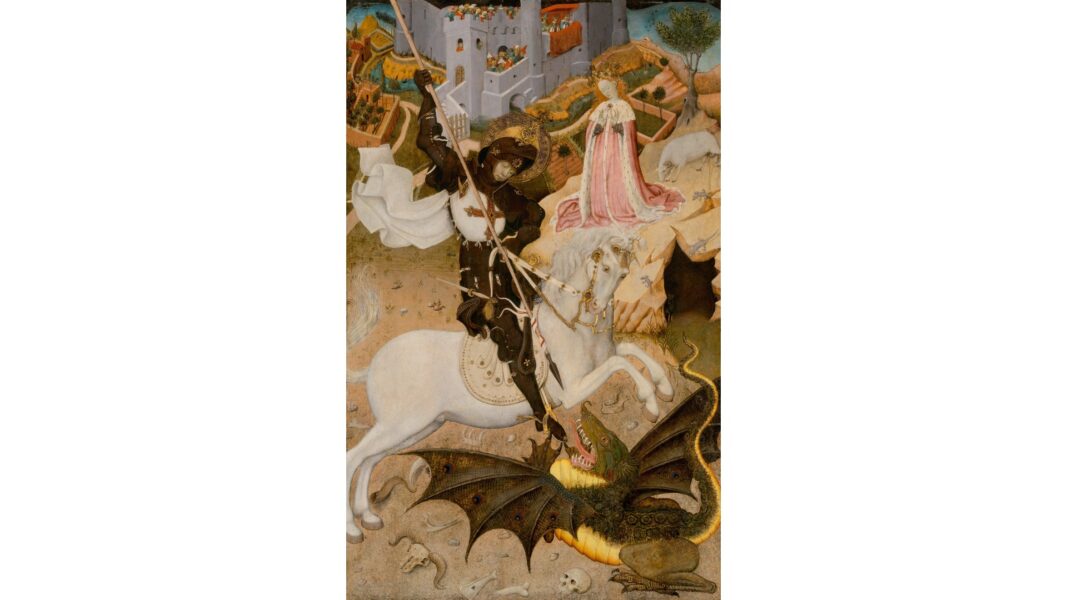
As Chesterton once said of fairy tales, they are more than true: not because they tell us that dragons exist, but “because they tell us that dragons can be beaten.” That’s how I feel about the ghosts and specters of Halloween night. The greatness of the saints shines all the brighter when we consider the darkness they overcame, and the triumph of the Cross is magnified, not diminished, when one considers the nature of the enemy Our Lord defeated.
So, celebrate Halloween this weekend! If you’re in my neighborhood, stop by and say hello. Have a sausage and a beer. I’ll keep the fire going late into the night. But take note, too, of the darkness and the chill in the air. You’ll appreciate it all the more when the warm sun rises over the triumph of All Saints’.
About the author
Stephen P. White is executive director of the Saint John Paul II National Shrine and a fellow in Catholic Studies at the Ethics and Public Policy Center.