


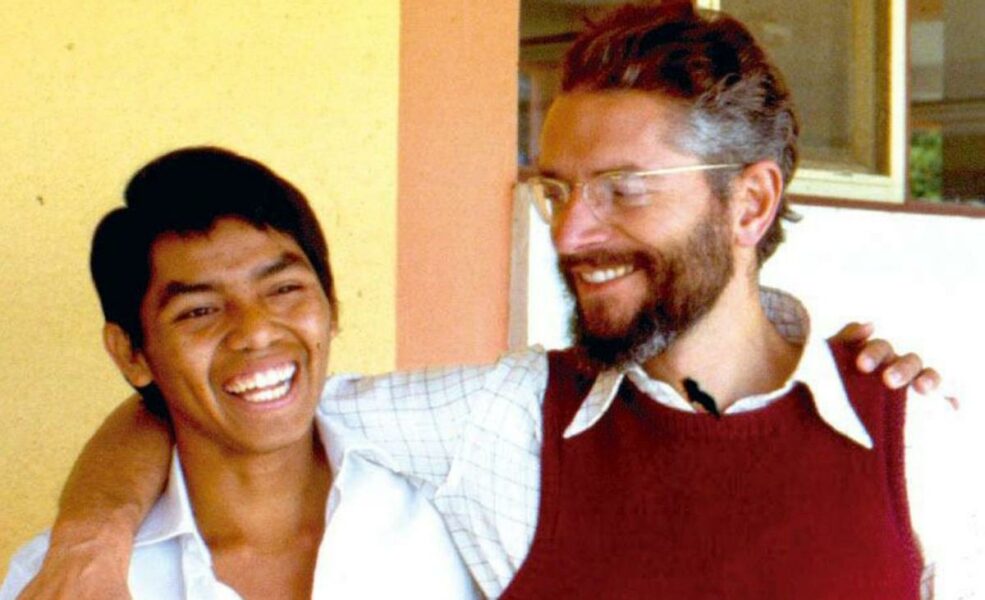
Jesuit Francesc Peris, accused of sexually abusing minors for decades in Spain and Bolivia, has been expelled from the clerical state and from the Society of Jesus after being found guilty in a canonical penal process. The ruling comes nine months after Spanish justice closed the possibility of trying him criminally, considering the reported crimes time-barred.
The decision was announced this Monday, October 5, by the Society of Jesus itself, which also acknowledges “serious errors” in its response to the victims and assumes its “moral and institutional responsibility” for its past actions.
According to El País, Peris, 84, is accused of having abused at least 22 boys and girls between 1974 and 2005. The incidents occurred during different periods of his activity in Spain and Bolivia.
Expelled from the clerical state and from the Jesuits
The canonical penal process has found it proven that Peris committed “various offenses against the sixth commandment of the Decalogue committed with minors (in this case, sexual abuse)” since at least the 1970s.
The ruling establishes his expulsion from the clerical state, described by the Society as “the most serious and permanent penalty provided for by Canon Law for this type of offense.”
Peris is thus permanently barred from exercising priestly ministry.
A second decision adds to this sanction. The Superior General of the Society of Jesus, Arturo Sosa, has also signed the decree expelling Peris from the religious order.
These are two canonically distinct measures: one affects his status as a cleric and the other his membership in the Society. They do not, therefore, equate to excommunication or an “expulsion from the Church.”
The Jesuits explain that both resolutions constitute “the maximum canonical consequences provided for in the two affected areas: his condition as a priest and his membership in the Society of Jesus.”
Peris retains the right to file the appeals provided for by Canon Law.
More than twenty victims and three decades of abuse
The accusations against Peris span more than thirty years.
According to the investigation by El País, the known testimonies place the abuses between 1974 and 2005 and affect at least 22 minors.
Some of the reported incidents took place in Catalonia and others during his stay in Bolivia, where he was transferred in 1982. One victim recounted having suffered abuse at the age of 14 while boarding at the Juan XXIII school in Cochabamba in 1983.
Peris later returned to Barcelona and remained linked to the Casp Jesuit school.
Another complaint refers to incidents that occurred in 2004, when a 14-year-old girl was participating in a Holy Week excursion to Zuriza, in Huesca. The teenager told her parents what had happened, and they reported the case to the school administration.
In mid-2005, Peris was removed for what were then described as “inappropriate conduct” and assigned to activities with adults.
The Jesuits admit “serious errors”
The statement released on Monday does not limit itself to announcing the sanctions against Peris. The Society of Jesus also acknowledges failures in the way it responded to the complaints.
“The Society deeply regrets the harm caused and assumes its moral and institutional responsibility for its past errors,” it states.
The order expressly recognizes and condemns the “serious errors” committed in “listening to, protecting, and responding” to those who reported the abuses and thanks the victims for “the courage and bravery” of their testimonies.
The Jesuits also admit that the conclusion of the canonical procedure is not enough to repair what happened.
“The conclusion of these processes does not in itself repair the harm caused nor does it end the moral and institutional responsibility of the Society of Jesus toward the people who suffered sexual abuse by one of its members,” the statement acknowledges.
The order has reiterated its request for forgiveness and its commitment to continue accompanying the victims.
Peris will continue to live under Jesuit supervision
Expulsion from the Society will not, however, mean that Peris immediately leaves the Jesuit residence where he lives.
Under an agreement reached with the order, he will remain there subject to “constant monitoring and supervision” and bound by strict rules of conduct.
Among the restrictions are the prohibition on maintaining contact with minors or vulnerable adults, leaving the residence without express authorization, contacting victims, or receiving visits without permission.
The decision allows Peris, 84, to remain under surveillance even though he will no longer belong to the Society or be able to exercise the priesthood.
The canonical outcome comes after years of complaints and a criminal route closed by prescription. The Society itself now acknowledges that imposing the maximum penalties provided for does not by itself repair the harm caused and that responsibility toward the victims continues beyond the resolution of the process.