


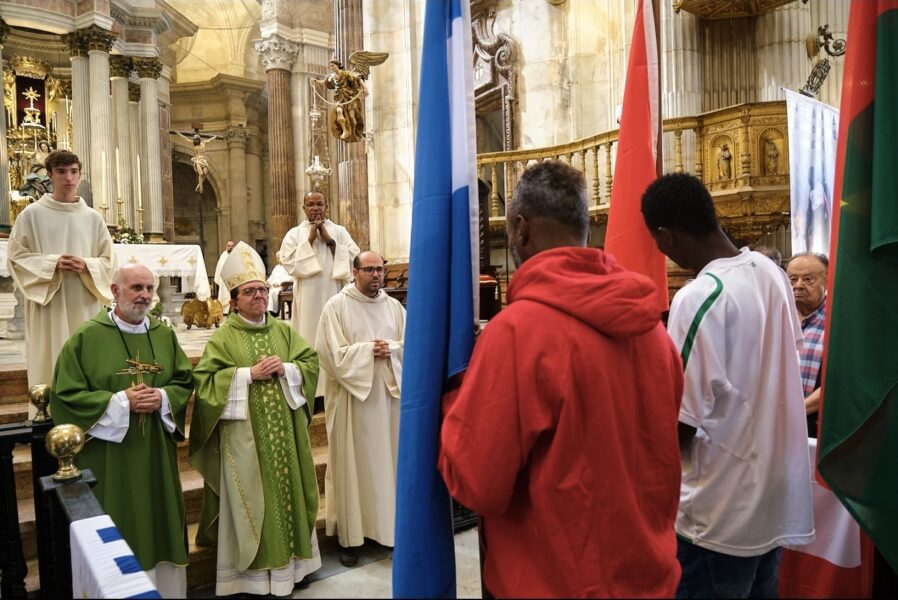
The apostolic administrator of Cádiz and Ceuta, Monsignor Ramón Valdivia, has stated that “the great strength of this Church is that we are all pilgrims, that we are all migrants,” during the diocesan celebration of the World Day of Migrants and Refugees. A speech delivered just two months after the invasion suffered by Ceuta, when the mass entry of immigrants from Morocco subjected the Spanish city to an exceptional situation of pressure, insecurity, and overload.
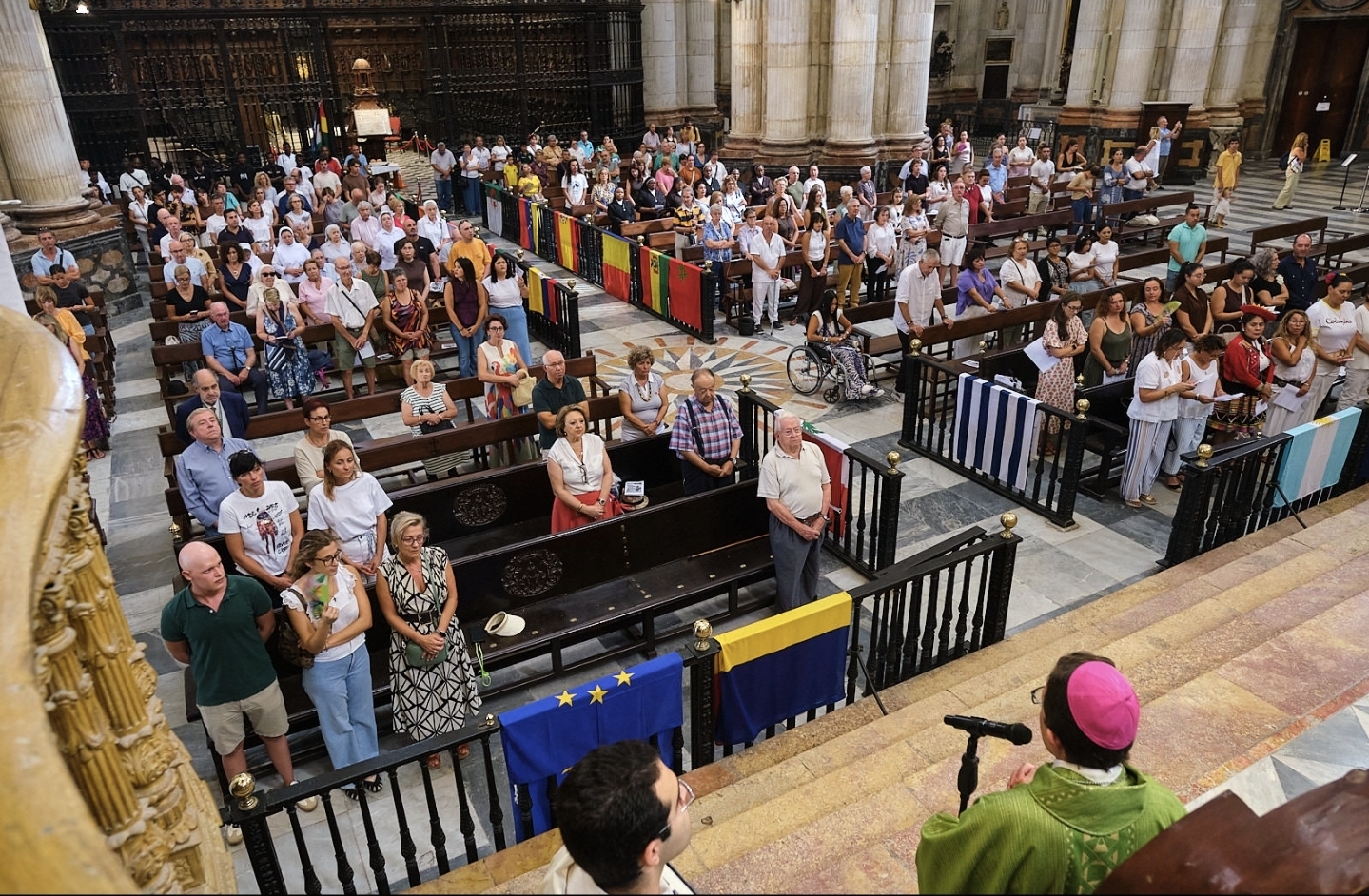
According to the Diocese of Cádiz and Ceuta, Valdivia presided this Sunday over the Eucharist in the Cathedral of Cádiz on the occasion of the “World Day of Migrants and Refugees 2026.” The event was especially dedicated to immigrant and refugee minors under the motto “Even one of these little ones,” inspired by Matthew 18:5.
Read also: “Even one of these little ones”: minors take center stage at the Day of Migrants and Refugees
“We are not passport holders”
During the homily, Valdivia presented immigration from the pilgrim condition proper to Christian life and took the Incarnation of Jesus Christ as a reference.
“Though he was in the form of God, he did not regard equality with God something to be grasped, but chose to dwell among us,” he affirmed.
From this theological consideration, the apostolic administrator transferred the image of Christian pilgrimage to the phenomenon of immigration and contrasted the passport and borders with belonging to the same family in faith.
“We are not passport holders, but bearers of a large heart; not of a border that seeks to limit political ideas, but of one same faith that makes us recognize one another as belonging to the same family,” he maintained.
Valdivia later insisted: “The great strength of this Church is that we are all pilgrims, that we are all migrants, that we all have to walk.”
The statement thus equates, at least rhetorically, two realities of a different nature: the spiritual condition of the Christian as a pilgrim toward the heavenly homeland and the concrete condition of the immigrant, linked to borders, citizenship, rights and obligations, and the legitimate responsibility of States to control their territory.
The speech comes after the invasion of Ceuta
The context is especially significant because Valdivia is not a bishop unfamiliar with the concrete consequences of uncontrolled immigration. As apostolic administrator of Cádiz and Ceuta, he is responsible for the Church in the city that suffered a mass entry from Morocco at the end of July.
The invasion left Ceuta subjected for hours to an extreme situation and caused fear among its inhabitants, as well as deaths and disappearances in the attempt to cross the border.
Valdivia himself acknowledged at the beginning of August that what happened constituted an “international political crisis” and not merely a humanitarian issue. He also admitted the feelings of “anger” and “fear” existing among the people of Ceuta and recalled that it is up to public administrations to guarantee security.
Read also: Ramón Valdivia defends the Church’s action in Ceuta after the invasion: “It has shown its maturity”
The homily now delivered in Cádiz places the emphasis almost exclusively on welcome, fraternity, and the vulnerability of those who arrive. In the information released by the Diocese, there is no reference to the obligations inherent to immigration, to the right of States to control their borders, or to the problems that a massive and disorderly arrival can cause in host communities.
The contrast is particularly striking after what happened in Ceuta and the ecclesial debate that followed the invasion.
Different episcopal voices after the crisis
The president of the Episcopal Subcommittee for Migration, Monsignor Fernando García Cadiñanos, later stated that “migrants are not a threat,” although he expressly recognized the right of States to “manage their borders and control flows for real integration.” He also admitted that Ceuta’s society was “very tense.”
A very different reading was offered by the Archbishop of Oviedo, Monsignor Jesús Sanz Montes. The Franciscan refused to reduce what happened to a simple immigration phenomenon and denounced a “calculated stalking” and a “hybrid war,” while recalling that the young people used to cross the border were also victims of the operation.
Immigrant minors, protagonists of the celebration
Valdivia devoted a good part of his homily to immigrant and refugee minors. “They are small, they are fragile, who at times can be manipulated and are always unprotected,” he affirmed.
The apostolic administrator defended the need to guarantee their care and protection: “We all need care that is absolutely essential and basic.”
The Eucharist included the participation of immigrants residing in the diocese, who carried the flags of their respective countries. The Sisters of the Flock of Mary performed traditional African songs and dances inside the Cathedral of Cádiz.
After the celebration, the day continued at the Tartessos Center with an intercultural gathering organized with the participation of the Diocesan Secretariat for Migration, the Tierra de Todos Center Foundation, and the Cardijn Association.