


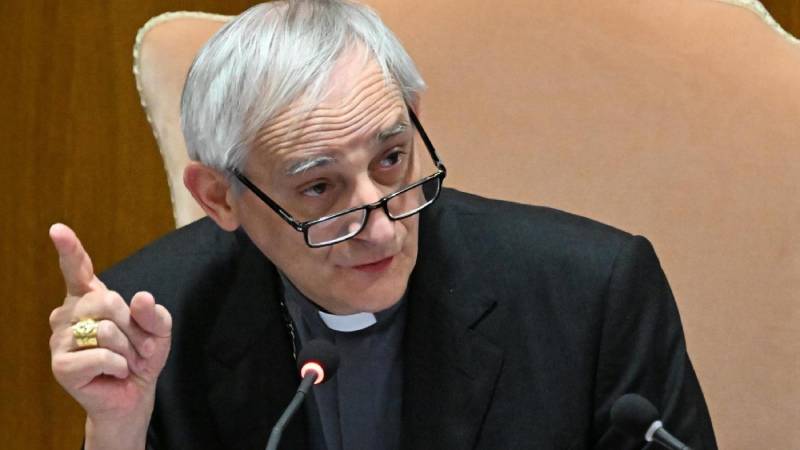
Cardinal Matteo Zuppi, president of the Italian Episcopal Conference (CEI), has rejected the existence of a «right to die» and has called on institutions to effectively guarantee palliative care, pain therapy, and assistance to the sick before «opening other spaces» in end-of-life legislation.
The Archbishop of Bologna addressed the issue this Monday, September 21, during his opening speech at the CEI Permanent Episcopal Council, meeting in Rome. His words come amid the ongoing Italian debate on potential national legislation and regional initiatives related to assisted suicide.
«The right to be cared for, assisted, and never abandoned»
Zuppi recalled the recent pronouncements of the regional episcopal conferences of Triveneto and Apulia on end-of-life issues and maintained that the response to suffering must begin with accompaniment and care for the sick.
«There cannot exist a ‘right to die,’ but rather the right to be cared for, assisted, and never abandoned,» he stated.
The president of the CEI also distinguished between euthanasia, therapeutic obstinacy, and the refusal of disproportionate treatments. Opposition to deliberately causing death, he noted, does not mean defending the prolongation of treatments when they have ceased to offer a benefit proportionate to the patient.
Between these two extremes, Zuppi identified an area in which he considers the institutional response still insufficient.
Palliative care before «opening other spaces»
The cardinal called for the State to address existing gaps in palliative care, pain therapy, home care, hospices, and support for families and those who regularly care for the sick.
Zuppi warned that delays and inequalities in access to these services generate suffering and may leave sick people without the assurance of receiving necessary care.
«Before opening other spaces, the State must address these shortcomings,» he stated.
The president of the Italian bishops maintained that «the true achievement of civilization is not the suppression of life, but care that alleviates suffering» and called for preventing a sick person from coming to consider themselves a burden to those around them.
Italy debates national legislation
The intervention comes as Italy continues to debate how to regulate situations related to assisted suicide following decisions adopted by the Constitutional Court and initiatives promoted in various regions.
The debate also recently reached the Pontifical Academy for Life. Its president, Monsignor Renzo Pegoraro, defended the advisability of approving national legislation that establishes common limits and prevents the proliferation of regional regulations that could be more permissive.
Zuppi also referred to the legislative dimension and called for the issue not to be subjected to electoral or ideological confrontation. He called for a broad parliamentary debate that takes into account, first and foremost, the concrete needs of sick and vulnerable people.
The cardinal linked his intervention to the recent words of Leo XIV on the care of human life and recalled the Pope’s warning against forms of «illusory compassion,» among which he has placed euthanasia.
For the president of the CEI, the response to end-of-life issues must begin by ensuring that the sick can receive care, pain relief, and accompaniment, and that no person is pushed to consider their own existence a burden to others.