


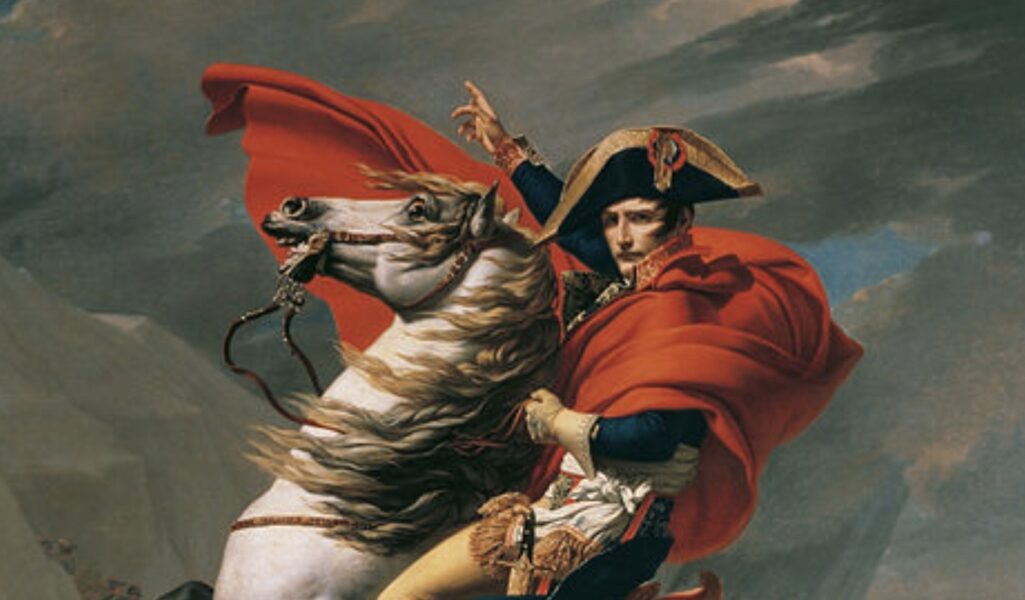
On December 2, 1804, in Notre-Dame, Pius VII anointed a general of the Revolution, and the general crowned himself. There is a pious reading of that morning—the Church returning to the cathedral after the Terror—and another, the one held by those who occupied the pews: Cambacérès, who had voted for the king’s death (with reservations, as was his style), was already arch-chancellor of the Empire, and Fouché, who had also voted for it, was once again minister of Police. Neither of them saw a restoration in that nave. They saw the Revolution dressed in ermine—the way a revolution becomes irreversible when it can no longer be carried out with the guillotine.
Francis was Robespierre. On the reduced scale of these things—one is not going to compare a few unanswered dubia with the Place de la Révolution—he had his Committee, his episcopal purges, his Traditionis custodes, and his cult of the Supreme Being in Amazonian version, with Pachamama in the Vatican gardens as the feast of 20 Prairial. That was visible. Anyone could point it out, and half the Church did.
But he died, in an elevator, in a tragicomic way. And back came the mozzetta and the stole, on the loggia, that May 8, 2025, which Francis had rejected twelve years earlier with a gesture his biographers turned into a program: “Carnival is over.” The Regina Caeli sung in Latin the following Sunday. The summer vacation in Castel Gandolfo, and almost every week since then, from Monday afternoon to Tuesday afternoon. The apartment in the Apostolic Palace, occupied since March 14 after thirteen years empty. The title of Vicar of Christ, which the 2020 Annuario had sent to the attic of historical titles and which the Pope pronounced again in October before the Knights of Columbus. And on Monday, his birthday, the repeal of the salary cut with which Francis had mortified cardinals and employees in 2021.
Everything Leo has reversed from Francis belongs to the stage set. None of that was ever the revolution. Santa Marta was not a thesis. It was a set.
And now review what has not been touched.
Fernández remains at the head of the Dicastery for the Doctrine of the Faith with a provisional title that has already lasted sixteen months, confirmed by a leak to Religión Digital and by no note from the Sala Stampa, and the two documents he had in his drawer when Francis died—the one on Marian titles and the one on monogamy—were issued with Leo’s signature.
Fiducia supplicans has neither been assumed nor corrected: it is there, which is what matters, and in the interview with Elise Allen it remained the starting point.
Traditionis custodes is applied with the regularity of a sacristy clock: of the thirty-four decrees with which the Dicastery for Divine Worship authorized the 1962 Missal in 2025, twenty-seven bear a date after the conclave.
The agreement with Beijing continues to produce bishops with truncated biographies.
Écône consecrated on July 1 without mandate, and Rome punished.
And on Wednesday, three dicasteries published a Note on Nostra aetate with an Ex Audientia of June 22, the same formula with which Francis signed Fiducia, in which proselytism no longer makes sense because the world is a global village and in which Dominus Iesus fits entirely in a footnote.
The Concordat of 1801 is the instruction manual. Napoleon returned to French Catholics the bells, Sunday, and the bishops, and in exchange, in article 13, Pius VII pledged never to disturb the buyers of Church property sold by the Revolution: the Mass in exchange for the receipt of the plunder. Later the Pope had to ask for the resignation of the entire French episcopate, constitutional and refractory alike, so that the First Consul could appoint a new one; the faithful of the bishops who refused founded the Petite Église, and those who accepted discovered in the Organic Articles, added by decree without consulting Rome, that no bull could be published in France without government permission.
Four years later came the Imperial Catechism: Bossuet’s catechism, the one of all time, with a new lesson in which children were taught that failing in their duties toward Napoleon I was to resist the order established by God and to make themselves worthy of eternal damnation (the same year Saint Napoleon was invented, with a feast on August 15, in case the Assumption was short on content). No one touched the Our Father. A paragraph was added.
Wednesday’s Note is the Imperial Catechism of this pontificate, and these pages have already explained how it works: it cites Nostra aetate up to the sentence before the obligation to proclaim Christ, cites Paul VI up to the circle before the one true religion, cites John Paul II’s 1986 audience skipping the number where it said that only in Christ are men saved. No one touched the text. A paragraph was added, number 54, where doctrinal firmness and proselytism no longer make sense, not because Christ attracts, as Leo himself told the cardinals in January, but because the world has become an interconnected village.
And as in 1806, whoever protests will have to explain why he protests against a text that affirms, in so many words, that Christ is the only redeemer and that there is no room for a world religion. Try explaining that to the parish priest.
Here is the difference with Francis, and it is a difference for the worse. Against Robespierre it was enough to have eyes. Against Bonaparte one also had to distrust them, because the eyes saw the Pope in Notre-Dame, the bells again in the villages, and the Gregorian calendar restored from January 1, 1806 (good-bye to Brumaire, good-bye to Thermidor: the Revolution even returned the months).
It is said—and the anecdote is one of those that, si non è vera è ben trovata—that after the Te Deum celebrating the Concordat, a general named Delmas told Napoleon that it was a fine piece of Capuchin rhetoric and that all that was missing were the hundred thousand men who had been killed to destroy what he was restoring.
The general was completely wrong.
Napoleon was not restoring anything: he was placing the Church at the service of the State the Revolution had built, and to the hundred thousand dead he gave, as a bonus, a Mass.
The Jacobins who grumbled about the Capuchin rhetoric are today the strict-observance Bergoglians who grumble about the mozzetta, and their grumbling is the best propaganda Leo has: if those complain, the traditional reader thinks, something good must be happening, and he relaxes. It is what good old Wanderer experiences every time he mocks Piqué.
Napoleon did not put on the crown to restore the monarchy. He put it on so that no one could restore it: with the throne occupied, the counter-revolution was left without a throne to claim (and, incidentally, to dissolve the Holy Roman Empire, whose last holder was called, to complicate the nickname, Francis II). The mozzetta serves the same purpose. It is not a concession to those who asked for a restoration; it is their eviction.
While Francis lived, the Church at least knew where the revolution was: opposite, without mozzetta, in Santa Marta. Now it lives in the Apostolic Palace, sings the Regina Caeli in Latin, and signs, Ex Audientia, that proselytism no longer makes sense.
The Revolution, the consuls proclaimed in December 1799, is fixed in the principles with which it began: it is finished. It is the most exact description that has been written of this pontificate, and Bonaparte signed it. All it lacked was the mozzetta.
Read also