


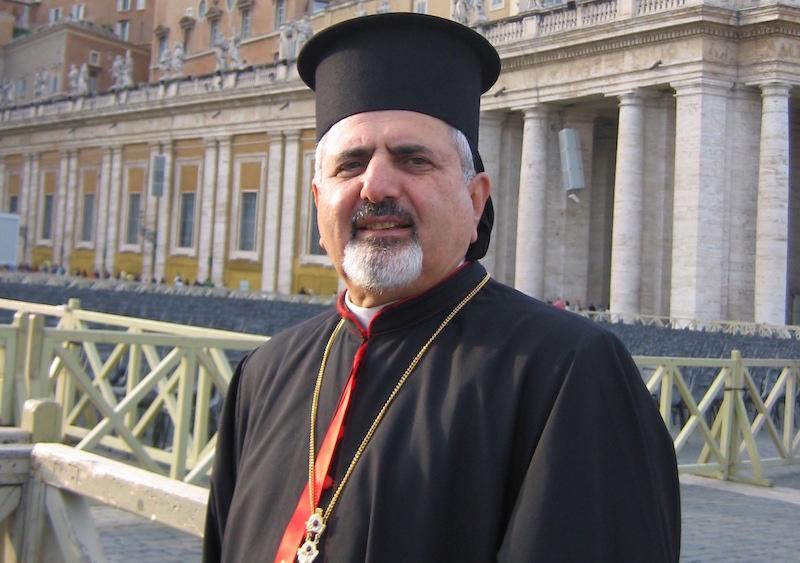
The reform with which Leo XIV allowed the synods of the Eastern Catholic Churches to promote the removal of their own patriarchs already has its first case. The bishops of the Syriac Catholic Church have initiated proceedings against Patriarch Ignace Youssif III Younan, after several years of tensions over the governance of this Eastern Church.
The procedure was launched on September 4, just six days after Leo XIV promulgated the motu proprio Mutua Concordia. According to The Pillar, the most senior bishop among the Synod members in favor of removal activated the mechanism provided for by the new legislation. Younan, 81, has governed the Syriac Catholic Church since 2009.
Read also: Eastern synods may remove their patriarchs with the Pope’s assent
Three years of tensions over the convocation of the Synod
The conflict did not arise with Leo XIV’s reform. According to sources cited by The Pillar, the discontent among the Syriac bishops has been building for approximately three years and one of its main causes is Younan’s refusal to convene the Synod of Bishops regularly despite repeated requests from its members.
This issue is of particular importance in an Eastern patriarchal Church. The patriarch is Pater et Caput —Father and Head— of his Church, but his governance is exercised together with the Synod, which has much broader competencies than those of a Latin Church episcopal conference. Among these is decisive participation in the election of bishops and of the patriarch himself.
The situation described in the Syriac Church coincides precisely with the problem Leo XIV sought to address through Mutua Concordia: a serious breakdown between the patriarch and the bishops that makes the normal functioning of the synodal structure impossible.
Younan responds by finally convening the bishops
After the procedure for his possible removal was set in motion, Younan has called a meeting of the Synod. The bishops in favor of activating the new norm had planned to meet between the end of September and the beginning of October, while the convocation issued by the patriarch places the meeting in November.
The reaction does not appear to have resolved the crisis. Sources close to the Syriac Church cited by The Pillar maintain that a broad sector of the episcopate has the impression that the convocation comes too late after years of requests to convene the Church’s governing body regularly.
The conflict must now be resolved in accordance with legislation that has never been applied.
Two-thirds of the bishops and the assent of Leo XIV
Leo XIV promulgated Mutua Concordia on August 29 to fill a gap in the Code of Canons of the Eastern Churches. Until then, the patriarchal see became vacant by death or resignation of the patriarch, but there was no specific procedure to address a serious and irreparable breakdown between the patriarch and his Synod when the latter refused to resign.
The new norm establishes that, in the event of a serious cause, the Synod may formally request the patriarch to present his resignation. If he refuses, the procedure may continue under the presidency of another bishop and culminate in a secret vote.
To remove the patriarch, a majority of two-thirds of the members of the Synod with the right to vote is required. The patriarch must first be given the opportunity to defend himself, and the synodal decision ultimately needs the assent of the Roman Pontiff to take effect.
The reform thus grants Eastern synods a capacity for action they did not expressly possess until now, while retaining the final word on removal in Rome.
Patriarch since 2009
Ignace Youssif III Younan was born in Hassaké, Syria, in 1944 and was elected Patriarch of Antioch of the Syrians in January 2009. He had previously carried out much of his episcopal ministry in the United States, where he was the first bishop of the Eparchy of Our Lady of Deliverance of Newark.
From his patriarchal see in Beirut he has been one of the voices of Eastern Christians in the face of the wars and persecutions suffered by their communities in Iraq and Syria. The Syriac Catholic Church has about 160,000 faithful, mainly in Syria, Iraq, and Lebanon, as well as communities established in the diaspora.
The crisis now places Younan in an unprecedented situation. The same Synod that participates in the governance of the Syriac Church must decide whether it considers the rupture with its patriarch irreparable and whether there are sufficient grounds to request his departure.
Mutua Concordia was presented by Leo XIV as a way to strengthen the internal autonomy and synodal tradition of the Eastern Churches. Just six days after its promulgation, that reform ceased to be a provision for exceptional cases: the Syriac Catholic Church has become the first arena in which it will be necessary to see how far it reaches in practice.