


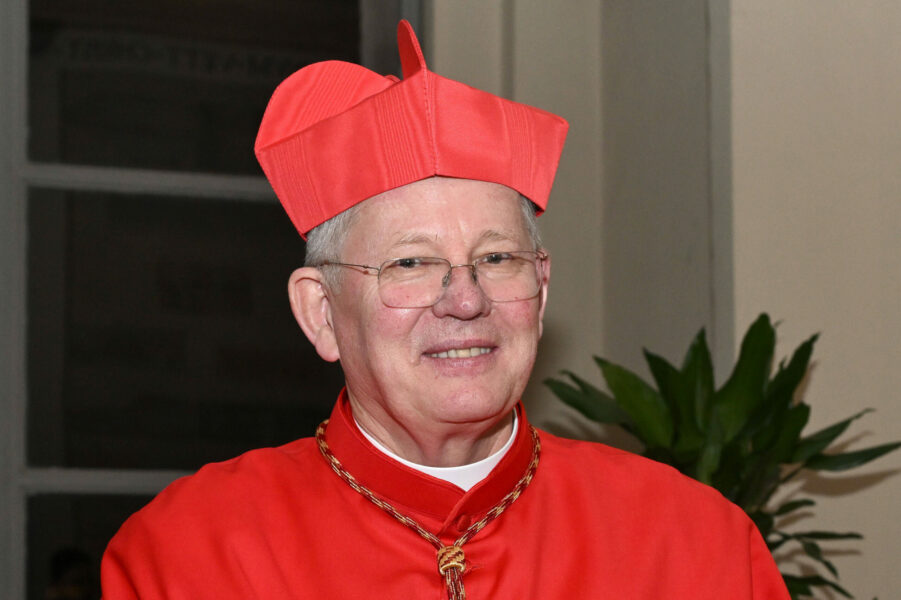
Brazilian Cardinal Jaime Spengler, Archbishop of Porto Alegre and president of the Latin American and Caribbean Episcopal Council (CELAM), has defended the need to deepen the “inculturation” of the Gospel and has called for sufficiently prepared individuals to develop this process theologically and pastorally.
“The task consists in incarnating the Gospel in different cultures, without superimposing it on what is good in those cultures and without denying what properly belongs to the Gospel,” Spengler stated in an interview given to Advaticanum.
The statements come just days after the Undersecretary of the Dicastery for Divine Worship and the Discipline of the Sacraments, Monsignor Aurelio García Macías, reminded 49 new bishops of the limits that must govern any process of liturgical inculturation: “No culture is the Gospel” and the liturgy “belongs to Christ and to the Church”.
Spengler also wants to advance in the liturgical field
The president of CELAM acknowledged that this process presents significant difficulties.
“This represents a considerable challenge, both theologically—how to develop a truly inculturated theology—and pastorally, in the way we live the faith in an inculturated manner,” he explained.
Spengler therefore considers it necessary to have “capable minds” that can delve deeper into these issues.
This is not a new position. During the 2024 Synod of Bishops, when the possible configuration of an Amazonian rite was also being debated, the cardinal defended another path: deepening the inculturation of the Roman rite itself in different realities, rather than creating an entirely new rite.
As an example, Spengler recalled an assembly of the Ecclesial Conference of the Amazon (CEAMA) held in 2023, in which indigenous people participated in altar service “with a dignity, reverence, and care that we sometimes do not even see in our most solemn celebrations.”
After the consistory convened by Leo XIV in January of this year, the cardinal again maintained that there exists a Roman rite that must be inculturated in different ecclesial realities and linked this process to greater liturgical formation for the faithful as a whole.
Inculturation also requires converting and purifying cultures
Inculturation is not, in itself, a novelty or a concept foreign to the Church’s evangelizing tradition. The decisive question lies in what is understood by it and what its limits are.
Saint John Paul II taught in Redemptoris missio that through inculturation the Church “incarnates the Gospel in diverse cultures,” assuming what is good in them and renewing them from within. At the same time, he warned that this process “must not in any way compromise the characteristics and integrity of the Christian faith”.
The International Theological Commission likewise explained that the relationship between Gospel and culture does not consist simply in recognizing and assuming the values existing in each people.
Evangelization also requires a conversion of mentalities and a correction of those customs incompatible with the faith. Cultures, the document states, must be “purified and restored in Christ.”
It is precisely the aspect on which García Macías insisted last week before the new bishops: the Gospel “welcomes and purifies, assumes and transforms, confirms and corrects, elevates and, when necessary, calls for a break.”
In this way, inculturation does not mean adapting the content of the faith to the demands of each culture. It welcomes whatever is true, good, and beautiful in them, but also subjects their elements to the judgment of the Gospel.
The limits in the liturgy
The issue acquires particular importance when inculturation directly affects the celebration of the sacraments.
The Undersecretary for Divine Worship warned last week against a conception of inculturation reduced to introducing songs, dances, instruments, or local customs into celebrations. He also pointed out three specific risks: unnecessary innovation, syncretism, and folklore.
“The liturgy is not a cultural performance,” García Macías then affirmed, who also recalled that any adaptation must respect the faith of the Church, favor interior participation, and have the discernment and approval of the corresponding ecclesiastical authority.
In contrast to these limits, Spengler now raises the need to continue deepening a “truly inculturated” theology and pastoral practice, also in the realm of the Roman rite.
Read also: Final Synod Document: married priests and deaconesses
Read also: Texts from the small circles published: viri probati, deaconesses, Amazonian rite, ecology…