


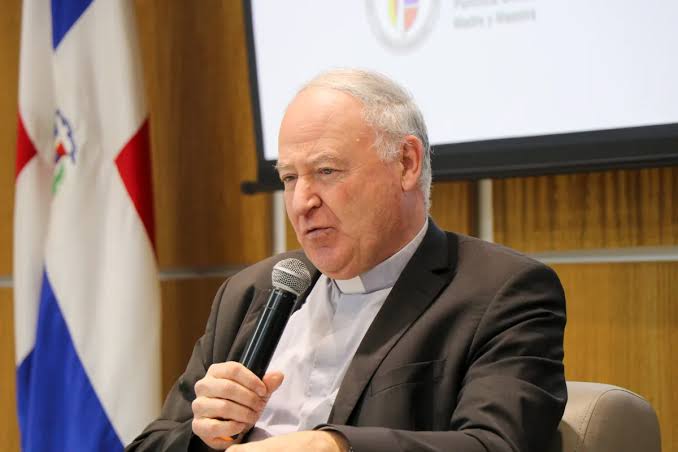
The president of the Pontifical Academy for Life, Monsignor Renzo Pegoraro, has suggested that Catholics could give their assent to a possible “imperfect law” on assisted suicide if it prevented the approval in Italy of “more permissive and libertarian” norms. At the same time, he stated that “there is no right to assisted suicide” and that healthcare professionals must never cause death or assist in suicide.
Pegoraro, appointed president of the Academy by Leo XIV in May 2025, spoke in an interview with Avvenire after the Regional Council of Veneto approved a regulation to govern access to medically assisted suicide.
The possibility of an “imperfect law”
Asked about the need for national legislation on end-of-life issues, Pegoraro noted that the Italian Parliament must study the matter and that the approval of a new law cannot be taken for granted.
The president of the Academy recalled that Italy already has Law 219/2017 on informed consent and advance directives, as well as legislation on palliative care. In his view, these norms allow for addressing most situations involving seriously ill patients.
It is in this context that Pegoraro raises the possibility that Catholics might support a potential national regulation they consider less harmful than other alternatives.
“From a Catholic perspective, it ultimately comes down to assessing whether we are facing an ‘imperfect law,’ to which it would nonetheless be morally acceptable to give one’s assent, considering that Parliament could quickly approve more permissive and libertarian laws, far more damaging to the dignity of the patient and the value of life,” he stated.
Pegoraro added that any national legislation should remain within the limits set by the Italian Constitutional Court.
“There is no right to assisted suicide”
In the same response, the president of the Pontifical Academy for Life maintained that Italian law does not recognize a right to receive assistance in committing suicide.
“There is no right to assisted suicide. In Italy, there is an obligation of the State to take care of the patient, and also to respect the individual’s will not to receive treatment,” he said.
Pegoraro recalled that assisted suicide remains a crime in Italy. Constitutional Court ruling 242/2019 established certain cases in which such conduct is not punishable and called for legislative intervention on the matter.
In the prelate’s view, it is up to the national legislature to address an issue of this nature, while the regions can only regulate procedures derived from the framework established by the Constitutional Court.
Criticism of the law approved in Veneto
Pegoraro was critical of the speed with which Veneto’s new regulation—his home region—was processed.
“I believe that in the case of Veneto, even more time should have been taken to listen to the many local organizations serving patients and ensuring the proper functioning of the palliative care network,” he noted.
“Haste is never a good advisor. Especially when intervening on a norm concerning the very meaning of life,” he added.
The president of the Academy did, however, welcome the fact that the regulation includes the obligation to offer a path of palliative care and psychological support, as well as the possibility of informing the applicant about organizations whose statutory purpose is the protection of life.
Pegoraro noted that some people who had requested access to assisted suicide in Veneto ultimately chose to continue facing their illness after receiving accompaniment, information about the healthcare system, and palliative care.
“The request to hasten the end of one’s days—though not always—is a request for a life that is cared for, for the elimination of pain, or stems from the fear of becoming a burden to others. It is a request not to be left alone,” he explained.
“True medicine, when it can no longer cure, always continues to care”
Pegoraro rejected the idea that causing death could be incorporated into the proper purpose of medicine.
“No conception of medical science can ever regard it as a science at the service of death,” he stated.
The prelate distinguished assisted suicide from the refusal of futile or disproportionate treatments. He recalled that patients may reject or suspend treatments and be accompanied through deep sedation when necessary.
“True medicine, when it can no longer cure, always continues to care,” he noted.
Pegoraro also warned that seriously ill patients may be especially vulnerable in a society where he believes the value of life is diminishing, and called for dedicating “time, resources, and affection” to them.
“Fewer weapons and more palliative care”
The president of the Academy argued that Italy must effectively guarantee all citizens access to palliative care and provide the necessary financial resources for it.
“A good law on palliative care already exists in Italy and recognizes an explicit right to benefit from it. But those who present themselves as defenders of life must also find the money to implement it. Fewer weapons and more palliative care, I would say,” he stated.
Pegoraro ultimately insisted on the obligation of healthcare professionals to accompany the patient until the end of life without causing death.
“According to the Church’s Magisterium, every healthcare professional should always be committed to saving life, accompanying the final stage of existence, and never causing death or assisting in suicide,” he noted.
“Suicide has always been something to be prevented, never supported,” he added.
Pegoraro called for the Italian Parliament to hold a “deep and serious” discussion on the issue and concluded his reflection by recalling a phrase from criminologist Nigel Walker: “The legislation of one generation may become the morality of the next.”
“What ‘morality’ do we want to build for the young people of tomorrow?” he concluded.