


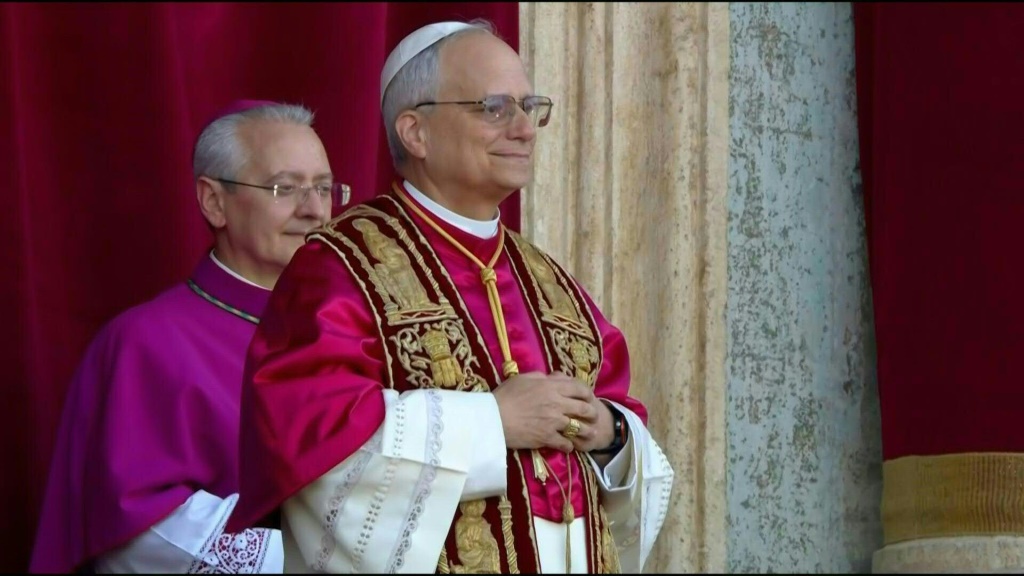
Pope Leo XIV has been in office for more than fifteen months, and it is already possible to describe his method of governance with notarial precision: it consists in not governing conflicts. He governs everything else. He appoints substitutes, tweaks regulations, convenes consistories of timed listening, corrects the Vicariate of Rome after the required study group. But the burning files remain exactly where Francis left them, with that «donec aliter provideatur» of May 9, 2025 turned into the unofficial motto of the pontificate.
What then seemed like transitional prudence is today a system: the bet that problems will expire before he has to solve them.
In the United States there is a figure for this: the pocket veto. The president who does not want to sign a law or pay the political price of vetoing it keeps it in his pocket and lets the end of the legislative session kill it for him. Prevost, born in Chicago, knows the figure. His pontificate is elevating it to canonical status.
Let us begin with the prefect. He has not touched Víctor Manuel Fernández: he has left him where he was, which is the cheapest way to confirm him. The only “confirmation” on record is a leak to Religión Digital in June 2025, never backed by any note from the Sala Stampa. Since then the Pope receives him, shields him when the Marian storm intensifies, and entrusts him with dealing with Écône, including the required approval. What he does not do is pronounce on the substance: Fiducia supplicans remains in force without Leo XIV having made it his own or corrected it, requests for a change pile up without response, and the cardinal governs the most delicate dicastery of the Curia with a provisional title that has already lasted fifteen months. In September he criticized ritual blessings of same-sex couples in northern Europe; the document that gave rise to them remains intact. Maintaining is also deciding, but without a bill: if something explodes, everything was provisional.
Germany is the textbook case. The Synodal Conference, heir to the vetoed synodal council, was approved in February by the German bishops with a two-thirds majority barely reached, four dioceses on the sidelines (Cologne, Regensburg, Eichstätt, Passau) and Cardinal Marx exclaiming “I don’t want this!” before the mechanism of episcopal oversight. On March 31, Wilmer traveled to Rome, delivered the statutes to Iannone and requested recognition by the Holy See. Five months later, the official response is that Rome “still needs some time.” The constituent session was scheduled for November 6 and 7 in Stuttgart: Wilmer himself now admits that it will probably not be held. There is no need to say no when the calendar says no for you. Asked about the matter on his first trip, the Pope dispatched the question with a “we’ll see” that deserves a place in the manuals of pontifical diplomacy. And in the background, as we reported a few days ago regarding the dinner at Castel Gandolfo with the major American donors, the arithmetic that makes the wait possible: a treasury that depends less and less on the Kirchensteuer negotiates more calmly.
With the Opus Dei the wait is no longer measured in months but in pontificates. Francis ordered the adaptation of the statutes in 2022 with Ad charisma tuendum; the Work submitted its proposal on June 11, 2025; and in February of this year Leo XIV personally informed Ocáriz that the process “remains in the study phase” and that “a publication date cannot yet be foreseen.” Four years of statutory provisionality for the institution most obsessed in the Church with its own legal security, with the Argentine cause of the auxiliary numeraries reactivated in the background and the centenary of 2028 approaching without anyone in the prelature knowing what the Work will canonically be when it celebrates it. The waiting room as a legal regime.
Torreciudad is the perfect miniature of the method. Arellano, dean of the Rota, was appointed in October 2024 as plenipotentiary pontifical commissioner to settle the dispute between the prelature and Bishop Pérez Pueyo. He listened to the parties, drafted his report and delivered it. The report has been gathering dust for months on the Pope’s desk, pending an evaluation that does not arrive. On September 12, the commissioner will preside over the Marian Family Day at the disputed shrine with nothing to announce: a plenipotentiary whose only power exercised to date is patience.
Traditiones Custodes is another example of how inaction explodes: the FSSPX, needing to secure its spiritual nourishment, has blown up what was a time bomb.
And then, for those in Madrid, there is Cobo. When Leo arrived at the papal throne, he privately lamented that “this one knows everything about me.” Yet it seems it has not mattered, and the man from Sabiote is stronger than ever and has surrendered the Valley of the Fallen along the way.
Deciding has a price and waiting seems free, thinks Leo. It is the calculation of the bureaucrat, not of the pastor, and it has a flaw: ecclesial problems do not die on their own; they explode. “We’ll see,” the Pope said. We are seeing it.