


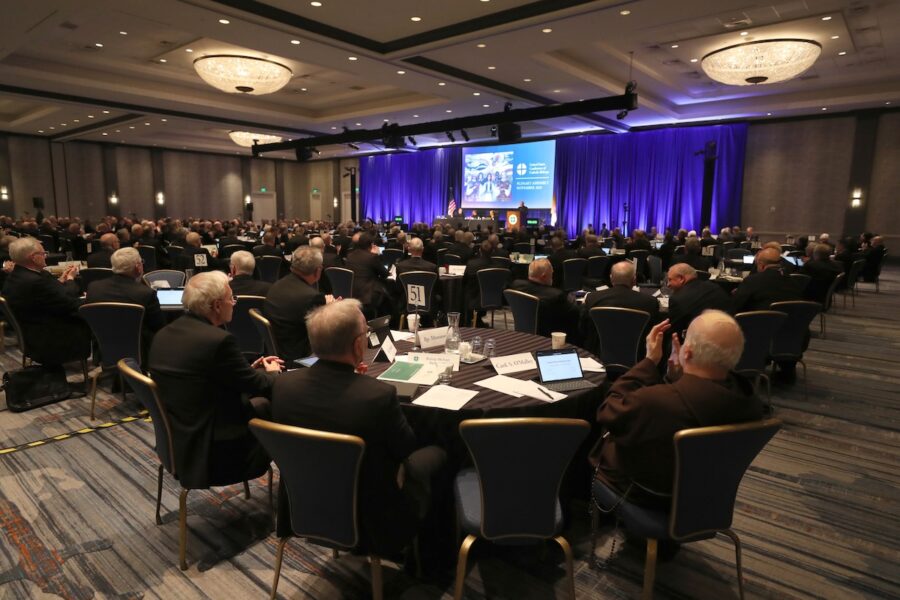
The United States Conference of Catholic Bishops (USCCB) received a federal award of nearly 141 million dollars under the Preferred Communities program, aimed at the resettlement and assistance of especially vulnerable refugees. An investigation published by Effort focuses on the strong growth of this program during the Biden Administration and on the weight that public funding has reached in several religious organizations dedicated to migration services.
The data collected show that the USCCB was not an isolated case. Among the major beneficiaries are Church World Service, Lutheran Immigration and Refugee Service —now Global Refuge—, Episcopal Migration Ministries, HIAS and other organizations that develop reception and resettlement programs in the United States.
Nearly 141 million for the USCCB
The award corresponding to the U.S. Episcopal Conference began in September 2021 and amounted to 140,937,398 dollars. According to the records collected by Effort, until the end of the grant period, slightly more than 80 million dollars had been counted in disbursements.
The Preferred Communities program falls under the Office of Refugee Resettlement, part of the U.S. Department of Health and Human Services (HHS). Its goal is to facilitate the resettlement of especially vulnerable refugees in communities prepared to meet their needs.
The volume of the program grew considerably starting in 2021. The analysis estimates that the cumulative obligations of these grants ultimately exceeded 1 billion dollars, after successive expansions in the following years.
Among the awards collected by the investigation are approximately 162 million dollars for Church World Service, 159 million for Global Refuge, 139 million for HIAS and nearly 80 million for Episcopal Migration Ministries.
The weight of public funds in the USCCB’s accounts
The issue becomes more relevant when looking at the general accounts of the Episcopal Conference.
According to the USCCB’s audited financial report for fiscal year 2024, cited in the investigation, the Conference recorded 180.4 million dollars from government contracts and grants. That amount represented 81.8% of its revenue during the fiscal year.
Not all of those funds came from Preferred Communities. The USCCB participates in various government programs related to refugees, unaccompanied foreign minors and other forms of migration assistance.
Within the episcopal structure, Migration and Refugee Services (MRS) concentrates a large part of this activity. The investigation notes that this department represents a substantial portion of the USCCB’s operating expenses and that it assumed approximately 13.4 million of the 36.6 million dollars allocated by the Conference to salaries, taxes and benefits during 2024.
Religious organizations dependent on migration contracts
Effort extends its analysis to other organizations linked to different Christian denominations and maintains that some depend very significantly on public money allocated to migration programs.
In fiscal year 2024, Global Refuge reported total revenues of 303.6 million dollars, of which approximately 291.9 million came from the Government. Church World Service recorded nearly 282.9 million in revenue, with about 251.4 million coming from government funds.
Based on these figures, Effort uses a particularly critical formulation and financially describes some of these organizations as “migration contractors with a smaller stake in the churches.”
The data themselves show the heavy weight that public immigration and refugee programs have acquired within the finances of several of these entities.
Public funding and opposition to Trump’s immigration policies
The investigation also points to a politically relevant circumstance: several of the organizations that benefited from these funds have become public critics of Donald Trump’s immigration policies.
The USCCB and other religious organizations have questioned measures related to deportations, border security, restrictions on refugee resettlement and reductions in aid intended for foreigners.
Effort contrasts that public activity with the economic dependence these organizations developed on federal programs in previous years.
In the specific case of the USCCB, the data thus raise a question that goes beyond the Preferred Communities grant: to what extent the significant presence of government funds allocated to immigration and refugees conditions the economic structure of the U.S. Episcopal Conference.
A large part of the awards analyzed also come to an end during 2026. According to Effort, approximately 1.020 billion dollars in Preferred Communities grants are scheduled to expire this year, while the question remains open as to which programs the Trump Administration will maintain or renew.