


By Stephen P. White
Next week, my wife and I will celebrate our 20th anniversary. We had barely finished high school when we met, just a year older than our eldest daughter is today. That’s enough to stir the emotions of any middle-aged man, even one with a touch of cynicism.
Yet, for the most part, I am grateful for all the undeserved blessings that have shaped our life over the past two decades. And as gratitude always does, it moves us to share. That is why, in a spirit of thanksgiving, I take the liberty of offering you, dear reader, some unsolicited advice on marriage from someone who has been at it for quite some time.
Obviously, these brief reflections are intended first and foremost for the young, but if there is any wisdom in them, I hope that those who are not so young may also benefit.
First: marriage is not the summit of the mountain; marriage is base camp. Perhaps it is because young people marry later, or perhaps because Catholic courtship is full of complications these days, but it seems that more and more young people see marriage as an ultimate achievement rather than a humble, though joyful, beginning.
And it is not hard to understand why: years of discernment, education, formation, and career planning precede this decision, which is the greatest one young people make. It is often the first choice they consciously face as irrevocable. They feel the enormous weight of the decision and are painfully aware of the costs (which they see around them) of getting it wrong. Yet the meaning of marriage is not simply to arrive at the married state, but to begin something entirely new.
This brings me to my second piece of unsolicited advice. Marriage—the grace of the sacrament—is for the spouses; the wedding is for everyone else. Everyone wants their wedding day to be special and memorable. And given what marriage means, that is not a bad desire. However, there is also the temptation to turn the wedding celebration into a kind of ultimate and definitive expression of oneself.
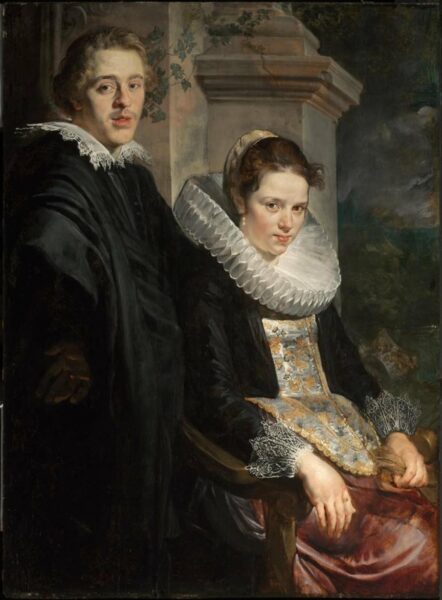
When a man and a woman are united in marriage, the whole community rejoices. Something new has come into existence: not only a new bond between two people, nor merely a lasting tie between already existing families and communities, but something entirely new. A new society has been formed, and the entire community recognizes and celebrates it. The wedding is a cause of joy for the couple, of course, but also for all of us. The celebration is, literally, a celebration of the common good. Do not spoil that by trying to make everything revolve around yourselves.
Speaking of not making everything revolve around oneself, here is my third piece of advice. Cling to Christ; cling to the Sacraments. It is good advice for everyone, but it is especially critical for marriage. One of the most important “skills” in married life is learning to ask for forgiveness and to apologize. The Sacrament of Confession is particularly important. It forces us to be honest with ourselves and with God. It requires us to own our failures, to be accountable, to promise improvement, and then to strive to do so. The devil loves infected wounds. Frequent Confession not only heals sin before it has a chance to fester, but it also trains us to face our own mistakes with honesty and in a timely manner. This is an indispensable benefit in married life.
The fourth piece of advice: the average age of first marriage in the United States is approximately 30 years. It varies a little between men and women—men tend to marry a bit later—but 30 is a good approximation. The average life expectancy of Americans is about 80 years. Again, the figure varies a little between men and women—men tend to die a bit younger—but 80 is the general average.
What this means is that if one marries at 30 and lives to 80, and everything goes as planned, one can reasonably expect to spend more than half of one’s marriage married to a spouse who is over 50. Choose your spouse accordingly.
Marriage will demand more of you and your spouse than you can reasonably be expected to handle. You will learn to handle it anyway. You will grow in courage by facing your fears. You will grow in faith by relying on trust. You will grow in love by giving more of yourselves than you thought possible.
Do not underestimate the advantages of starting a family while you are still young and inexperienced. Security is important; waiting until finances, education, career, and everything else are settled is often a mistake. Marriage is a risk that two people take together. Pretending that marriage offers material certainties is asking it to give something it cannot.
On the other hand, marriage does offer certainties in other respects. You know precisely for whom you are living (and dying). That is, in my experience, one of the most liberating experiences in life. Marriage brings with it an endless array of challenges and uncertainties; but it also removes an endless array of challenges and uncertainties. Commitment—an irrevocable, lifelong commitment—is incredibly liberating.
The same is true of children. I know many people who would have loved to have more children. I know very few couples (in fact, none) who wish they had had fewer. The life change that comes with getting married pales in comparison to the change that comes with having children. That can be frightening. It is certainly difficult. Yet raising our children is the most rewarding and worthwhile endeavor my wife and I could have undertaken. It has made our life infinitely richer and our marriage infinitely stronger.
Which brings us to my final and most practical piece of advice: sleep is sacred; buy the biggest bed you can reasonably afford. And always remember that the Lord provides.
About the author
Stephen P. White is executive director of the Saint John Paul II National Shrine and a fellow in Catholic Studies at the Ethics and Public Policy Center.