


Twenty-two women from the Loyola Community left written testimonies in the year 2000 about alleged spiritual, psychological, and sexual abuses attributed to Marko Ivan Rupnik. The letters, whose existence had not been made public until now, add a new piece to a case that remains pending resolution in the Vatican and show that numerous members of the community had already put their accusations in writing more than two decades before the scandal became public.
According to OSV News, the letters were written during Easter of the year 2000 at the instruction of Ivanka Hosta, then superior of the Loyola Community, and were addressed to Rupnik himself. The documents were preserved in the community’s archives, now under the custody of the Archdiocese of Ljubljana, in Slovenia.
The Vatican confirmed on July 22 that the canonical criminal trial remains open and described as “completely unfounded” the reports of an alleged acquittal of the former Jesuit. The representative of some of the complainants had expressed her dissatisfaction just one day earlier over the limited information received about the progress of the proceedings.
Twenty-two testimonies among about 40 religious sisters
Fabrizia Raguso, a former member of the Loyola Community and currently a professor of Psychology at the Catholic University of Portugal, is the only woman connected to these letters who has agreed to be publicly identified.
Raguso explained to OSV News that about 40 members of the community were instructed to write to Rupnik on the occasion of the Jubilee of the year 2000. Of them, 22 reportedly described different forms of abuse.
“During Easter of the year 2000, Ivanka Hosta, superior of the Loyola Community, forced us to write a letter to Marko Rupnik in which we described our relationship with him, what he had done to us, and then we had to forgive him,” she stated.
According to Raguso, the superior justified the request by the need to seek reconciliation with Rupnik on the occasion of the Jubilee. The former religious sister says she does not know whether the letters ultimately reached the priest.
The documents reportedly describe alleged situations of manipulation, abuse of authority, pressure, and physical and sexual aggression. Sources familiar with their content told the outlet that several women also described the alleged use of spiritual direction and religious language to pressure them into acts presented as expressions of purity or the will of God.
Some testimonies further claim that Rupnik allegedly used previous experiences of abuse suffered by some of the women to perpetrate new forms of abuse against them. Raguso, for her part, claims to have been a victim of spiritual abuse, but not sexual abuse.
Testimonies written long before the case became public
The date of the letters is one of the most significant elements of the revelation. The documents were written 22 years before the accusations against Rupnik became public at the end of 2022.
Complaints about his behavior date back even further. In the early 1990s, reports had already reached superiors of the Society of Jesus and the then Archbishop of Ljubljana, Alojzij Šuštar. Rupnik was removed from the Loyola Community in 1993 and later moved to Rome, where he founded the Aletti Center.
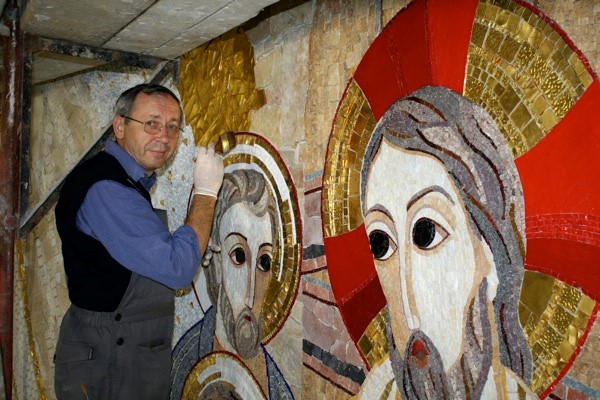
His artistic career, however, continued to grow. When the letters were written in 2000, Rupnik had already created the mosaics for the Redemptoris Mater Chapel in the Vatican Apostolic Palace. In the following years, he received commissions for some of the main Catholic churches and shrines in the world, including Lourdes and Fátima, the Basilica of Saint Pio of Pietrelcina in San Giovanni Rotondo, the National Shrine of Saint John Paul II in Washington, and the Almudena Cathedral in Madrid.
The timeline thus raises a question that goes beyond the specific content of the new letters: for years, complaints and testimonies about the priest’s conduct existed while his prestige and presence in top-level Church institutions continued to grow.
Nine of the 22 testified again in 2021
The letters were not entirely disconnected from later investigations. Nine of the 22 women who reportedly described abuses in 2000 gave testimony in a preliminary investigation commissioned by the Jesuits in 2021 and conducted by an external person outside the Society of Jesus.
That investigation concluded in January 2022, finding the accusations received to be substantiated, according to the order itself.
By then, Rupnik had already been the subject of another proceeding for an offense related to the sacrament of Penance. In 2018, the Jesuits received an accusation that he had sacramentally absolved a woman after committing a sin against the sixth commandment with her.
The preliminary investigation found the complaint credible, and the matter was referred to the then Congregation for the Doctrine of the Faith. Rupnik was found guilty of the offense of absolving an accomplice and was excommunicated in 2020. The excommunication was later lifted after his repentance was confirmed.
The subsequent course of the case has been marked by successive decisions and long periods of limited information. In October 2022, the Dicastery for the Doctrine of the Faith considered the facts reported by former members of the Loyola Community to be time-barred. A year later, Pope Francis decided to lift the statute of limitations to allow Rupnik to be tried.
Are the letters part of the case file?
The revelation now raises a specific question: whether these 22 letters are being examined by the tribunal judging Rupnik.
When it confirmed in July that the process remained open, the Holy See explained that the judges were studying documentation from dioceses, the Society of Jesus, the parties involved, and other sources. However, the Vatican has not made public an inventory of the evidence included in the case file.
Sources close to the case consulted by OSV News presume that the Dicastery for the Doctrine of the Faith is aware of the existence of the letters, but there is no official confirmation yet that the 22 documents form part of the proceedings being examined by the judges.
The issue is not minor. Nine of the authors later testified in the 2021 investigation, and the accounts contained in the letters reportedly show similarities with accusations that other women, including Gloria Branciani, have publicly made against Rupnik.
Twenty-six years later
Rupnik was expelled from the Society of Jesus in 2023 after refusing to comply with the restrictions imposed by his superiors regarding the accusations of sexual, spiritual, and psychological abuse. The priest has denied committing abuse, and the canonical tribunal must determine his responsibility regarding the accusations submitted to trial.
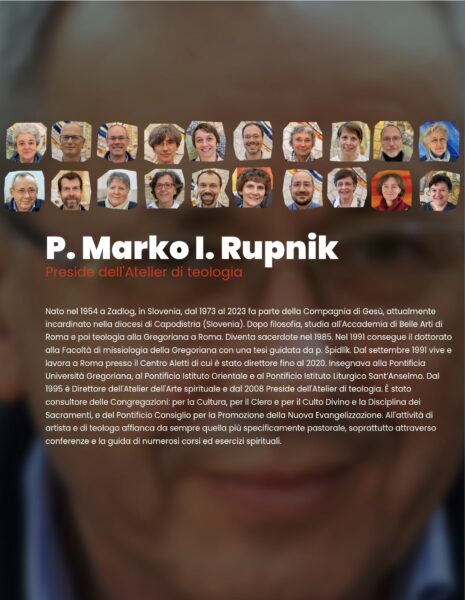
As of August 6, 2026, he continues to appear on the website of the Aletti Center as president of the Atelier of Theology.
The 22 letters now known force, in any case, an expansion of the temporal perspective of the scandal. These are not testimonies reconstructed only after the case gained public notoriety: dozens of women were asked to write about their relationship with Rupnik in 2000, and 22 of them reportedly recorded alleged abuses at that time.
The sentence must establish the facts and the corresponding responsibilities. But, regardless of its outcome, a question remains that also affects the functioning of Church institutions: how complaints and testimonies of this gravity could accumulate for decades while Rupnik developed one of the most relevant and well-connected artistic careers in the contemporary Church.