


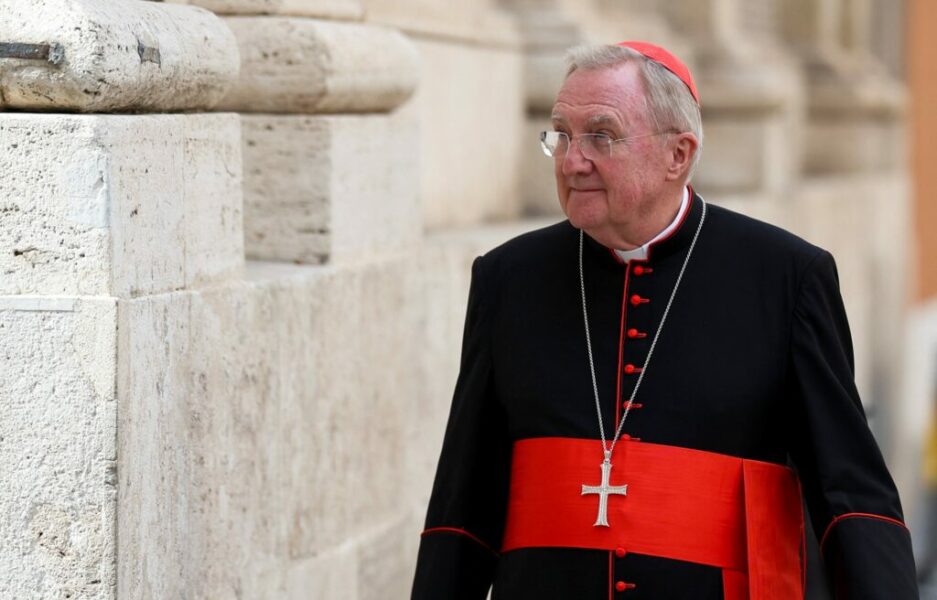
The prefect of the Dicastery for Divine Worship and the Discipline of the Sacraments, Cardinal Arthur Roche, has assured that Pope Leo XIV will not modify the restrictions on the celebration of the traditional Mass established by Traditionis custodes nor restore the regime provided for by Benedict XVI in Summorum Pontificum.
The statements were made in an interview granted to the British weekly The Tablet, in which the English prelate categorically affirmed: «Pope Leo is not going to change Traditionis custodes and is not going to return to Summorum Pontificum.»
This is the first public statement by Roche regarding the Pontiff’s position on one of the liturgical issues that has generated the most debate within the Church in recent years.
Unity as an argument
During the interview, the prefect defended that the question of the traditional liturgy must be understood from the perspective of ecclesial unity. He recalled that the Eucharist is «the sacrament of unity» and maintained that, if the celebration of the Mass becomes a cause of division, «something is seriously wrong».
Roche also rejected the claims of persecution made by some faithful linked to the traditional liturgy. According to him, when the Pope grants authorizations in accordance with current regulations and those groups continue to claim they are being persecuted, «they cannot answer what the real problem is».
Likewise, he lamented the tone of some criticisms directed against Church authorities and even wondered: «Can one honestly say that one is Catholic when one writes things so full of hatred about people and about the Church?».
Defense of the liturgical reform
The prefect clarified that he does not consider the liturgy prior to the Second Vatican Council to be erroneous, but maintained that the reform promoted after the Council responded to the need to prepare the Church for a renewed missionary task.
Among the changes introduced, he highlighted the expansion of biblical readings in the liturgy and emphasized a different understanding of the participation of the faithful in the eucharistic celebration. Whereas in the traditional form the priest acts on behalf of the assembly, he stated, the conciliar reform emphasizes that the entire baptized people actively participates in the celebration together with the priest.
The prefect’s statements do not constitute a change of position. Since the publication of Traditionis custodes, Arthur Roche has been one of its firmest defenders.
Already in January, during the extraordinary consistory convened by Leo XIV, the cardinal attempted to place the liturgical question at the center of the debate. Roche distributed among the cardinals an extensive document in which he defended the liturgical reform following the Second Vatican Council and justified the restrictions imposed by Francis on the celebration according to the 1962 Missal. Ultimately, the debate was postponed and the issue was left off the consistory’s agenda.
An ongoing debate
Roche’s statements come at a time when the future of the traditional liturgy continues to be the subject of intense debate within the Church. Since the promulgation of Traditionis custodes in 2021, numerous dioceses have restricted the celebration according to the 1962 liturgical books, while others have sought ways to maintain its pastoral continuity.
Furthermore, the liturgical debate took a turn with the episcopal consecrations carried out by the Priestly Fraternity of Saint Pius X (FSSPX) in Écône at the beginning of July.
The consecration of four new bishops without a pontifical mandate led to the decree of the Dicastery for the Doctrine of the Faith that described the act as schismatic and declared the excommunication of the consecrated bishops and of those who participate directly with the FSSPX.
This event profoundly altered the climate surrounding the liturgical question. The focus ceased to be exclusively on Traditionis custodes and shifted to the rupture with the FSSPX and the consequences that decision could have for the traditional world as a whole.
At the same time, numerous communities linked to the traditional liturgy that remain in full communion with Rome expressed their concern over the risk of their situation being identified with that of the Fraternity, insisting that the vast majority of the faithful attached to the usus antiquior continue to live fully integrated into the life of the Church.
The words of the prefect of the Dicastery for Divine Worship contrast with those positions and point to the continuity of the line marked by Traditionis custodes, although to date Leo XIV has not personally pronounced on this issue nor published any document relating to a possible modification of the current regulations.
Voices against Traditionis custodes grow
Far from being closed, the debate has intensified in recent weeks. Some of the most direct criticisms came from Cardinal Gerhard Ludwig Müller, who called for restoring full freedom for the celebration of the traditional Mass and maintained that Traditionis custodes «did not have a positive effect», but rather ended up reinforcing the positions of the FSSPX.
Likewise, Archbishop Georg Gänswein stated that Francis «was mistaken» with Traditionis custodes and defended that this error should be corrected. He also revealed the deep pain experienced by Benedict XVI upon learning of the publication of the motu proprio that limited the scope of Summorum Pontificum.
In this context, Roche’s statements appear aimed at cooling the expectations of those who hoped for a review of the liturgical policy initiated during the pontificate of Francis.
The last memories of Francis
In the interview, Roche also recalled his last meeting with Pope Francis. He recounted that he was with him the day before his death and remembered how the Pontiff insisted on going out to St. Peter’s Square to greet the faithful despite the doctors’ initial opposition.
According to the cardinal, after returning to the Vatican and being put back to bed in his room, Francis spoke his last words: «Thank you for taking me to the people».
Roche also addressed other issues related to the life of the Church, defended the importance of Sunday Mass attendance as an essential element of Catholic life, and expressed his concern about the evolution of contemporary culture in matters such as abortion and euthanasia, upholding the teaching of Humanae Vitae and the need to preserve the dignity of human life until its natural end.
For the moment, the only certainty is that Leo XIV himself has not pronounced on this issue. Arthur Roche’s words reflect the position of the prefect of the dicastery in charge of the liturgy, but any eventual modification—or confirmation—of Traditionis custodes will ultimately depend on a decision by the Pope.