


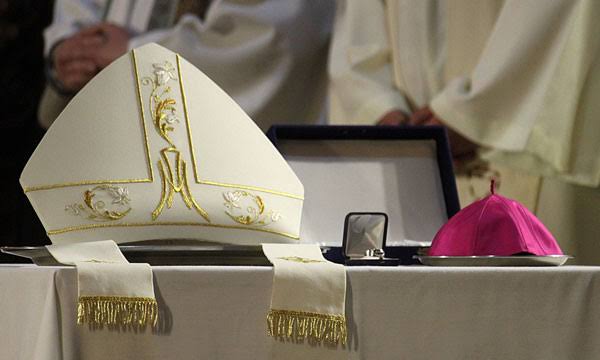
The Holy See announced on Wednesday the episcopal ordination of Monsignor Francisco Javier Duan Yongkun as coadjutor bishop of Bameng, in the Inner Mongolia Autonomous Region.
According to the Vatican, Leo XIV approved his candidacy last June 15, although the appointment was not made public until the day of the episcopal ordination, as was the case last week with the appointment of Monsignor Giuseppe Chang Yanfeng as bishop of Chifeng.
A priest trained in China and Taiwan
Francisco Javier Duan Yongkun was born on December 6, 1980 in Hangjin Houqi, Inner Mongolia. He studied at the Hebei Theological Seminary from 2000 to 2007 and later continued his education at Peking University and the Beijing Foreign Studies University.
He was ordained a priest for the diocese of Bameng on January 1, 2011. Between 2013 and 2016, he pursued studies at Fu Jen Catholic University in Taiwan. Upon his return, he directed the diocesan formation center and was later appointed vicar general of the diocese and pastor of the cathedral, positions he held until his designation as coadjutor bishop.
Second appointment in one week
The consecration of Duan Yongkun is the second episcopal ordination announced by the Vatican in China in just one week, following that of Giuseppe Chang Yanfeng in the diocese of Chifeng, also located in Inner Mongolia.
The appointment comes just days after the entry into force of the new regulations approved by Chinese authorities to strengthen political control over the official Catholic clergy, a regulation that requires priests and bishops to show greater adherence to the directives of the Communist Party and the policy of “sinicization” of religions.
An agreement that remains confidential
The appointment of Duan Yongkun falls within the Provisional Agreement between the Holy See and Beijing, signed in 2018 to regulate the appointment of bishops in China and renewed in 2024 for a new four-year period.
Although the Vatican maintains that this mechanism ensures the Pope’s participation in the selection of bishops and keeps dialogue open with Chinese authorities, the text of the agreement has never been published and continues to be criticized by members of the underground Church, experts in religious freedom, and various Western political leaders, who believe that Beijing continues to exert decisive influence over the life of the Catholic Church in the country.