


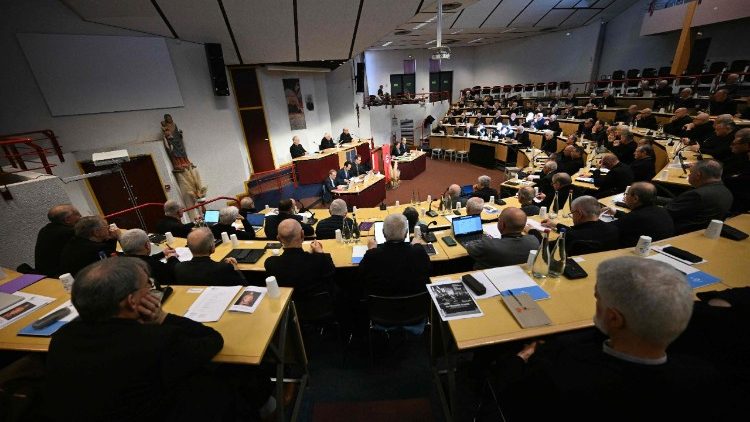
The presidency of the French Episcopal Conference has reacted to the parliamentary approval of the law legalizing euthanasia and assisted suicide, describing the July 15 vote as “a serious breaking point” in the country’s history. In a statement signed by Cardinal Jean-Marc Aveline, president of the Episcopal Conference, and Archbishops Vincent Jordy and Benoît Bertrand, the bishops maintain that the new legislation introduces into the legal system “the possibility of causing death” and breaks with the medical tradition oriented toward the care and accompaniment of the sick.
The text recalls that, over the past four years, the Catholic Church in France has taken part in the debate on the end of life through proposals and contributions aimed at defending the dignity of every person. However, the bishops consider that the debate, announced by the authorities as “serene, informed and respectful,” ended up being conditioned by “political, ideological and, undoubtedly, also economic interests,” hidden—according to them—“behind misleading words.”
They warn of the social consequences of the new legislation
The Episcopal Conference maintains that the effects of the law cannot yet be fully measured, although it warns that the approval of euthanasia and assisted suicide will change society’s relationship with illness, disability, old age and vulnerability.
Likewise, the bishops express concern about the possible deterioration of trust between patients, healthcare professionals and families, and warn of the risk that elderly people in precarious situations may feel pressured to request death so as not to become a burden on their relatives.
The statement adds that the experience of other countries shows a gradual expansion of the conditions for access to euthanasia and assisted suicide, while palliative care is relegated.
The Church encourages strengthening end-of-life accompaniment
In light of the new situation, the bishops call for strengthening the commitment of families, healthcare workers, volunteers, chaplains and associations to provide accompaniment that relieves physical and psychological suffering without resorting to the deliberate provocation of death.
The text also expresses the Episcopal Conference’s gratitude to those who work daily with sick, elderly, disabled or terminally ill people, and encourages Catholic healthcare centers to maintain their actions in accordance with the ethical principles of the Church, refraining from practices they consider morally illicit.
Pending the appeal before the Constitutional Council
The Episcopal Conference announced that it will closely follow the appeals planned before the French Constitutional Council, as well as the initiatives promoted by various associations, with the aim of guaranteeing respect for the ethical freedom of centers dedicated to accompanying people at the end of life that exclude the practice of euthanasia and assisted suicide.
The bishops conclude their statement by affirming that French Catholics will continue to work “in the service of life” together with others, believers and non-believers, convinced that “the greatness of a society never consists in giving death to the most fragile or allowing them to give it to themselves, but in accompanying them, through genuine fraternity, to the end.”