


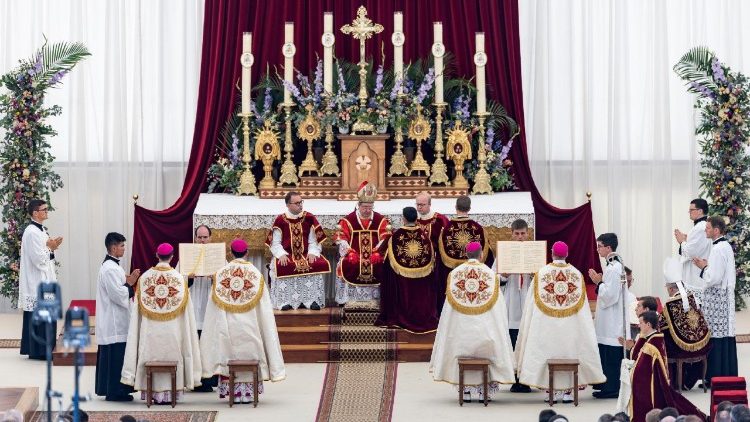
The Priestly Fraternity of Saint Pius X (FSSPX) has filed an administrative appeal against the decree published on July 2 by the Dicastery for the Doctrine of the Faith. According to a statement issued by the Fraternity itself on July 13, the appeal was lodged on July 11 in accordance with canons 1734 and following of the Code of Canon Law.
What do the canons invoked by the Fraternity state?
The Priestly Fraternity of Saint Pius X bases its appeal on canons 1734 and following of the Code of Canon Law, which regulate appeals against administrative decrees issued by ecclesiastical authority.
- Canon 1734. Before lodging a hierarchical appeal, anyone who considers themselves harmed by a decree must request in writing that its author revoke or amend it. This request must be submitted within ten useful days following notification of the decree.
- Canon 1735. The authority has thirty days to respond to that request. If it amends the decree or rejects the petition, the time limits for lodging the hierarchical appeal then begin.
- Canon 1736. When the law establishes that the appeal has suspensive effect, the request submitted in accordance with canon 1734 also suspends execution of the decree. In other cases, suspension may be requested from the hierarchical superior.
- Canon 1737. If the initial petition is unsuccessful, the interested party may lodge an appeal before the competent hierarchical superior within the fifteen useful days provided by law.
- Canon 1739. The authority that rules on the appeal may confirm the decree, declare it invalid, revoke it, amend it, or replace it with another.
According to the FSSPX, the filing of this appeal produces the suspension of the decree’s execution by virtue of canon 1353 of the Code of Canon Law, while the competent authority examines the petition.
A preliminary step before a possible hierarchical appeal
In its communiqué, the Fraternity explains that the document submitted constitutes the preliminary step required by Canon Law before the possible lodging of a hierarchical appeal against an administrative act of the Holy See.
The FSSPX notes that it has exercised the right recognized by canonical legislation to any person or institution that considers an administrative act to have caused it harm, requesting that the act be reviewed.
It also states that this action is carried out “in a spirit of respect toward ecclesiastical authority” and with the purpose of seeking “justice, truth, and the good of the Church.”
The decree is suspended
The Fraternity maintains that the filing of the appeal automatically suspends execution of the decree, relying on the provisions of canon 1353 of the Code of Canon Law, which regulates the suspensive effects of certain administrative appeals.
Consequently, the decree of the Dicastery for the Doctrine of the Faith cannot be executed until the appeal that has been lodged is resolved, according to the Fraternity’s own interpretation.
An acknowledgment of the legal channel provided by Canon Law
The filing of the appeal means that the procedure follows the administrative channels established in the Code of Canon Law for challenging a decree of the Holy See.
This appeal constitutes the mandatory preliminary step before resorting, if necessary, to a higher hierarchical instance within the canonical order.
Unlike what occurred after the 1988 episcopal consecrations, when the controversy was addressed mainly through declarations and canonical sanctions, the current procedure is being conducted expressly within the system of administrative appeals provided by Canon Law, with the involvement of the Dicastery for the Doctrine of the Faith itself as the competent authority to examine the challenge.
The Fraternity concludes its communiqué by entrusting this process to the prayers of the faithful while awaiting the Holy See’s response.