


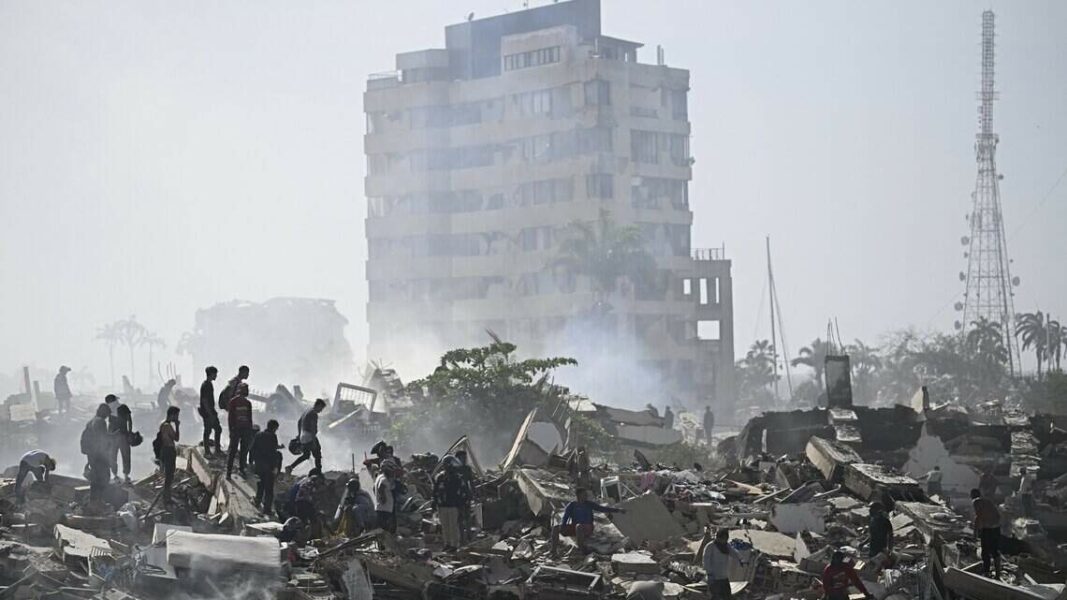
A week after the magnitude 7.2 and 7.5 earthquakes that struck Venezuela’s northern coast on June 24, the country remains immersed in rescue operations, care for the displaced, and damage assessment. While thousands of people are still outside their homes and numerous families continue searching for loved ones, the emergency is evolving into a humanitarian and health crisis that will require a sustained response over the coming months.
According to the official tally released by Venezuelan authorities, the quakes have left 1,943 dead, more than 10,500 injured, and nearly 16,000 displaced. However, international bodies and humanitarian agencies warn that the final toll could be higher as search efforts continue and the number of missing persons is clarified. The La Guaira region is among the hardest hit, with hundreds of damaged buildings and thousands of families left without shelter.
In this context, the Catholic Church has stepped up coordination of its pastoral and humanitarian response. Bishops, priests, Caritas, and the apostolic nuncio are working together to meet the population’s most urgent needs while preparing a second phase of assistance focused on material reconstruction and the spiritual accompaniment of the most affected communities.
The Church coordinates the national response
To that end, the Venezuelan Episcopal Conference gathered at its headquarters the apostolic nuncio to Venezuela, Archbishop Alberto Ortega Martín; the president of the episcopate, Bishop Jesús González de Zárate Salas; the bishops of the Ecclesiastical Province of Caracas; and the clergy of the Diocese of La Guaira to coordinate the Church’s lines of action in the emergency.
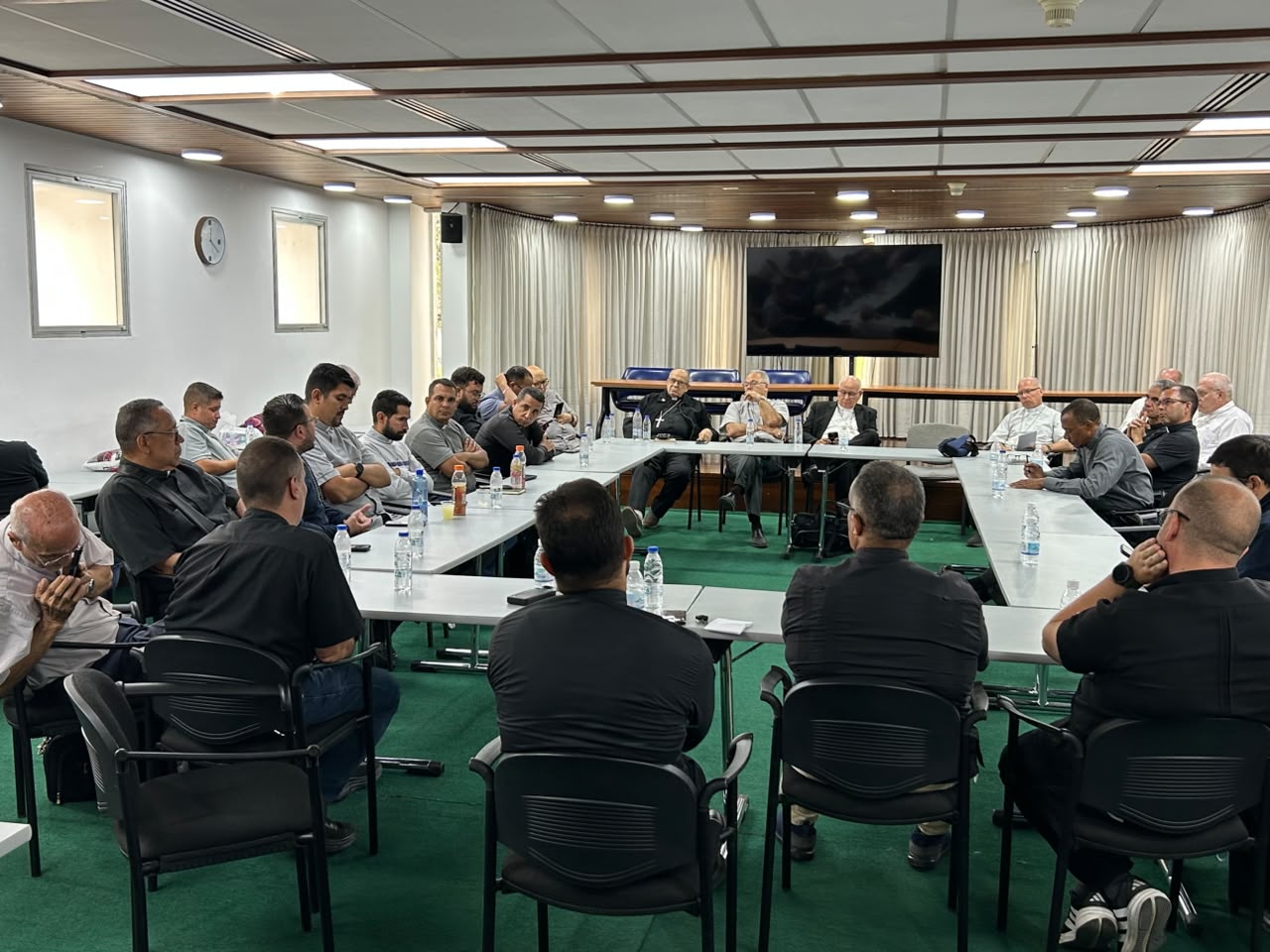
During the meeting, Bishop González de Zárate noted that numerous dioceses and parishes had, from the first hours, become collection centers, places of prayer, and shelters for those affected. The president of the Episcopal Conference also stressed the need to care for the priests of La Guaira themselves, many of whom have suffered material and personal losses while continuing to serve their communities.
“Our priority is clear: to help these caregivers of God’s people heal their own wounds so they can keep providing aid and consolation,” he said.
For his part, the apostolic nuncio confirmed that Pope Leo XIV has sent material assistance to those affected and remains attentive to the unfolding tragedy. He also announced that further aid is expected from both the Holy See and other particular Churches.
The Church’s response also includes prayer
Alongside material aid, Venezuelan dioceses have intensified prayer initiatives for the victims and for those involved in rescue operations.
In Maracaibo, the parish of San Benito de Palermo has begun periods of adoration of the Blessed Sacrament that conclude with the recitation of the Holy Rosary for the deceased, the injured, the missing, and the emergency teams. The faithful also pray that as many people as possible still trapped under the rubble may be rescued alive.
These initiatives add to the Masses, vigils, and other prayer moments organized since the start of the emergency in various dioceses across the country, with the aim of spiritually accompanying affected families and sustaining the hope of communities struck by the tragedy.
Caritas warns of a new phase of the emergency
While coordination of aid continues, the situation on the ground is worsening. In statements to Vatican News, the director of Caritas La Guaira, Deacon Rubén Perdomo, warned that the emergency is now entering a phase marked by health risks.
“We still have many bodies that have not been recovered from the rubble,” he explained. He noted that the shortage of body bags forced the creation of temporary morgues, while search operations continue cautiously because survivors have still been found alive several days after the earthquakes.
Perdomo estimates that around 30,000 families have lost their homes and that many people are sleeping in streets, parks, and public spaces while awaiting news of missing relatives or the chance to begin rebuilding their homes.
The Caritas official also highlighted the role parishes are playing during the emergency. “People are very attached to their priests. They are feeling the Church’s response,” he said.
A plan of assistance for the coming months
During the meeting convened by the episcopate, the executive director of Caritas Venezuela, Janeth Márquez, presented the so-called 24 by 24 Plan, a strategy designed to maintain the continuous reception and distribution of humanitarian aid through the parish network.
She explained that in just three days more than 321 trucks carrying food, water, and other essential goods were sent to La Guaira, Caracas, Carabobo, and Falcón. The organization is now working with dioceses, social organizations, and public administrations on a second phase aimed at meeting the needs that will arise in the coming weeks and months.
For his part, the bishop of La Guaira, Bishop Pablo Modesto González, explained that the diocese is conducting a community-by-community assessment to identify the most urgent needs, restore communication with still-isolated areas, and provide psychosocial support to those deeply affected by the tragedy.
Solidarity also arrives from Spain
The ecclesial mobilization has found an echo in other countries. The Archdiocese of Valladolid recently shared the testimony of Father Aderito García Ramos, a Claretian missionary from Valladolid who has spent nearly sixty years in Venezuela and currently resides in Caracas.
In the first days after the earthquakes, the Claretian Missionaries’ residence sheltered neighbors whose buildings were at risk of collapse. In addition, the main parish hall has been set up as a logistics center for Caritas Petare to store and distribute food, water, clothing, and mattresses to those affected.
The 87-year-old priest also issued a call to prayer. “It is extremely important that people in Spain pray for us. Prayer is always important,” he said.
This initiative is joined by material support from Caritas Spain, which has allocated an initial €300,000 in response to the request made by Caritas Venezuela. Several Spanish dioceses have also announced special collections and liturgical celebrations for the victims and their families.
“Rebuilding lives, rebuilding a people”
During the coordination meeting, the archbishop of Caracas, Archbishop Raúl Biord Castillo, recalled that the challenge facing Venezuela goes beyond the reconstruction of buildings and infrastructure.
“What is essential at this hour is to rebuild lives, rebuild the community fabric, and rebuild a people,” he said. The archbishop also urged that reception and relocation processes respect family unity, avoiding the separation of parents and children during the emergency.
With rescue operations still underway and a long reconstruction process ahead, the Venezuelan Church is preparing to maintain a steady presence alongside affected communities, combining humanitarian aid, pastoral accompaniment, and prayer as part of its response to one of the greatest natural disasters the country has experienced in recent decades.