


It went unnoticed, as serious things do. This Sunday, in an ordinary parish, mine, the faithful were invited to pray to God “that all the rulers and powerful of the world may unite.” The addition—“to give a just response to the drama of the migrants”—is the pious coadjuvant, the blameless cause under which the truly unusual slips in: that Catholic liturgy should ask, in plain language, for the union of the powerful of the earth. A kind of Bilderberg, but with a blessing.
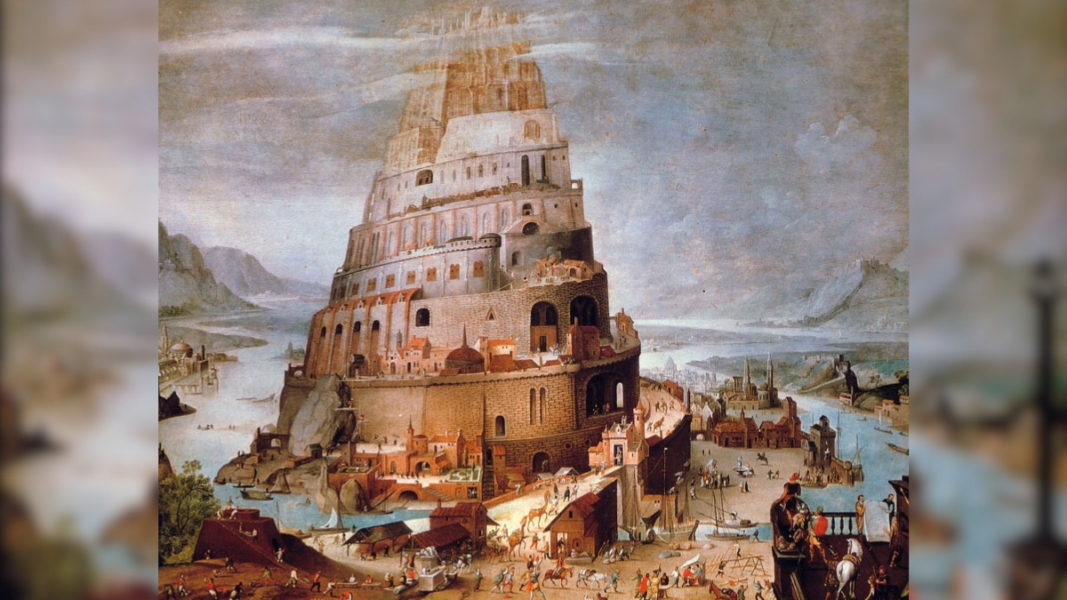
It is worth pausing on the subject of the prayer. It was not asked that nations cooperate, nor that law order the flows, nor that peoples understand one another. It was asked that “the rulers and powerful of the world” unite: power as power, with no other quality than its potency, converging in a single will. Anyone who has read Genesis will recognize the project. It is exactly that of Babel: men who gather “to make a name for themselves” and whom God scatters, not out of whim, but because the unification of human power apart from Him is the very form of pride. The Virgin, in the Magnificat, does not ask the Lord to gather the powerful: she proclaims that “He has brought down the powerful from their thrones” —deposuit potentes de sede— and “scattered the proud.” Scripture’s stance toward the conclave of the strong is dispersion. The parish asked the opposite, and it asked it on its knees.
The concentration of power at the summit is, for Catholic doctrine, an evil to be conjured away, not a good to be implored. The principle of subsidiarity —a pillar of social doctrine since Quadragesimo anno— teaches that each matter should be resolved at the nearest level capable of handling it, and that the higher power accumulates, the farther it moves from the person and the sooner it degenerates. A prayer that aspires for “the powerful of the world to unite” is, in its very grammar, a prayer against subsidiarity.
And so, between one “let us pray to the Lord” and the next, without anyone raising their voice, God was asked to do what in Genesis He prevented: to bring the powerful together, to unify the language of the strong, to rebuild the tower. Deposuit potentes de sede, says the canticle. Let them sit again, and together, the prayers now ask. Someone ought to explain when the Magnificat ceased to be the prayer of the Church.