


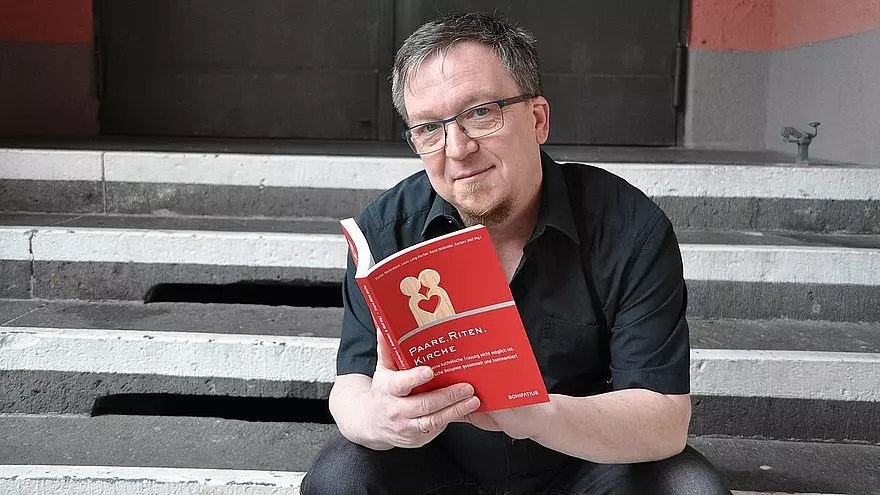
One of the writers of the guide prepared by the German Episcopal Conference to regulate blessings for same-sex couples has responded to the criticisms issued by the Vatican and has defended the content of the document, stating that he finds it difficult to understand much of the objections raised by Rome.
According to an interview given to Katholisch.de, Stefan Diefenbach, former priest and contributor to the drafting of the guide Blessing Strengthens Love, believes that the statements of Pope Leo XIV and the prefect of the Dicastery for the Doctrine of the Faith, Cardinal Víctor Manuel Fernández, do not adequately reflect the content of the text approved in Germany.
“In the end, it’s like trying to square the circle, and we knew we might encounter resistance from all sides,” Diefenbach said, referring to the attempt to harmonize the decisions adopted by the German Synodal Way with the provisions contained in the Vatican declaration Fiducia supplicans.
A document adapted after Vatican objections
During the interview, Diefenbach acknowledged that the text was modified following exchanges with Rome. Among the changes introduced is the repeated removal of the expression “blessing celebration,” a terminology that raised concerns at the Vatican.
“We removed the expression ‘blessing celebration’ in many places because it seems to be a word that sets off all the alarms in the Vatican, and we didn’t want the entire text to fail because of a single word,” he explained.
The former priest also noted that a proposal for a more developed ritual structure that appeared in the early drafts of the document was withdrawn.
Despite these modifications, he maintains that the essential content of the guide remained intact and continues to reflect the pastoral approach approved by the German Synodal Way.
The disagreement over how blessings should be imparted
While Cardinal Fernández has insisted that they must be spontaneous, brief, and far from any appearance of a liturgical ceremony, the German guidelines envision prior meetings with the couple to prepare the act, select biblical readings, prayers, and music.
Diefenbach defended this approach, arguing that those requesting a blessing expect more than an improvised gesture.
“Couples don’t want just anything thrown at them,” he said, adding that a blessing requires preparation and pastoral accompaniment.
“Pastoral care must move forward”
Diefenbach also criticized what he considers an excessively rigid application of Church teaching and argued that pastoral experience must play a decisive role in the future development of the Church.
“The demand that everything always be in line with doctrine and tradition is a bit cold,” he maintained.
And he added:
“Sometimes pastoral care must also move forward and explore new paths; doctrine comes afterward.”
He hopes for dialogue between Germany and Rome
Diefenbach also expressed his hope that the German bishops will maintain the position approved during the Synodal Way in upcoming conversations with the Holy See.
“I hope the bishops will support the decision they made and hold to their convictions,” he stated.
The former priest also positively assessed the recent signals of openness to dialogue expressed by the Vatican Secretary of State, Cardinal Pietro Parolin, and expressed confidence that future conversations between Rome and the Church in Germany will allow the existing differences on this issue to be addressed.