


For the Mass with which Leo XIV will conclude his trip to Spain, on Friday, June 12, in the dock of the port of Santa Cruz de Tenerife, the organizing committee has arranged three cayucos—real vessels, of the kind that arrive loaded in the Canaries—moored around the altar. The altar itself is built with cayuco wood; behind it, the Atlantic that the organizers themselves describe as a “deadly route”; in front, a thousand native plants and volcanic stone. The scene, they have said, aspires to be “a significant and silent presence of that migratory reality.” The verb that governs it is not mine: they provide it, and it is “to make visible.”
Let us pause on that verb, because there lies the knot of the unease that many Catholics will feel those days and that few will know how to name. To make visible is to direct something toward a spectator. A Mass, however, is not directed toward a spectator: it is directed toward God. That is, technically, the entire difference between liturgy and theater. Guardini said it better than anyone: liturgy is a playing before God, a holy uselessness that pursues no effect because its sole recipient needs to be informed of nothing. The moment the altar is arranged so that the cameras read “migration,” the Mass has changed its recipient. It has stopped looking upward—“Lift up your gaze,” reads, not without irony, the motto of the trip—to look toward the waterline.
It is worth clarifying what offends and what does not, because confusion on this point is what ruins good arguments. Charity toward the one who arrives does not offend: the Church has hosted the stranger for twenty centuries without needing to moor anything beside the tabernacle, and “I was a stranger and you welcomed me” is not a progressive gloss on Matthew but Matthew itself. What produces unease is the suspicion—grounded in the organizers’ own words—that the sacrifice has become the support of a message; that what matters in the scene is not what happens on the altar, but what surrounds it and what is deduced from it. One thing is for the Mass to say “welcome the one who arrives.” Quite another is for the Mass to serve to say it. In the first case charity springs from worship; in the second, worship is subordinated to a thesis on migration policy that could be stated, exactly the same, without the Eucharist in between.
And this is where I would like to propose something unpopular among the scandalized, who today are the majority and are, moreover, serious people: disconnected.
I do not say it as one who recommends looking the other way. I say it in a more demanding sense. The Catholic who allows this staging to sour his faith will have granted, without noticing, the entire premise of the setup: that Catholicism is something that happens on a stage and that rises or falls according to what the Pope does in front of a camera. Whoever despairs at the pontifical gesture and whoever idolizes it suffer, at bottom, the same disease: both have made their faith depend on a man. Papolatry and scandal are twins. They are born on the same day—that day, not so long ago, when the Pope ceased to be a distant authority and became a global figure, first thanks to the airplane, then to television, today to the phone you carry in your pocket—and they feed on the same thing: attention.
For most of Christian history there were Catholics who did not know the Pope’s name. Sometimes not even that. A farmer from Astorga in 1700 was not scandalized by what was done before an altar in Tenerife, among other reasons because he did not find out, but above all because his faith did not travel along that cable. It rested on the Mass of his parish, on the catechism, on the rosary, on the sacraments: on the perennial, not on the broadcast. He was not a worse Catholic for his ignorance. He was, often, much better, because his adherence was not an opinion about ecclesiastical current events but a life. Modernity has made us all Vatican correspondents, and in doing so has made us, paradoxically, more fragile: our faith has become commentary, and commentary depends on the event, and the event is programmed by someone else.
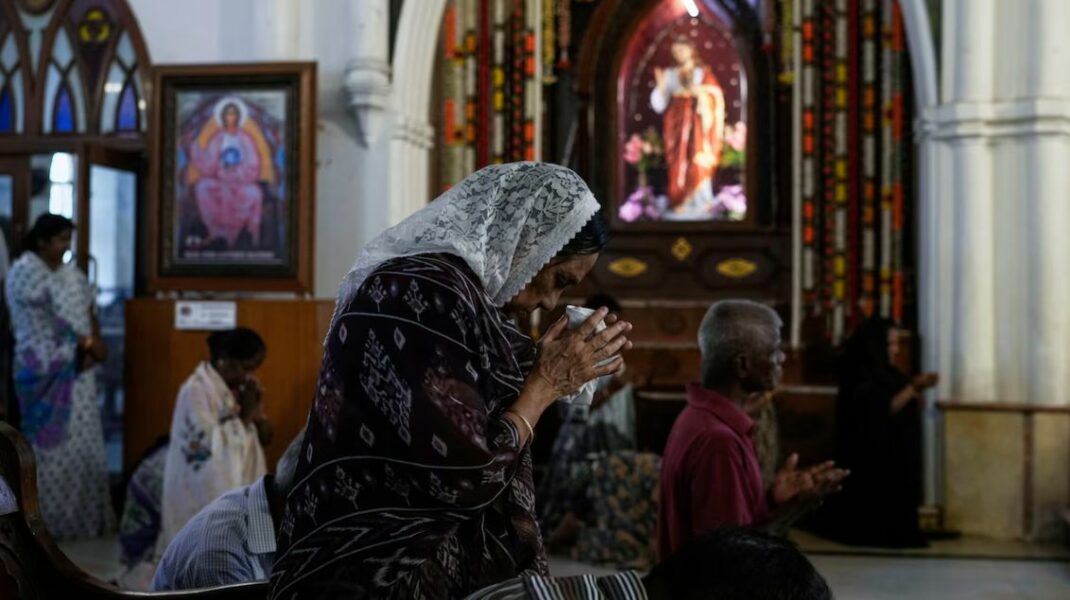
There is an irony here that the traditionalist should ponder slowly, because it concerns him more than anyone. Whoever most prides himself on the perennial is often the one most agitated by the ephemeral. The one who claims to despise the spectacle is many times the one who most faithfully consumes it, indignant, thread by thread, at two in the morning. The unease is real and legitimate; but it is worth examining it, lest it conceal a subtle form of vanity: that of wanting a Church tailored to one’s own aesthetic and liturgical sensibility, and of taking private displeasure for a public cause. The truly traditional act, in the face of the trip, is not the indignant commentary. It is to go to Mass, to pray, to form oneself with the catechism and with the Fathers, and to let the scenery pass.
It is worth noting, however, that one should not turn “disconnect” into an alibi, because that would betray half the argument. Disconnecting from the spectacle is not pretending that it does not occur. Whoever sees clearly that an altar has become a prop is not obliged to silence the diagnosis; he is obliged, instead, not to hand over to that prop the government of his interior life. And it turns out that only the disconnected sees clearly, precisely because he is not inside the machine that needs his indignation to function. The one who looks from outside the spotlight can allow himself the only response the setup does not know how to administer: indifference toward the stage and fidelity to what the stage sought to cover.
Because that is what will happen. After the Mass the cayucos will be removed from the dock. The message will dissolve in the next news cycle, as all messages dissolve. And the Mass—that which needs no cameras, nor vessels, nor the Atlantic in the background to signify what it signifies—will continue to be said, identical, in ten thousand parishes where no one is watching. That is the Church. The rest is production. And production is not fought with applause or with scandal, which are the two reactions it had foreseen, but with something that did not figure in the script: that the spectator, shrugging his shoulders, gets up and goes to pray.