


By Fr. Raymond J. de Souza
A death on Good Friday—even for a Catholic giant of the last fifty years—meant that less attention was paid than was deserved. On the other hand, it proved most fitting for the author of Patì sotto Ponzio Pilato? (Did He Suffer Under Pontius Pilate?).
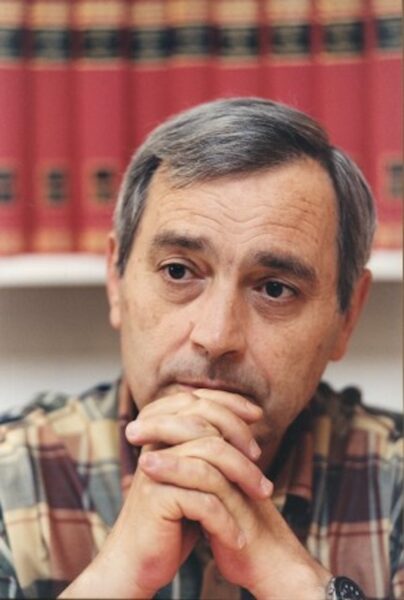
Vittorio Messori, just days short of his 85th birthday, died on the night of Good Friday last month, closing one of the most important Catholic lives of recent generations—a life that shaped the way people think about Christ and about His Vicar on earth. Messori gave definitive form to the way the voices of the popes are heard and, therefore, to the papacy in our time.
Catholics know well the impact a convert journalist can have, even more than a gifted theologian. English speakers have G.K. Chesterton, Malcolm Muggeridge and Richard John Neuhaus, and French speakers have André Frossard.
Messori grew up in an Italian communist and anticlerical family, a student of rationalism who professed agnosticism. In 1964, during the summer break from his university studies, he experienced something like an instant conversion after reading the Gospel of Matthew.
He applied his rationalism to his newly professed Catholic faith. What could reason tell us about Catholic claims and their coherence? At a time when apologetics was falling out of fashion, Messori devoted himself, with the mindset and skills of a journalist, to a project that would consume more than a decade.
In 1976 he published in Italian Hypotheses about Jesus, the fruit of his work, drawing on history, reason, data and experience to formulate arguments for the faith. It was a sensation that sold more than a million copies in Italy and was translated worldwide. This made Messori a leading cultural figure: a Catholic journalist, not simply a journalist. He became the Church’s foremost apologist in the 1970s, a lay witness who challenged atheists, materialists and communists on the reasonableness of faith.
In 2002, he applied the same approach to the Passion, examining the extra-biblical evidence for the crucifixion and death of Jesus in Did He Suffer Under Pontius Pilate?
Messori’s greatest influence, however, came not with his own voice, but in two interview-books he conducted: The Ratzinger Report: An Exclusive Interview on the State of the Church (1985) and, with Pope John Paul II, Crossing the Threshold of Hope (1994). The interview-book format, now common for senior prelates, was a genre Messori did not invent but did elevate.
In 1984, André Frossard had published Be Not Afraid (in French), the fruit of extensive conversations with St. John Paul the Great. The book had little impact.
At the same time Frossard’s book was released, Messori persuaded Cardinal Joseph Ratzinger to sit for several days of interviews on the state of the Church, some twenty years after Vatican II. The prefect of doctrine, and the most important figure in the Roman Curia, was relentless in his frank criticisms of a number of lamentable trends, rejecting what he would later call the “hermeneutic of rupture” and even using the inflammatory word “restoration.”
John Paul II had called an “extraordinary synod” for October 1985 to assess the lights and shadows of the post-conciliar period. This would give rise to the 1992 Catechism of the Catholic Church. Messori’s interview with Ratzinger set the terms of the debate, to the frustration of those progressives who realized that Ratzinger’s book was a turning point.
“This is a synod about a council, not about a book!” protested Cardinal Godfried Danneels of Belgium. It was, but the book provided the script for the synod.
Messori proposed an unprecedented television interview with John Paul II for the fifteenth anniversary of his pontificate in 1993. The Holy Father agreed, but the interview never took place. John Paul II kept the questions Messori wanted to ask him and handed over written answers for him to do with as he thought best. The result was Crossing the Threshold of Hope, a publishing phenomenon that put the Pope in conversation with millions of people. Messori’s questions did not concern the supposed controversies that journalists always raise. He asked about the Pope’s prayer, about other religions, about hope and meaning.
The papal memoir in the first person exploded thereafter. John Paul II would write a brief memoir for the fiftieth anniversary of his priestly ordination—Gift and Mystery (1996)—and then two more later on. Meanwhile, Cardinal Ratzinger would do two interview-books with Peter Seewald, then another while Pope and one more after his abdication.
Pope Benedict XVI would write his three books of biblical theology, Jesus of Nazareth, while Pope, and Pope Francis would generate dozens of titles: so many interview-books that it became hard to keep count.
Messori thus changed the way popes spoke to the world, directly through journalists. The pontificate of Francis was more accurately captured in the interview he gave in August 2013 to Fr. Antonio Spadaro than in Evangelii gaudium, published a few months later.
Francis’s in-flight press conferences and impromptu press conferences outside Castel Gandolfo with Leo can generate unnecessary problems—as Benedict himself discovered aboard the papal plane—but the Church never finds the right balance until it first overshoots it.
Two weeks ago, the Vatican celebrated its annual World Day of Social Communications, which once focused on journalism but in recent years has broadened its scope. Leo’s official message urged the preservation of “human voices and faces”:
Our faces and voices are unique and distinctive features of each person; they reveal someone’s unrepeatable identity and are the defining elements of every encounter with others.
Messori gave us the voices of the popes in a direct, unfiltered way through a personal encounter: the interview. Messori thus anticipated our interview-saturated cultural moment, where on podcasts and YouTube everyone interviews everyone endlessly. The world, too, struggles to keep its balance.
Messori’s work was a blessing, as was his devout Catholic life. He died on the day Jesus suffered under Pontius Pilate. May he now know the light of the Resurrection.
Fr. Raymond J. de Souza is a Canadian priest, Catholic commentator and senior fellow of Cardus.