


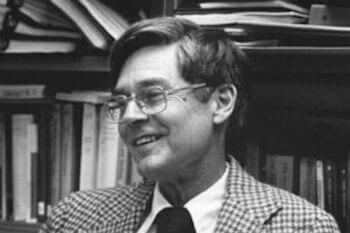
In the face of the extremely grave situation in the Church regarding the possible excommunication of the Priestly Fraternity of Saint Pius X if they consecrate bishops on July 1, we publish here a very pertinent text translated into English for the first time expressly for InfoVaticana; an article that John Senior published in the newspaper The Remnant and which is included in the work “The final essays of John Senior”.
These hurried notes document a state of mind and soul (anguished) in the days between the consecrations in Écône (June 30, 1988), the threat of excommunication hanging over those of us who attend Mass in the chapels of the Fraternity of Saint Pius X, and the Sunday that is approaching. I am anxious to know the opinions of those who know more, especially those of Walter Matt, the best Catholic journalist in the United States, Michael Davies in England, Jean Madiran in France, and Dom Gérard of Le Barroux.
While awaiting their good counsel —and that of others who wish to remain anonymous—, I invoke the gentle but sharp spirit of Saint Thomas More, who rebuked his beloved king (and murderer) to his face and wished him «may God go with you» on the scaffold. It is possible that men of good will and even saints may find themselves on both sides of this dispute, perhaps for decades —for all we know, until the end of the world—. Meanwhile, «the wisdom of the just», says Saint Gregory, «does not consist in practicing dissimulation, but in saying what is in the heart, in loving the truth as it is». No more polite evasions. Truth and charity are as sharp as any two-edged sword.
This is how it seems to me, without research files, notes, or time to detect errors; all of this arises, as great decisions do, suddenly and now.
Three things stand as the foundation of every argument: 1) In the psychological order, a man must be in his right mind. As the great philosopher Boethius pointed out, a drunkard does not even know the way to his own house. 2) In the moral order, we must face and speak the truth. 3) In the order of knowledge, proof is based on evident facts and the principles of reason. These three things are the foundations of rational discourse, summarized as «common sense». They precede argument, have nothing to do with expertise; their best guardian is the man in the street.
Now, it seems to me that the great questions of life and death always reduce to common sense. God will not hold us accountable for the five proofs of His existence or for the quodlibets and subtleties of Canon Law, which are the concern of experts. We must act, here and now, under threat of excommunication before next Sunday’s Mass, based on what we see and know.
First, in the psychological sphere, when faced with the great questions of life and death, good men usually start not from «what do I see?», but from «what did my mother say?».
Thus reads the poem «The Little Black Boy» by William Blake:
My mother taught me underneath a tree,
And sitting down before the heat of day,
She took me on her lap and kissed me,
And pointing to the east, began to say:
Look on the rising sun: there God does live,
And gives His light, and gives His heat away;
And flowers, and trees, and beasts, and men receive
Comfort in morning, joy in the noonday.
And we are put on earth a little space,
That we may learn to bear the beams of love;
And these black bodies and this sunburnt face
Are but a cloud, and like a shady grove.
For when our souls have learned to bear the beams of love,
The cloud will vanish; we shall hear His voice,
Saying: Come out from the grove, my love and care,
And round my golden tent like lambs rejoice.
The little Catholic was taught that the surest way to realize that vision was, simply, «follow the Pope». Now, a rule so deeply rooted cannot be contradicted. It constitutes a first practical principle in every Catholic controversy.
And yet, my mother also taught me that no one, even the Pope, can command us to sin, and therefore evident fact and right reason take priority even over obedience, because orders must be heard and understood and carried out in specific times and places with a good conscience.
1) In the psychological order, that means that authority must be in full use of its mental faculties, and not, in a certain sense, drunk or acting under coercion. Newman, speaking of the excommunication of Saint Athanasius, says that it was as if the heretical Roman emperor guided the fingers of Pope Liberius while writing the invalid order. And, of course, Saint Athanasius was not disobedient at all in ignoring such a nullity.
2) In the moral order, every argument presupposes honesty. In addition to simple abuses such as putting ecclesiastical benefit or other things before the truth, there is, unfortunately, a difficult and indeterminate «Renaissance» morality that proposes semi-frauds of the type: «I can do more good if I bleibe with this and work from inside to change it». Well, everything depends on how bad things are and how serious the issue is. When life and death are at stake, we must take a stand.
3) In the order of knowledge we must start from: a) the principles of reason —that is, the laws of contradiction, sufficient reason, and cause/effect—. When philosophers say that existence is an essentially contradictory «becoming», one doubts the forecast of any argument they raise. And b) evident facts. Ob, from Latin, means something you «bump into», plus via, «on the way». We are not talking about arguments, but about the foundations of the argument. We even are not in the investigation phase where we seek to know difficult things that are not clear, but before the beginning, when at least something must be clear; otherwise, we could not seek. You must see the telescope in front of you before you can look through it. An obvious fact is not a scientific conclusion, but a piece of common sense evidence that everyone (honest and in their right mind) can see.
Under a tyrannical inquisition, the man on the street, Winston Smith, in George Orwell’s novel 1984, explains:
In the end, the Party would announce that two plus two made five, and you would have to believe it. It was inevitable that they should make that claim sooner or later: the logic of their position demanded it. Their philosophy denied not only the validity of experience, but the very existence of external reality. The heresy of heresies was common sense… The Party told you to reject the evidence of your eyes and ears. It was their final, most essential command. And yet he was right! They were wrong and he was right. The obvious, the silly, the true, had to be defended. The obvious is true, cling to that!… Stones are hard, water is wet, objects without support fall to the center of the Earth. With the feeling… of having started from an important axiom, he wrote: Freedom is the freedom to say that two plus two make four. If that is granted, all else follows.
It is an axiom of obedience that private judgment cannot be opposed to authority. In ecclesiastical affairs, this means that the Pope is the supreme court of all disputes in matters of faith and morals. But Winston Smith is not speaking of private judgment or any kind of judgment. He is speaking of its foundation. No authority, supreme court, king, pope, or angel from heaven can force obedience against evident facts in a clear and present danger. No helmsman follows orders to steam full speed ahead toward an iceberg.
There is the famous story of the British fleet during great maneuvers in the Mediterranean: a hundred ships lined in columns, like platoons. Suddenly, the admiral’s pennant orders a turn that all the captains see will lead them to collide with each other. Ninety-nine obey. Only one realizes and deduces that the admiral wanted to say —or should have said— starboard, not port! So he escapes cleanly to a safe place while the ninety-nine «obedient» ones collide and sink. When, during the subsequent investigation, someone asked whether the surviving captain should be court-martialed for disobeying a direct order, the members of the Admiralty laughed.
In the current issue of the apparent excommunication of Archbishop Lefebvre, assuming that our love for the papacy does not blind us until the point of not considering the evidence —«the Pope cannot be wrong!»—, anyone can see that the Church is heading straight toward the threatening ice of unbelief. A well-educated man can close his eyes and ears in a Novus Ordo Mass and convince himself, based on his memory, that this action is the same sacrifice of Christ on the Calvary offered under the bloodless appearance of the bread and wine. But it is not possible that ordinary people, and especially children who have no memory of such things, maintain the faith against an assault on the senses, emotions, and intellect that would make George Orwell’s «Party» blush.
The «Party», in this case, is a determined group of modernist theologians whose bad faith in negotiating a «reconciliation» with traditionalists is evident in the papal declaration after Archbishop Lefebvre’s consecrations. As cited in the AP agency on July 3, 1988, it says the following:
To all those faithful Catholics who feel close to some older forms and liturgical disciplines of the Latin tradition, I would like to express my will… to facilitate their spiritual unity with the Church through the means necessary to ensure the respect of their just aspirations.
This is a sample of the usual Vatican prose these days —in the biting phrase of Abbot Georges de Nantes (I cite in French)—, it is «¡Bla, bla, bla!». «Some older forms and liturgical disciplines»? That means the immemorial Mass of the Catholic Church, which, according to the Council of Trent, comes from the apostles. And think what a union man would do with a contract that said: «I would like to express my will […] to facilitate […] through the means necessary to guarantee the respect of their just aspirations»!
We are under the authority of theologians who deny the laws of contradiction, sufficient reason, and cause and effect. They truly believe that the dialectical philosophy of «becoming», which inspired Marx and Engels, can be reconciled with Christian Revelation. In practical management, this means that progress requires a turn to the right and another to the left while navigating from the Novus Ordo Saeculorum. Cutting off Lefebvre and throwing a bone to traditionalists. The old Mass may be allowed for a time (as it had to sein!); committees will be formed and we will die of terminal bla-bla. No one (who does not want to) will be deceived by a speech like this. There is no change of heart or mind; not even recognition of the true issue. «I would like to express my will —to facilitate…» Ecclesiastical glasnost.
All the kind declarations made from Rome about the Mass comfort the elderly for whom the Council reforms came «too quickly» and sometimes with unnecessary «intensity», but no one has said that the reforms were wrong. They have refused to face the problem, which is not nostalgia on the part of «those who feel close to some older liturgical forms», but the shipwreck of the Catholic Church. I refer to a new Mass, a new catechism, a new morality, a flagrantly bad translation of the Bible, a architecture and music that constitute a meticulously orchestrated and rehearsed attack on Catholic doctrine and practice. Read the papal declaration ten times if you can. You do not need arguments. It constitutes in itself a proof of its own radical insincerity. It cannot be explained as a misunderstanding of the issue; it is, simply, a misrepresentation. As if the Mass were only «our aspirations» and not a reality for all:
the true light that enlightens every man who comes to this world… To all those who received Him, He gave the power to become children of God: those who believe in His name, who were not born of blood, nor of the will of the flesh, nor of the will of man, but of God. And the Word became flesh (here all kneel) and dwelt among us.
On the last Saturday, a person whose powers of observation and honesty are unquestionable went to confession in the main church of a provincial city. The absolution was given in the following way: «May God grant you forgiveness and peace». This came from a «conservative» priest who, not even a year ago, did such things: pronouncing a phrase that denies the priestly ministry in the very act of its exercise. The penitent went immediately to the nearest church, only to discover that its interior had been reformed to resemble a Babylonian temple with fountains (literally) cascading over rocks, ferns in pots, and a confessional with glass walls, inside which an anguished woman, on her knees, was crying and gesturing frantically before (presumably) a priest behind a modernist screen, while those in line watched solemnly, without blinking.
This pseudo-Church, imposed auf the true and subsisting one since the Second Vatican Council, is like that glass confessional. Anyone can see —and everyone sees— that, whatever it is, it is not the Church of our Fathers.
The good priests and religious (who only celebrate their own Masses) usually say: «Even, and especially, if I am given an unjust order, I will obey. If I were ordered, as to Archbishop Lefebvre, to cease my episcopal and priestly function, I would obtain the grace for the arduous exercise of humility». In one of those professions of superstitious piety, I heard a distressed father say: «Priests do not have children!». The good priests, and especially the religious in sweet serenity after the walls of their monasteries, simply do not know what really is happening. Or is it that they do not want to know it? After a decade of excuses, they say: «If Rome knew…». Rome knows! The faith is being crushed from above by the hierarchy that imposes its own inventions on the people, in the name of the people, as tyranny always does. The figure of the Pope is surrounded by a monarchical fear, a kind of hallucinatory halo of the type that led the Elizabethan courtiers, against the dreadful evidence, to say that the beauty of the good Queen Elizabeth dazzled the stars. Certainly, in the normal course of events, superiors must not be criticized. There is a special grace in a pope. But before icebergs? With the care of children and their children on our heads? We are not talking about complainers and whiners, but ordinary people who lead ordinary lives and who, without sound doctrine and the sacraments, will die.
One thinks of Milton’s Lycidas: The hungry sheep look up and are not fed…
Speaking of the double function of the bishop —Episcopus (watch) and Pastor («feed my sheep»)—, the poet exclaims:
Blind mouths! That scarce know how to hold a sheephook, or have learned aught else, the least that to the faithful shepherd’s art belongs! What recks it them? What need they? They are sped; and when they list, their lean and flashy songs grate on their scrannel pipes of wretched straw; the hungry sheep look up, and are not fed, but swoln with wind, and the rank mist they draw, rot inwardly, and foul contagion spread; besides what the grim wolf with privy paw daily devours apiece, and nothing said, but that two-handed engine at the door stands ready to smite once, and smite no more.
The scholars debate the exact meaning of that «engine at the door», though the general sense is clear. Most believe it refers to the two-handed sword of the Apocalypse, when the same Christ will come to put things in their place.
The priests do have children: that is the issue.
«Whoever causes one of these little ones who believe in me to sin, it would be better for him to have a millstone hung around his neck and to be drowned in the depth of the sea».
How can the good priests stop feeding their sheep? What prohibition, or even excommunication, can be opposed to a million tongues that rise to receive the Author of their existence and salvation?
Oh, they can find a way. Drive a hundred miles to find a Catholic Mass, or wait like the Christians in Japan between the prohibition of the Church and the arrival of Admiral Perry! It is not true. It is not true in any common sense. Some may do those things. A few grouped around the remnant of good priests who offer the sacraments in their substance and beauty intact; but God must send us bishops with the courage to ordain thousands.
In the chapels of the Fraternity of Saint Pius X (and in many others that are not affiliated with it) the doctrine, the sacraments, and the culture of the Catholic tradition have been preserved.
Take two pictures: look at this one and the one of the Novus Ordo church. It is like comparing Hyperion to a satyr. Passing from the glass confessionals even to the poorest and most makeshift shelter under which the grand Traditional Mass is celebrated is crossing fire and water to reach a place of refuge.
Transivimus per ignem et aquam, et eduxisti nos in refrigerium.
There is no possible discussion. Try and see.
There was a time when there was a single Church with two rival popes. Now we have a single pope with two rival Churches, one of which is the true one. Meanwhile, the hungry sheep demand their food and someone, in pious «disobedience», must fill that office despite the invalid orders and sanctions.
In various popular circumstances throughout the world, men of good will may issue different prudential judgments and reach different practical conclusions, while still agreeing in principle, finding ways to unite to fight against the common enemy. It is possible that even saints may be in both sides of the dispute —as Catherine of Siena and Vincent Ferrer during the Avignon exile— and millions of less important people, like us, who must choose now. God help us; we may be wrong. Some see danger, but not a clear and present danger; they see probable facts, but not obvious ones, and possible alternatives (for whom and for how many?); they fail to see the truth (I believe) because they have not looked directly at that wall of ice that Jean Madiran calls immanent apostasy —perhaps not ice, but Moby Dick, the mad white whale of the Antichrist.
Meanwhile (that has become my favorite word; it will not take long for some of us), God, make us love one another in the Sacred Heart of Jesus and the Immaculate Heart of Mary, which have come to console us in these dark days like Enoch and Elijah, those «olives that stand before the Lord of the earth». Meanwhile, the whole Church waits, like a desolate woman crying in a glass confessional, confessing before a priest about to give an invalid absolution.
Of course, there is a legal issue. The man in the street is not a lawyer and, of course, not a judge. Only a pope can judge another pope; if one is wrong, another of the line of succession must put things in their place, as Felix did with Liberius in the matter of Saint Athanasius, or as Saint Jerome notes in his commentary on Matthew 14:
Then, while the Lord remained on the top of the mountain, suddenly a contrary wind arose, the sea grew rough, and the apostles were in danger; and the shipwreck was imminent, until Jesus came. And in the fourth watch of the night He approached them walking on the sea. The military guards and sentinels are divided in shifts of three hours each. Therefore, when he says that the Lord approached them in the fourth watch of the night, this shows that they had been in danger all night; and it was at the end of the night, as it will be at the end of the world, when he will bring help to his own.