



«Can the State decide that your third child has no right to exist?» The question that five million readers have already read in novel form
Homo Legens publishes the third volume of Among the Hidden, the series by Margaret Peterson Haddix that imagines a State where having a third child is a crime. A fast-paced, short novel, written so that teenagers who don’t read won’t want to put it down — and that parents end up stealing from them to finish it in one night.
There are books that sell because of the plot. Others, because of the author. And there is a third type, much rarer, that sells for something that seems anachronistic to say: because they propose a moral battle in which the reader has to take sides.
That third category includes the saga of Among the Hidden by Margaret Peterson Haddix, of which Homo Legens has just published the third volume, Among the Betrayed. More than five million copies sold worldwide. New York Times bestseller list. A phenomenon comparable, in its niche, to The Hunger Games or Ender’s Game. But with a difference: here the heroes do not rebel for epic reasons, but for something much more essential. For the suspicion that there are lives that deserve to exist, even if the law says otherwise.
A premise that is not science fiction
The universe of the saga is simple and, for that very reason, terrifying. The Government has decreed that no family can have more than two children. The third ones —officially called the hidden ones, unofficially the outcasts— exist outside the law: without identity, without a birth certificate, without the right to go out on the street. The Population Police are in charge of hunting them down. Their parents live with the permanent fear that a neighbor will denounce them.
There’s no need to explain to a Catholic reader why this premise, written by an American author in 1998, is not exactly science fiction. While all of Europe is bleeding demographically and seriously discussing as adults how many children a family can afford, Haddix had the narrative insight to imagine the inverse version of the problem: what happens when a State, instead of favoring birth rates, decides to restrict them from above? The question is not exotic. Malthus asked it. Chinese policies did for four decades. It is asked, under another name, by everyone who looks at a family with four children as if it were an ecological rarity.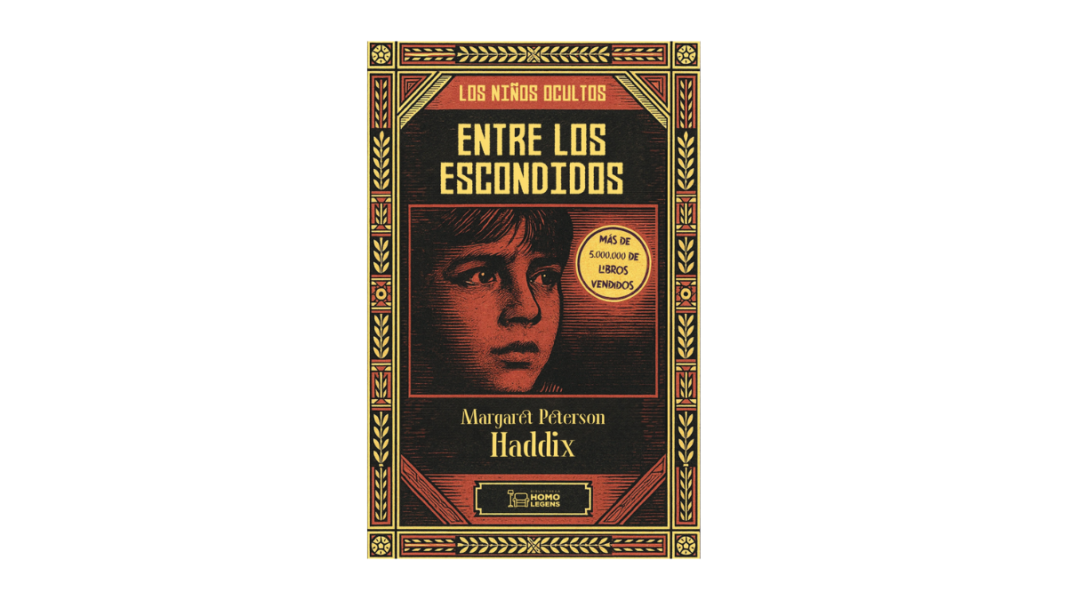
Luke, Mark, Matthew: a clue that the Catholic reader should not overlook
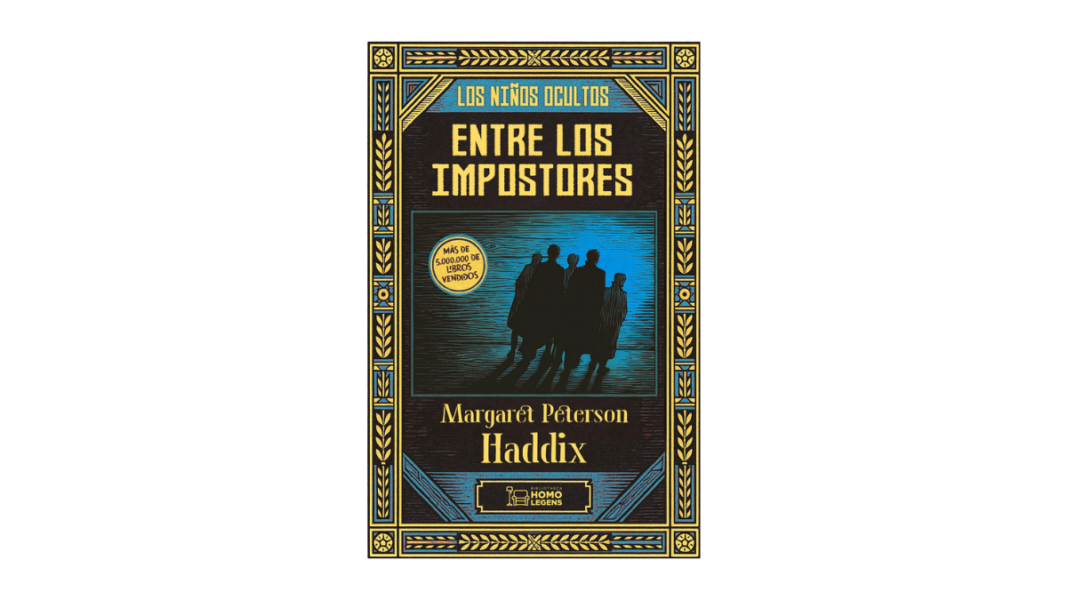
In the first two volumes of the saga —Among the Hidden and Among the Impostors, both already available from Homo Legens— the protagonist is a boy named Luke. He has two older brothers: Mark and Matthew. In Spanish, Lucas, Marcos, and Mateo. Three of the four evangelists. In a novel about children condemned not to exist.
We have no evidence that Haddix is Catholic. On the other hand, it is obvious that she is an author too aware of what she writes for those names to be coincidental. The three synoptic evangelists —those who tell, over and over, the story of a child whose birth an imperial decree tried to suppress— share a surname in a saga about children whose birth has been suppressed by decree. Anyone who wants to read there only a coincidence is free to do so. Anyone who reads something else, too.
The search for truth as the backbone
Among the Betrayed opens with its new protagonist, Nina, chained to the wall of a concrete cell. She is a third daughter. She has been denounced. They offer her a deal: if she can get three other prisoners to confess to being hidden children too, she will live. If she refuses, she will die.
When they introduce her to her three cellmates, she discovers that they are three children. The oldest is ten years old. The youngest, six. Dirty, hungry, scared children.
What happens next is one of the most honest representations of a moral dilemma written in young adult literature in the last twenty years. Nina is not a heroine. She is terrified. She wants to live. She ponders for pages the possibility of lying, of denouncing them, of saving herself. What prevents her from doing so is not an abstract doctrine but something much more concrete: she has looked into the six-year-old girl’s face. And, looking at her, she can no longer.
Throughout the book, Nina faces a type of question that almost no successful contemporary young adult novel dares to pose: is it possible to distinguish truth from lies when everyone around you has incentives to lie to you? To what extent can one trust one’s own memory, one’s own judgment, when the entire system is built on falsehood? Haddix’s answer is difficult and, ultimately, hopeful: truth exists, and it is recognized because it still costs when it would be easy to deny it.
 Sacrifice and the refusal to live with resentment
Toward the end of the novel, Nina discovers that the boy who betrayed her —the boy she loved— may not have been entirely bad. That perhaps, in his twisted way, he tried to save her. And then she discovers something worse: that he is still alive and working for the Population Police.
The final conversation in the book is of a moral maturity that the adult reader does not expect to find in a novel written for teenagers. Nina could take refuge in resentment —she would have reasons. She could take refuge in easy forgiveness that ignores the evil done —she would be tempted. She does something different: she decides that she does not want to live in bitterness and that, however, she cannot look the other way while evil continues. «I don’t want to live with resentment. But I want to help… what can I do to make sure Jason’s project fails?»
That phrase says it all. The acceptance that evil is real. The refusal to let that evil poison the soul of the one who suffered it. And, above all, the decision to combat it actively. If anyone finds a better synthesis for a two-hundred-page young adult novel, let them present it to us.
Doing the right thing against society’s values
At the end of the book, Nina remembers the stories her grandmother and aunts told her as a child —all of them, she says, «spoke of people who remained faithful to what was right in the face of adversity». And she discovers that for years she had clung to the wrong part of the stories: she had believed that her role was to wait like a princess for a prince to save her. Now she understands that the role was another. That her role was to resist.
That is, ultimately, the theme of the entire saga: the possibility of doing the right thing when doing the right thing is prohibited by society. The possibility of protecting a life that the law considers illegal. The possibility of affirming that a child has the right to exist even if the State thinks otherwise. The possibility —ancient, Christian, timeless— of being faithful to the truth when being faithful to the truth costs dearly.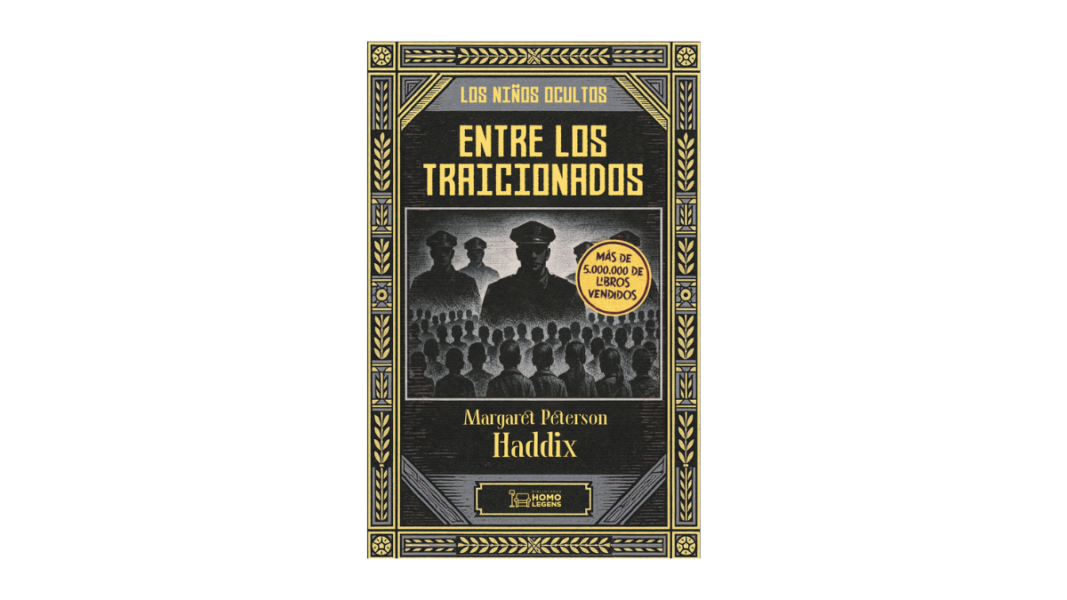
Why even the teenager who doesn’t read doesn’t want to put it down
An editorial virtue worth emphasizing: Haddix knows how to write for teenagers who don’t read. Short chapters —some three pages long. Short sentences. Noir novel pace. No chapter ends without a hook that forces you to start the next one. The one hundred fifty-eight pages of Among the Betrayed are read in an afternoon, two at most. Teachers and parents confirm it: these books work with the reluctant reader, with the boy who doesn’t finish any book, with the teenager who falls asleep with any novel.
But anyone who thinks that this accessibility implies superficiality has not read Haddix. What she does in these pages —exposing real moral dilemmas in fast and direct prose— is exactly what Suzanne Collins did in The Hunger Games and Orson Scott Card in Ender’s Game. And that is why, exactly as happened with those two sagas, the parents who give these books to their children end up stealing them after two nights to find out how it continues. More than one adult reader has entered Among the Hidden thinking it was young adult literature and has come out seven books later as an addict to the series.
Among the Betrayed (Margaret Peterson Haddix, Bibliotheca Homo Legens, 2026) is available at homolegens.com and in bookstores. The two previous volumes of the saga, Among the Hidden and Among the Impostors, also available.