


Too many times, when the issue of sexual abuses reaches the public space, the institutional response from the Catholic Church hierarchy has relied on a rhetoric of dilution: “this happens everywhere,” “most abuses occur in the family setting,” “they are isolated cases.” The first two statements are true in absolute terms. And yet, read with honesty, they do not absolve the Church in the slightest.
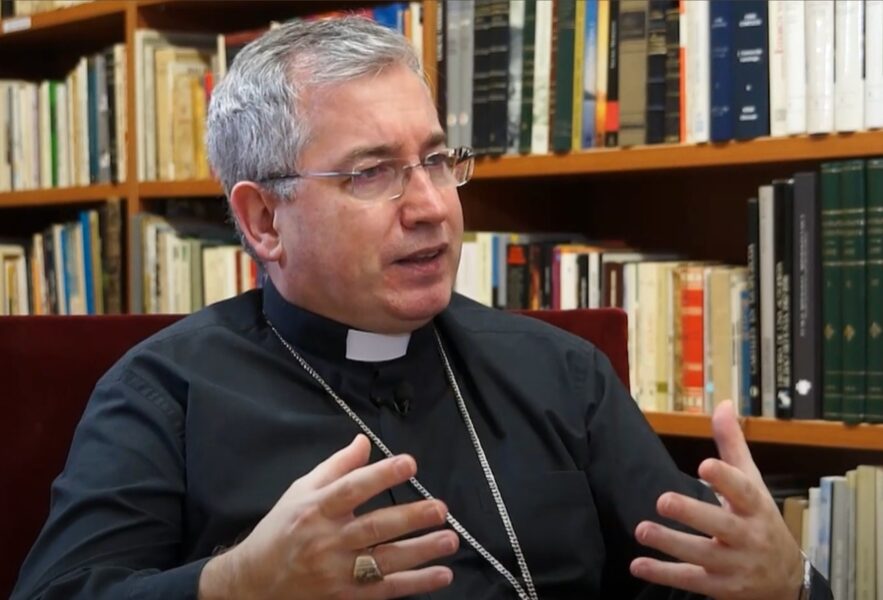
A few days ago, the Bishop of San Sebastián, Fernando Prado Ayuso, publicly stated about the abuses: “Forgiveness is not enough, but we must tell the truth, most sexual abuses against minors occur in the family setting.” The phrase is formally true. But it is also, in the context in which it is pronounced, exactly the problem. And it is for two reasons: for what it says and for what it omits.
What the Figures Say
The October 2023 report from the Defensor del Pueblo, the work of the law firm Cremades & Calvo Sotelo commissioned by the Conferencia Episcopal Española, and the major independent reports from France (Sauvé commission), Germany (MHG study), Australia (Royal Commission), and the United States (John Jay Report) all converge on a narrow and revealing statistical range. Between 3% and 7% of Catholic clerics from the period investigated in each country appear flagged by complaints of sexual abuse against minors. That is: around one in every twenty-five priests, in the most conservative scenario. One in every fifteen, in the most severe.
Criminological studies on the prevalence of child sexual abusers in the general adult male population, on the other hand, place the figure below 0.5%. The comparison, made with methodological prudence, yields an uncomfortable but clear result: the probability that an adult male has committed abuses against minors is between five and ten times higher if that male is a priest. It is not a sensational headline; it is the sober reading of reports that the Church itself, in other countries, has had to accept.
Saying that “most abuses occur in the family” is mathematically correct: in a Spain with nineteen million households compared to nearly fifteen thousand active diocesan priests, the absolute numbers admit no comparison. Obviously. But that comparison is not the relevant one. The pertinent question is not how many victims each setting produces in gross terms, but what density of abusers exists within each group. And in that question—the only honest one—the ecclesiastical institution comes off very badly.
That this phrase, moreover, is uttered by the bishop of a diocese where just a few weeks ago a priest was arrested for possession of child pornography, is more than an unfortunate coincidence. It is choosing the pulpit of aggregated statistics over that of institutional self-examination. And while that happens in the north, in the Archdiocese of Valencia an influencer priest, a habitual dispenser of moral lessons on social media, turns out to have stored photographs of nude minors on his hard drive and the Guardia Civil discovered downloads of aberrant titles. He was not convicted due to lack of explicit sexual content in the seized material, but what did the Church do? It did not open any process, first placed the priest in charge of a group of children in the collegiate church of Gandía, only in the face of the scandal moved him to a hospital where he had contact with sick minors and—when Infovaticana published everything—they have opted not to take measures and for the priest to continue on social media generating a community with tens of thousands of people in which he explicitly identifies as a priest. This is the level.
Legitimate Objections, and Why They Are Not Enough
It is true that the clergy has been subjected to unprecedented retrospective scrutiny. Independent commissions, diocesan archives opened, public appeals to victims for decades: no other professional group has gone through anything like it in countries like Spain (in other parts of the world, no). It is reasonable to suppose that if teachers, sports coaches, leisure monitors, or yes, parents and relatives were investigated with the same thoroughness, the rates detected in those areas would also rise. This is true. But it is not a defense: it is, if anything, a call to investigate those other areas as well. Not to stop investigating the ecclesiastical one.
It is also true that the clergy is not sociologically comparable to the “general male population.” It is an exclusively male group, in habitual professional contact with minors, in a position of moral authority and with facilitated access to trusted environments. The fairest comparison would be with other adult males in equivalent positions of authority and contact with minors. The few studies that exist in that direction narrow the difference somewhat, but do not eliminate it: the ecclesiastical rate remains far above.
And even accepting all methodological cautions, one fact remains that no statistic can gloss over: the institutional response. What distinguishes the ecclesiastical case from other areas is not only the prevalence, but the documented existence, in archives around the world, of systematic patterns of cover-up, transfer of alleged abusers between dioceses, pressure on victims, and obstruction of civil justice. That is the specific fracture. And that fracture is not closed with contextual figures.
The Silence of Our Own
There is also, moreover, a truth that Catholics must face head-on. We tend to protect ourselves. When a scandal arrives, we process it in terms of external attack: the press exaggerates, the enemies of the Church take advantage, the context is omitted, the figures are decontextualized. And in that defensive reflex—human, understandable, historically rooted in a real memory of hostility toward the faith—we are allowing something to rot inside the house without wanting to look at it. We confuse loyalty with cover-up, prudence with omertà, charity with silence. We say it in so many words: there is a Catholic silence that has become complicit through inertia.
It is not new. Any institution under external pressure tends to close ranks; ecclesiastical ones, by their communal nature and supernatural dimension, do so with greater force. But that defensive logic, which may have made sense in other times and against other adversaries, today is exactly what prevents the Church from doing the only thing that can save it: look inward. Analyze what is happening in seminary formation, in selection criteria, in supervision mechanisms, in the culture of power and obedience that surrounds the ministry. Ask, without alibis, why the data are what they are. Not to hand anyone over to the mob, but because without that honest examination the wound remains open and the pus keeps coming out, week after week.
The faithful who remain silent so as not to give ammunition to the enemy should ask ourselves if, by remaining silent, we are not making it easier for the true enemy, who is inside and is called abuse, cover-up, clerical vanity, and institutional fear of scandal. Faith is not defended by protecting our own when our own commit crimes. It is defended by demanding from our own house the highest standard, not the most indulgent.
The Questions That Cannot Be Asked (and That Must Be Asked)
There is an examination that the Spanish Church has spent decades unwilling to undertake out loud, and that must be put on the table even if it discomforts. What kind of Church are we projecting, and what kind of candidate does that model attract? A soft, infantilized, sentimentalized liturgy, alien to classical solemnity and exigency; soft catechesis; preaching fearful of any uncomfortable truth; a parish environment whose stable congregation is, mostly, elderly ladies: that Church, what vocations does it generate? What profiles does it repel and which does it attract? The question is not rhetorical or nostalgic: it is strictly sociological.
There is, moreover, an issue that political correctness prevents from being formulated in almost any forum but that any serious observer of contemporary clergy knows: the prevalence of homosexuality in the current Catholic clergy is, according to various sociological studies and according to statements from high-ranking officials of the Church itself—including the 2005 document from the Congregation for Catholic Education on the admission of candidates to the priesthood—notably higher than its prevalence in the general population. This is a documented fact, not an insinuation. Refusing even to analyze the issue, out of fear of being labeled, is exactly the attitude that has allowed for decades not to look at what needed to be looked at. The question about what real sexual and affective culture exists today in seminaries, presbyteries, and ecclesiastical residences, what informal networks operate in them, what real criteria—not those on paper—govern the selection of candidates, is a question that deserves an answer. And it deserves it from within the house, before someone else answers it from outside.
The Myth of the Administrative Solution
It is also worth saying something that in these years has been obscured by the noise. Neither the Defensor del Pueblo report, nor the Cremades & Calvo Sotelo report, nor the successive episcopal protocols, nor the diocesan prevention commissions are going to resolve this. They are useful as a thermometer, as an exercise in partial transparency, as a necessary public gesture. But, in essence, they are political fire. And political fire does not put out structural fires.
Sexual abuse against minors is a crime. And, as such, it only has two real channels of response: the State’s penal code and the Church’s canon law. The first works, with its delays, within the standards of the rule of law. The second, it must be said with the frankness that the moment demands, does not work. Canonical processes in matters of delicta graviora are a mess: slow, opaque, ultimately dependent on the will of the ordinary, with eternal deadlines, unequal criteria between dicasteries and dioceses, and a procedural culture anchored in premodern logics. The 2021 reform of Book VI of the Code of Canon Law was a step, but insufficient. As long as the canonical response remains what it is, every commission, every external audit, and every reparation plan will arrive behind the problem. And the faithful will continue to learn about the cases, time and again, through newspaper headlines and not through statements from the corresponding diocese.