


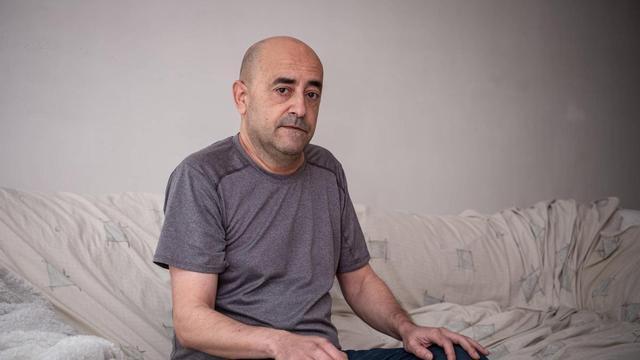
On April 16, following a long administrative process marked by previous denials and a psychiatric illness considered irreversible, Pere Puig, 54 years old, received euthanasia in Catalonia, in a case that once again calls into question the limits of this practice in Spain.
According to what the Argentine newspaper Clarín has published, Puig’s case occurs just a few weeks after the death of Noelia Castillo. The processing of his application lasted almost three years, with two previous rejections by health authorities before, on a third attempt, the request was finally accepted.
Another case of euthanasia due to psychic suffering
Puig, a resident of Reus, had been requesting access to the so-called aid for dying benefit for nearly three years. In that time, he had to go through several medical and administrative filters, and received two denials before his third attempt was finally accepted. The final resolution stated that his severe resistant depression had led to physical and emotional suffering impossible to alleviate with the available therapeutic means.
The decision was supported by Organic Law 3/2021, which regulates euthanasia in Spain and provides for this benefit for people suffering from a serious and incurable illness or a serious, chronic, and disabling condition under the terms provided by the law.
In the case of Pere Puig, the commission that reviewed the file concluded that the clinical situation fit that scenario. The patient had a recognized disability of 68%, suffered from permanent generalized anxiety, recurrent panic attacks, and almost continuous bedridden prostration, with additional physical deterioration due to inactivity. The doctors also noted that there was no reasonable prognosis for recovery and described his condition as “chronic and disabling.”
Two decades of treatments without results
The clinical history incorporated into the file reflected a long and failed therapeutic journey. Puig had tried more than fifteen different drugs over twenty years and had also developed a strong intolerance to a large part of the available psychotropic medications. Resistance to advanced therapies, including electroconvulsive therapy, was also documented, which reinforced the thesis that no effective alternatives remained capable of reversing the condition.
That was the decisive element for the Guarantee and Evaluation Commission of Catalonia to set aside the previous negative reports, which still pointed to a possible improvement. The administrative validation thus unblocked the procedure and allowed the euthanasia to be carried out on Thursday, April 16.
A precedent that worsens the drift of the law
The case has not only had repercussions due to its outcome, but also because of what it reveals about the practical expansion of the law. If at first euthanasia was presented in Spain as an exceptional response to terminal illnesses or extreme physical pain, its application in situations of severe psychic suffering once again shows to what extent the boundary has been shifting.
That drift had already emerged with Noelia’s case, whose death was carried out in March amid judicial appeals, family opposition, and great social commotion. Making it evident that euthanasia does not constitute a medical advance or a conquest of freedom, but a manifestation of the culture of death that ends up presenting the elimination of the sufferer as a solution. In that logic, suffering ceases to be accompanied and becomes suppressed with the death of the patient.
When a society accepts that desperation, depression, and prostration can lead to a public benefit for dying, the problem is not limited to a medical file. What is at stake is the very way of understanding human dignity, the value of suffering, and the duty to protect life precisely when it is most fragile.