


By Fr. Raymond J. de Souza
Just a few years ago—more than twenty years after my priestly ordination—I discovered the Eucharistic Prayers for Reconciliation. They have been in the Roman Missal for decades, but many of us priests leave the treasures of the Missal unexplored: the votive Masses, the Masses for various needs and occasions, the solemn blessings, etc.
The history of those prayers of reconciliation is linked to the Holy Year of 1975 and constitutes a fruit of the liturgical reform in a tumultuous time. That history itself deserves to be remembered with regard to the prayer at the heart of the Mass.
For about 1600 years, the Roman Canon (Eucharistic Prayer I) was the only anaphora, as it is properly called. The liturgical movement of the 19th and 20th centuries expressed ancient concerns about the prayer, namely, the strange absence of the Holy Spirit and that its literary structure was not entirely cohesive. However, it had been consecrated by more than a millennium of use, venerable simply by that fact. In any case, the rubrics of the Tridentine Missal mandated that it be recited sotto voce, so that it was not heard by the assembly. Depending on the priest’s fluency in Latin, it was very possible that he himself did not concern himself with such matters.
After the Second Vatican Council, the decision that the anaphora be recited aloud and in vernacular languages raised a question. Was the Roman Canon suitable for this in every Mass? The prevailing opinion was that it would be a burden for the priests and the people, and so new Eucharistic Prayers were drafted, some taken from ancient sources, others composed more recently.
The Church, as often happens, found it difficult to achieve a balance in the new use, and so the Roman Canon almost completely disappeared in practice, although the anaphora itself remained in its primary place, largely intact. There are some priests who still choose to use it in all Masses, which remains a possibility.
Paul VI’s new Missal included four anaphoras. The shortest of them (II) aroused the greatest enthusiasm in its use, probably for that reason.
The third, in my judgment, has a superior literary quality, with its elevated opening: invoking all the Persons of the Trinity, the work of Creation, the enduring covenant of salvation, with a “pure sacrifice” offered “from the rising of the sun to its setting”; and its final image of the Church as a “pilgrim on earth” that constantly offers its “oblation” of the “Victim immolated” by which it is “nourished with the Body and Blood of your Son and filled with his Holy Spirit”.
The fourth anaphora presents a broad journey through the history of salvation, expressed in language imbued with biblical references and images. In the “fullness of time,” one can almost hear Jesus preaching in the synagogue of Nazareth (Lk 4). The corresponding rubrics restrict its use to Ordinary Time, and I find it particularly suitable for Sundays throughout the year.
The additional prayers are, to my eyes and ears, welcome. From a strictly literary point of view, I find that the Roman Canon is euphonic in Latin in a way that it is not in English; famulórum famularumque is pleasing to the ear in a way that “servants” or even “servants and handmaidens” do not achieve. It retains its venerable status, and I use it when that is the desirable criterion, but more often I prefer the other options.
The options abounded in the early 1970s. Various national episcopal conferences (from northern Europe) were busy producing their own prayers, sometimes proceeding without due approval from Rome. There were disputes in Rome between the dicasteries for doctrine and for worship. The heart of the Mass threatened to become a disorder. In 1973, Pope St. Paul VI decided that the situation had gotten out of hand and ordered a halt to the proliferation. The four anaphoras of the Roman Missal would remain, and all other options would be restricted; the drafting of new versions would be officially discouraged.
The Holy Father granted permission, however, for Eucharistic Prayers for children and for the 1975 Jubilee Year, whose theme was “reconciliation.” Thus, two “Eucharistic Prayers for Reconciliation” were approved, which this year mark their fiftieth anniversary, a legacy of the 1975 Holy Year.
The rubrics indicate that they “may be used in Masses in which the mystery of reconciliation is presented to the faithful in a special way… as well as in Masses during Lent.” The mystery of reconciliation is present in every Mass, so the scope is broad.
For example, the two great solemnities of this month include explicit references to reconciliation. The Collect for All Saints invokes “so many intercessors” for an “abundance of reconciliation with you”; in Christ the King, the Prayer over the Offerings speaks of the “sacrifice by which the human race is reconciled with you”.
The first anaphora for reconciliation begins with simple language, not grandiloquent, direct, moving, even supplicating: “though we were lost and could not approach you, you loved us with the greatest love”.
It speaks explicitly of Jesus celebrating the “Passover with his disciples,” which is better than “the day before his passion” (Roman Canon) or references to being “betrayed” (II and III).
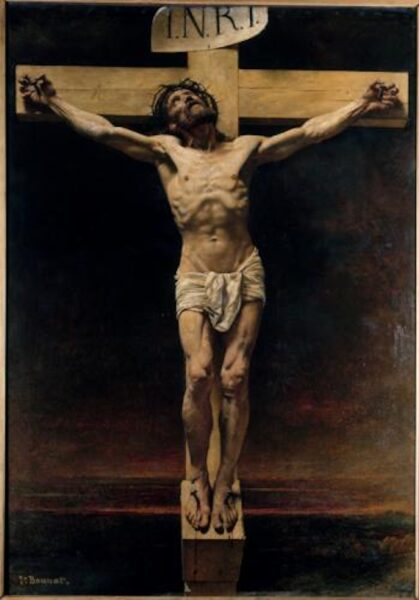
There is a vivid image of Jesus on the Cross: “he stretched out his arms between heaven and earth, to be the perpetual sign of your covenant.” The theme of the reconciling sacrifice is repeated between the two consecrations: “knowing that he was about to reconcile all things in himself by his Blood poured out on the Cross”.
The conclusion of the anaphora wonderfully combines direct speech with a poetic touch.
Help us to work together
for the coming of your Kingdom,
until the hour when we stand before you,
Saints among the saints in the courts of heaven…
Then, at last freed from the wound of corruption
and made fully into a new creation,
we shall sing with joy
the thanksgiving of Christ,
who lives for ever and ever.
American Catholics may appreciate that “freed at last,” which had particular resonances during the civil rights movement, but it is “Saints among the saints in the courts of heaven” that attentive parishioners comment on most every time I use it. In fact, I look forward to that line from the beginning of the prayer, which constitutes a liturgical experience of anticipation of heavenly bliss.
In the seminary, one of our formators advised us that every priest, during each year’s Advent, should read the General Instruction of the Roman Missal and the Missal itself. Familiarity and routine can limit our operational knowledge of what it contains. Evidently, I did not follow that advice. I may fail again this year, although Advent has just begun. It remains, however, good advice: lest it take more than twenty years to discover what the sacred book we use every day contains.
About the author:
Fr. Raymond J. de Souza is a Canadian priest, Catholic commentator, and Senior Fellow at Cardus.