


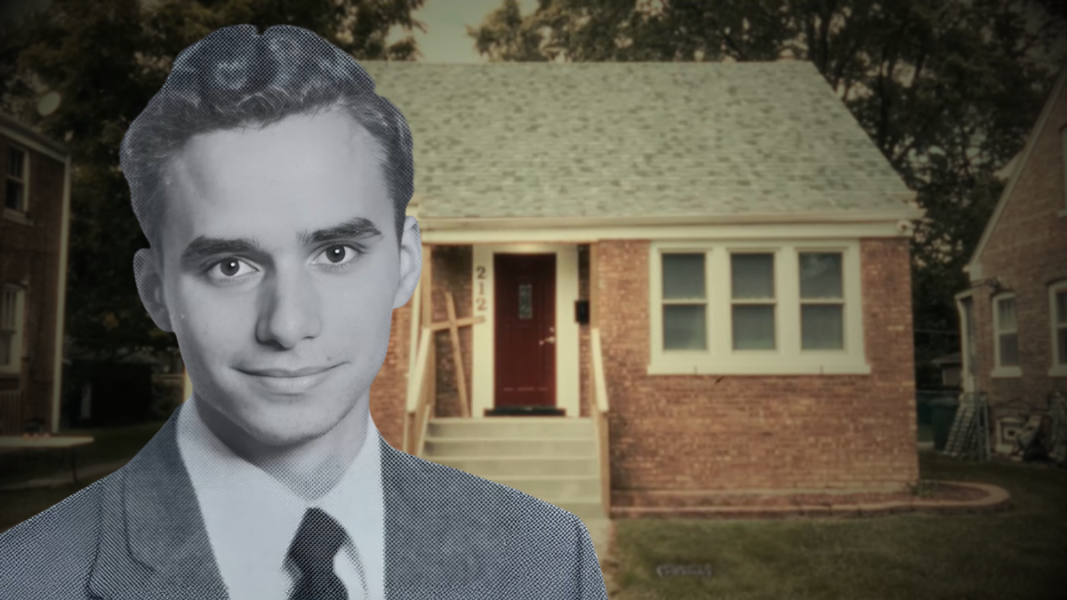
The Vatican premiered this Monday, through its official YouTube channel, the documentary titled Leo from Chicago, a production that narrates the origins and family trajectory of Pope Leo XIV, with testimonies from those who knew him closely in his childhood and youth. The film—second installment after León de Perú, released last June—reconstructs the pontiff’s early years in his birthplace, Dolton, a small suburb of the Chicago metropolitan area.
With a duration of 52 minutes, the documentary presents unpublished images, interviews, and memories from his family, friends, schoolmates, and former teachers. The Pope’s brothers, Louis and John Prevost, evoke his childhood in a modest home, with a single room and a simple yet deeply faith-marked environment. “You could see his inclination toward the priesthood,” says Louis in one of the most emotional moments.
Raised in a home where religious practice was part of daily life—his mother attended Mass every morning before preparing her children for school—the young Robert Francis Prevost grew up in an environment that shaped his vocation. They played at being altar boys and celebrated Mass in Latin—the usual mode at that time—.
An intimate portrait of the future pontiff
Beyond the biographical data, Leo from Chicago aims to show the human dimension of the Pope. Among the testimonies, his kind character, constant humor, taste for driving, and well-known fondness for pepperoni pizza typical of his hometown stand out. These everyday brushstrokes seek to bring the viewer closer to the man behind the pontificate, reminding that the current Successor of Peter was, above all, a neighborhood boy, studious and helpful, with a simple family life.
The documentary goes through the accounts of close friends, including a Lutheran couple who visited him in the Vatican and whom he took to see the relevant places of Martin Luther. Those closest to him portray him as a diplomatic, calm, and reflective leader. With a special vocation for the poorest— a calling that led him to the diocese of Chiclayo. They affirm that his roots are in Chicago, his growth in Peru, and his flourishing in the Vatican.
Between the human and the symbolic
The documentary offers a more intimate and symbolic gaze, centered on the roots and values that marked his priestly path. The intention—evident in the film’s style—is to show Leo XIV as a close shepherd, formed in simplicity and in the experience of everyday faith, rather than as an institutional or distant figure.
At the same time, the production fits into a Vatican communication line increasingly interested in humanizing the pontiff’s image, emphasizing his personal biography and his relationship with the social realities of his time. Without ceasing to be an exercise in pastoral outreach, Leo from Chicago can also be read as an effort to reaffirm the bond between the Church and ordinary life, between priestly vocation and the concrete history of a believing family.