


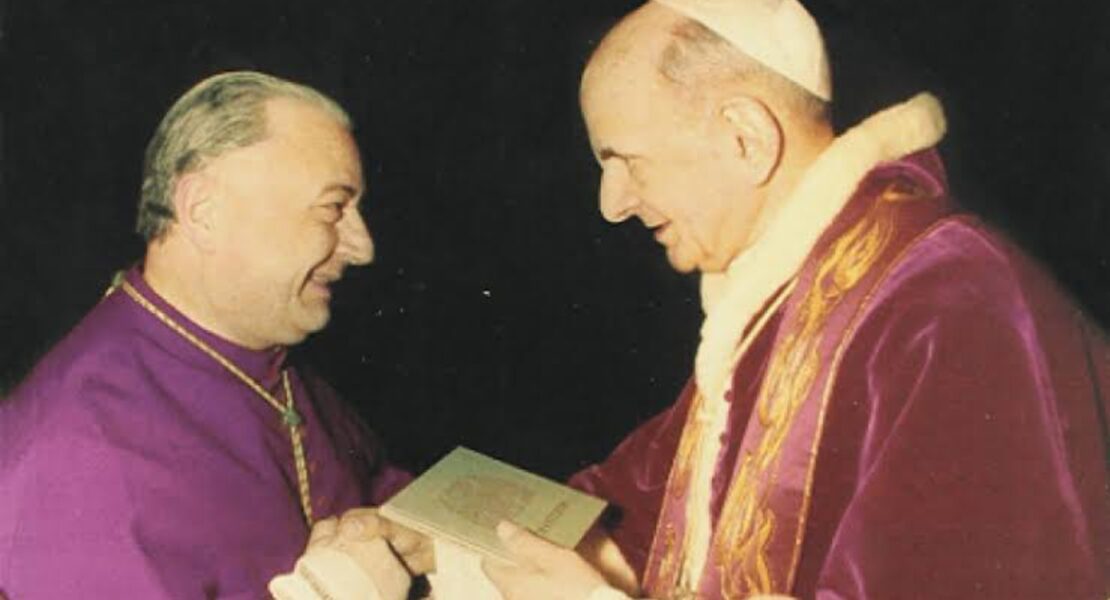
Leão XIV ha dito em um canutazo, caminho de seu carro e quase de passagem, que the Fraternidade São Pio X estaria fuera de la comunión eclesial porque «se niega a aceptar algunos elementos fundamentales de la Iglesia, empezando por varios puntos del Concilio Vaticano II». Y como yo soy de la Fraternidad, sino un mal católico que querria morir dentro de la Igreja, las palabras del Papa me generan a enigmática worrying question: ¿qué tengo exactamente que creer para que não passe a mim?
Because «vários pontos do Concilio» is a border that should be well delined. The Church distinguishes between dogmen, definitive doctrines and teachings of the authentic magisterium. If there is a whole architecture doctrinal destined to specify what requires each teaching, seems reasonable to ask that be used when talking to stay in or out of the eclesiastical communion.
For assim问: ¿debo creer en Lumen gentium del mismo modo que believe in divino de Cristo? ¿Debo creer in Digitatis humanae com the same asentimiento que believe in Immaculada Conception? ¿Pertenece la liberdade religiosa al depósito revelado or belongs to a prudential formulation applied to concrete historical circumstances? And if the resposta is the primeira, ¿en qué momento was defined as revealed truth by God and proposed as such by the Church?
More still: ¿debo adherirme solely to the conciliar text or also to a concrete interpretation of the text? Because the experience of the últimas sixty years seems to indicate that the controversy does not revolve much um the written words rather um the reading that must be made of them. If is obligatory to accept a certain hermeneutics, then it would be useful to know what is, who defines it and with what degree of authority binds.
Benedict XVI considered not necessarily dedicated a famous speech to explain the called «hermenêutica of the continuity». But if a document requires a full interpretative theory to demonstrate that it does not contradict previous formulations of the magisterium, results difficult to sustain at the same time that his meaning is so evident that can be used as an immediate criterion to determine who remain fully in de de Kommunion of the Church.
Same can be asked in respect of de liturgia. Does I obligatorily consider the reforma litúrgica later to the Concilio as the expression most perfect achieved by the Church in its history? Does I believe that the new eucarísticas prayers of Bugnini constitute a improvement compared to the Canum Roman received during centuries? Does I sustain that the ofertório introduced after the reforma expresses in a more full manner the theology of Messe, that the fórmulas traditionais? Is a question of faith or a question susceptible of legitimate discussion?
The tradição katholische always has understood that the Credo and the dogmen define the faith. However, in the practice heseea is imposiere_logic of considering de VATICAL II not simply as an ecumenical concílio that must be received according to the nature proper of its teachings, va, as a espécie of metacriterio or superdogma capable of determining retrospectively all the ortodoxia catholic<|eos|>