


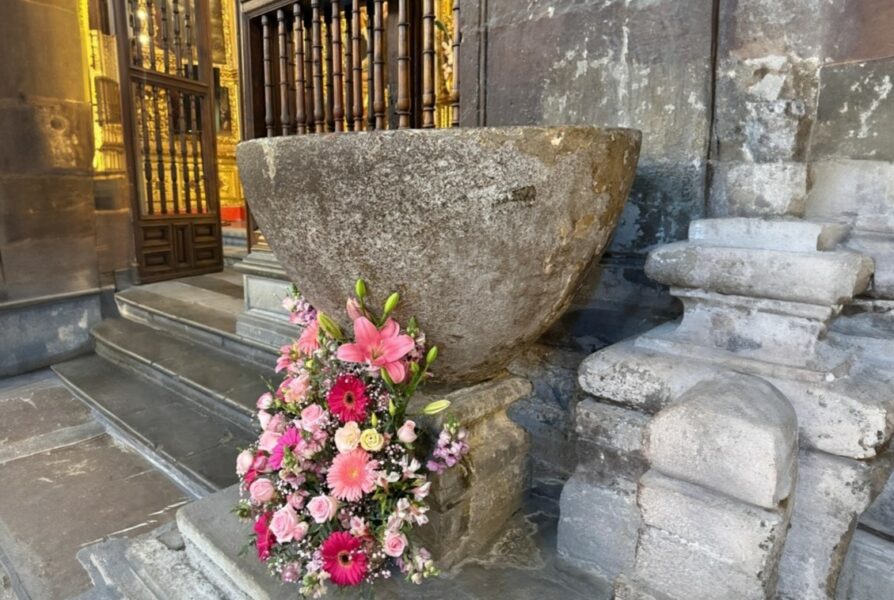
The tremendous crisis of the Archdiocese of Mexico now reaches even places once regarded as sacred and historic spaces that were jealously guarded; however, the style of those close to Archbishop Aguiar’s circles has turned the Church into their own spoils and a place where only VIPs hold power. If the sacristy of the Guadalupana was opened at the discretion of Archbishop Aguiar and rector Efraín Hernández solely for their privileged guests, the same pattern now appears to be replicated at the Metropolitan Cathedral, the seat that Aguiar has disregarded since his arrival.
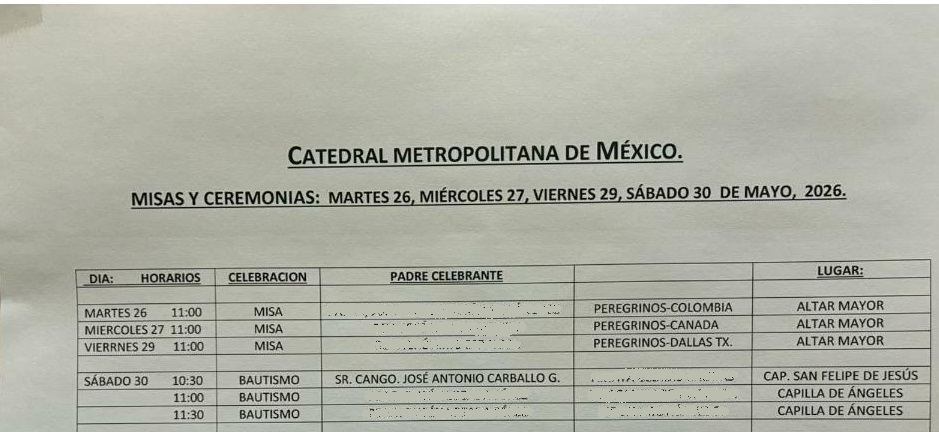
On Saturday, May 30, 2026, the Chapel of San Felipe de Jesús in the Metropolitan Cathedral of Mexico City hosted a baptism that, according to photographic and documentary evidence accessed by this blog at Infovaticana, unfolded with the characteristics of a private, inner-circle event.
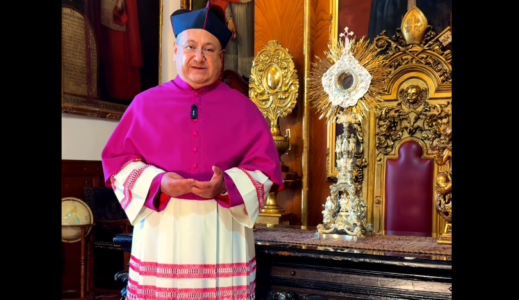
The daughter of a Cathedral employee, who holds the position of administrative assistant, received the sacrament at 10:30 a.m.. The celebration was presided over by Canon José Antonio Carballo García, rector of the Cathedral and Dean of the Venerable Metropolitan Chapter, well known among the clergy of the Archdiocese of Mexico as “the father of the feasts,” for sparing no resources to entertain his guests, mainly high-ranking clerics.
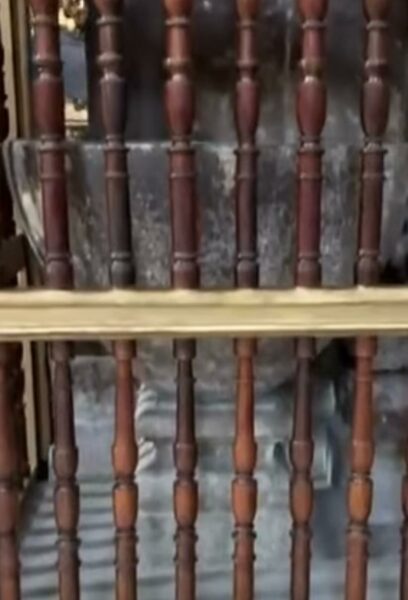
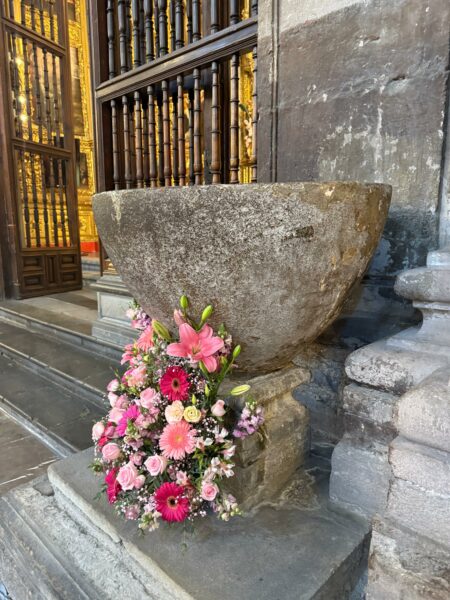
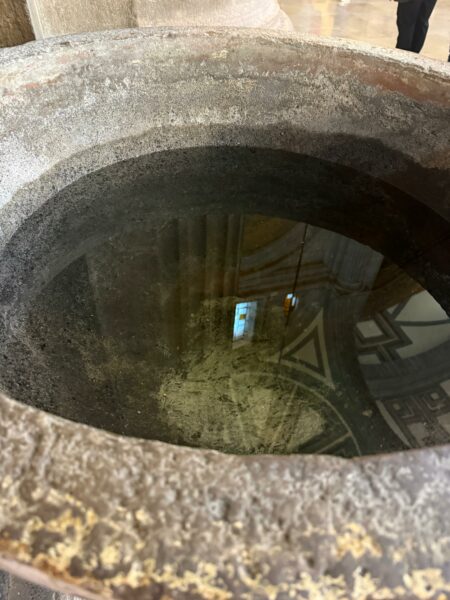
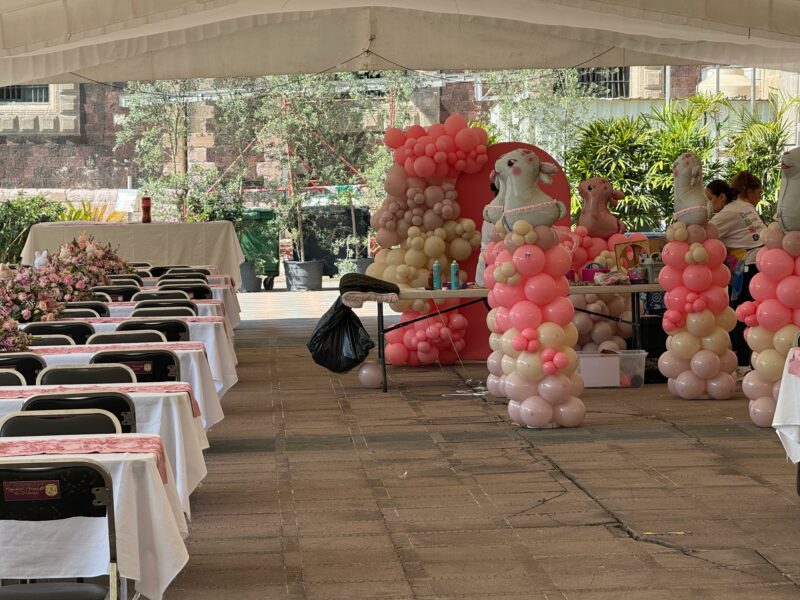
Preparation for the event included the removal of the protective grille from the baptismal font on the afternoon of the previous day, May 29. This historic grille was moved aside, the font was adorned with flowers, and water was added, transforming it from its usual protected state into a functional element for the sacrament. After the ceremony, a family celebration was held in the Canons’ Garden, a space that forms part of the historic complex of the Cathedral.
The Chapel of San Felipe de Jesús holds religious, historic, and artistic value of the highest order. San Felipe de Jesús, baptized in this same cathedral in 1572, is the first Mexican saint and patron of the Archdiocese of Mexico. The main altarpiece, dating from the 18th century, depicts scenes of his martyrdom in Nagasaki. In front of the chapel stands the 16th-century baptismal font, protected by a grille bearing the verified inscription: “In this font the glorious martyr San Felipe de Jesús, native of this most noble and loyal city of Mexico, was baptized. It was rebuilt in the year 1798.”
On February 5, 2002, the saint’s relics were received at the Cathedral and placed in this chapel for public veneration. The font is not an ordinary liturgical element but a protected historic object directly associated with the patron of the Archdiocese. Its manipulation—through the removal of the protective grille, the addition of water, and floral ornamentation—for a private act constitutes material intervention on national historic heritage.
This episode is not isolated. In September 2025, the Director General of Studies and Projects of Cultural Heritage at the federal Secretariat of Culture, Elisa Ruiz Covarrubias, issued an administrative notice against rector José Antonio Carballo García for moving a chandelier during cleaning and restoration work funded by the Cathedral. Although the object remained within the monument, federal officials considered the action was taken without the required permit and threatened to file charges for theft of cultural heritage. The rector defended his conduct by citing his administrative role. The incident revealed tensions between the Church as material possessor and federal authorities as guarantors of the protection regime for historic monuments.
The Metropolitan Cathedral forms part of the Historic Center of Mexico City, declared a UNESCO World Heritage Site in 1987, and is subject to the Federal Law on Archaeological, Artistic, and Historic Monuments and Zones. This law establishes that historic monuments are assets of public interest whose conservation constitutes a public utility and that any material intervention, including the removal of protective elements or alteration of the original state through the addition of water or ornamentation, requires prior authorization from the National Institute of Anthropology and History or the competent federal authority.
Article 52 of the same law stipulates that anyone who by any means damages, alters, or destroys an archaeological, artistic, or historic monument is liable to imprisonment from three to ten years and a fine up to the value of the damage caused. The removal of the historic grille, the ad hoc preparation of the font, and its use in a private context without proof of federal authorization prima facie constitute a serious violation. Rector Carballo García, by personally presiding over the celebration in his capacity as the highest authority of the premises, and the administrator under his protection, could be subject to administrative notices, fines, obligation to restore the original state, and, if willful alteration is proven, criminal charges. All indications suggest that the federal authorities of Historic Sites and Monuments had no prior notice of the event, according to the available evidence.
Inevitable questions arise. Was it under the authorization of the comptroller and administrator of the Cathedral, protected by the rector, who carried out this act to expose the historic and religious heritage of the chapel housing important relics and historic objects? Where were the members of the National Guard, who have the obligation and duty to protect the premises and all it contains? Did the federal authorities of Historic Sites and Monuments grant permission to hold a private event using and manipulating a relic belonging to the first Mexican martyr?
After the religious celebration, who allowed the reception to take place for the family gathering in the Canons’ Garden? Historic religious spaces are now being rented or lent for VIP gatherings like this baptism. Who is failing to respect the seat that serves as the principal center of the metropolitan Church for prayer and religious worship? How far do the networks of those who consider national heritage their personal property extend?
The use of the baptismal font linked to the patron of the Archdiocese, the removal of its historic protection, and the transformation of sacred spaces into venues for private events of associates reveal a pattern of appropriation that erodes both the material heritage of the Nation and the credibility of those duty-bound to safeguard it. This is the level of the crisis afflicting the Archdiocesan Church, and the faithful have the right to clear answers while federal authorities must restore due order.