


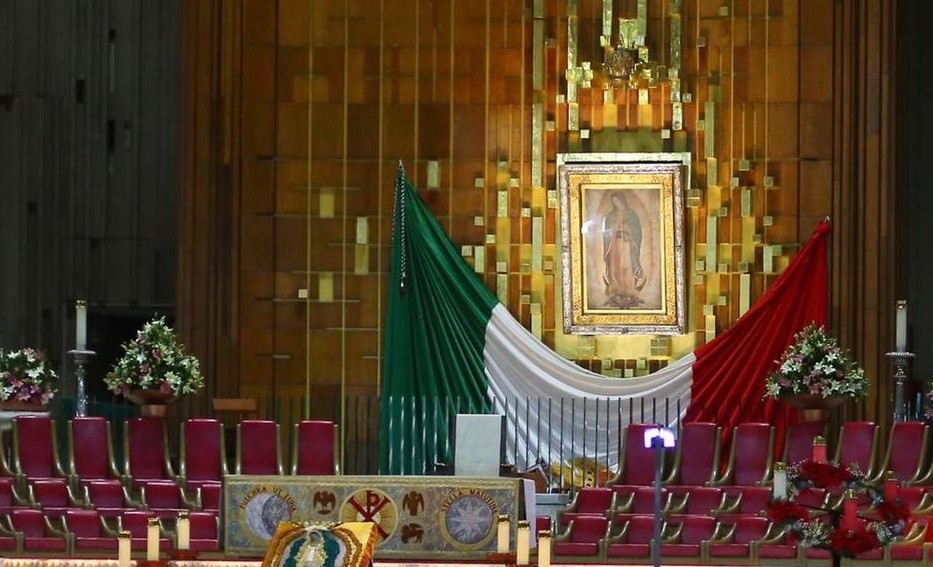
The resignation of the rector of the Insigne y Nacional Basílica de Santa María de Guadalupe has opened an institutional void that can no longer be concealed. The imminence of a decision on a new rector, an appointment that, by right and by the norms governing this Sanctuary, requires higher approval, once again places the beloved Sanctuary at a crossroads that admits neither shortcuts nor expedient solutions. What is at stake is not merely a name, but the credibility of a process that, from its very beginning, was marked by opacity and imposition.
The appointment of Efraín Hernández Díaz as canon and later as rector did not result from a collegial discernment by the Guadalupan chapter as established by the Code of Canon Law and, specifically for this Sanctuary, the Apostolic Brief Praestatem Pietatem of Saint John Paul II. It was the product of manipulations, deliberate opacity, and ill-intentioned decisions that turned Hernández into a cog that soon clashed with the interests of the Archbishop of Mexico and the clique surrounding him.
By displacing and nullifying the role that belongs to the chapter in proposing a canon who genuinely represents the interests of the Basilica itself and not those of an archdiocesan faction, the archbishop violated both the letter and the spirit of canon law and the pontifical norms that grant the Sanctuary special tutelage, now linked to the Mexican Episcopal Conference.
The appointment of the former rector, accused of mismanaging the Sanctuary’s administration, was imposed through maneuvers of pressure and exclusion whose handling ultimately erupted in the media, not without considerable indignation: reports of administrative irregularities, suspicions of financial opacity, and practices that eroded the faithful’s trust. The scandal at the Basilica of Guadalupe was no accident; it was the foreseeable consequence of a style of governance that placed sickening loyalty above institutional and ecclesial transparency and the common good.
If today there is crisis, resignation, and paralysis, the higher and direct responsible parties are more than well known. To pretend that an archbishop whose time has ended and whose resignation from pastoral governance has already been submitted should continue intervening in decisions that belong to the chapter in order to impose a new rector who is aligned and loyal would amount to repeating that same modus operandi, deceiving the Church in Mexico by maintaining the same state of affairs, only with graver consequences: the one “blessed” by the archbishop would carry, from day one, the sack of guilt and the stigma of having to cover up or defer what they have neither wanted nor been able to answer: the results of the canonical investigation opened against the former rector and the findings of the Deloitte audit, whose contents remain hidden from the public and from the chapter itself.
There is no doubt that the Archbishop of Mexico is acting with the desperation of someone who needs to present the Holy See with an outcome that calms the waters before major interventions become inevitable. That rush to “resolve” at any cost cannot be accepted as canonical normality. The chapter of the Basilica of Guadalupe is not closed. The former rector and, above all, the Archbishop of Mexico must, first and foremost, render clear and public accounts of what occurred in the administration of the Sanctuary, what happened to the resources entrusted by the faithful, and why opacity and contradictions have been the dominant tone. Only after such clarification can a new appointment be legitimately discussed.
In every crisis there are lessons, and, if there is sufficient humility, also new opportunities. The selection of the next rector of the Basilica of Guadalupe cannot repeat the mistakes of the past nor tolerate the interference of an archbishop in a clear state of obsolescence who seeks, above all, to protect himself. It is imperative that those who thoroughly know the juridical, pastoral, and administrative mechanisms of this Sanctuary, beginning with the chapter and the authoritative voices of the Mexican Church, promote a profound reform that effectively links the Mexican Episcopal Conference. The statutes and, as a priority, the Apostolic Brief Praestatem Pietatem of John Paul II, whose updating belongs to Pope Leo XIV, must be reviewed to give a new, more transparent, and collegial dynamic to the functions of a place that belongs not only to the Archdiocese of Mexico, but to the people of God in this nation and beyond its borders.
The Basilica of Guadalupe deserves more than a continuation disguised as normality. It deserves truth, justice, and a governance structure that prevents the errors and opacities of the past from recurring under new names. The time of impositions and cover-ups can no longer be repeated. It is now time to act with the responsibility and love for the Truth that the Basilica demands, but without forgetting. One cannot cover the sun with a finger. And the Archbishop of Mexico knows that much is against him.