


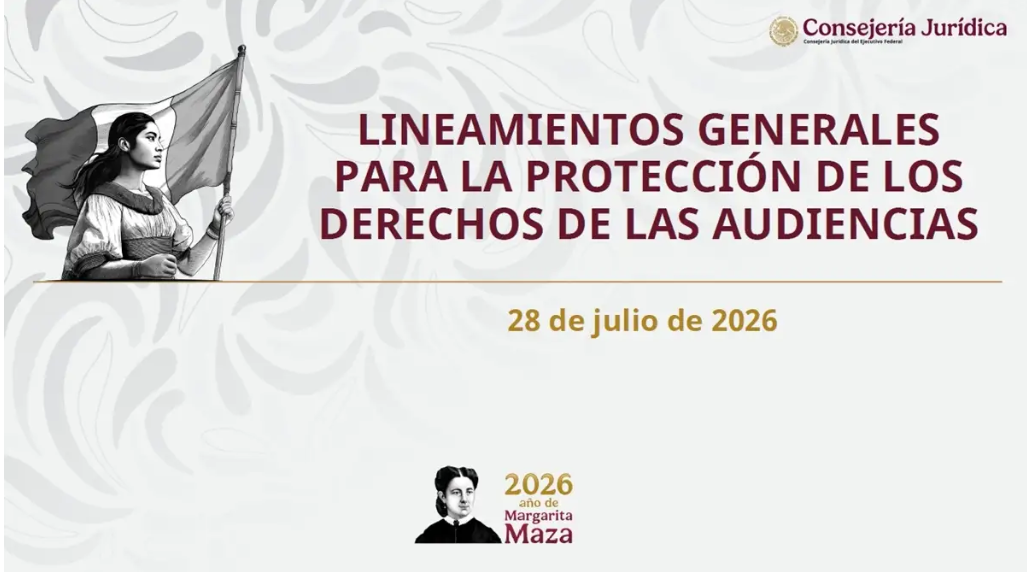
El Semanario de Guadalajara.- The pursuit of truth is one of the pillars of any free society. The right of individuals to receive truthful, plural, and timely information is part of the common good and strengthens the responsible participation of citizens in public life. For this reason, the protection of audience rights represents a legitimate cause that deserves to be promoted and defended.
Defending audiences or controlling information? In Mexico, the recent proposal of guidelines on telecommunications and broadcasting has sparked a broad debate and reflection. Its purpose is to strengthen the protection of audiences and combat disinformation. However, it has also raised concerns about the mechanisms through which this objective is intended to be achieved.
The new provisions include elements that raise legitimate concerns, especially because they establish economic sanctions for those who disseminate information deemed false, decontextualized, or presented outside its historical context.
The central issue does not lie in the importance of combating fake news, but in determining who will have the authority to decide when information is true, false, or presented out of context. Reality requires investigation, cross-referencing of sources, contextualization, and a permanent willingness to rectify when new elements emerge.
The disappearance of autonomous bodies and the concentration of regulatory powers in government agencies has raised questions about the delicate balance between the legitimate regulation of the State and the indispensable freedom of expression. A strong democracy needs institutions that simultaneously protect the rights of audiences and the independence of those who inform.
This does not mean that the media are exempt from responsibility. On the contrary, they are called to strengthen their codes of ethics, the verification of information, the right of reply, and correction mechanisms when errors are made. Credibility is built with transparency and a permanent commitment to the truth.
Audiences also have an irreplaceable responsibility. In an era marked by immediacy and an overabundance of information, it is essential to develop a critical spirit that allows distinguishing between information, opinion, propaganda, and disinformation. An informed citizenry is the best guarantee for preserving truly free communication.
Protecting audience rights is a shared task. It is up to the State to establish a fair legal framework; to the media, to exercise ethical and professional journalism; and to citizens, to participate with judgment and responsibility. Only in this way can communication continue to be a true service to truth, freedom, and the common good.
Freedom of expression has never been a comfortable right for those in power, but neither can it become a privilege without responsibility for those who inform. In a mature democracy, there must be a balance that simultaneously guarantees society’s right to be informed and the independence of the media.
The best protection of audience rights will continue to rest on responsible journalists, media committed to ethics, and critical citizens, rather than on mechanisms that could be interpreted as forms of control or censorship.