


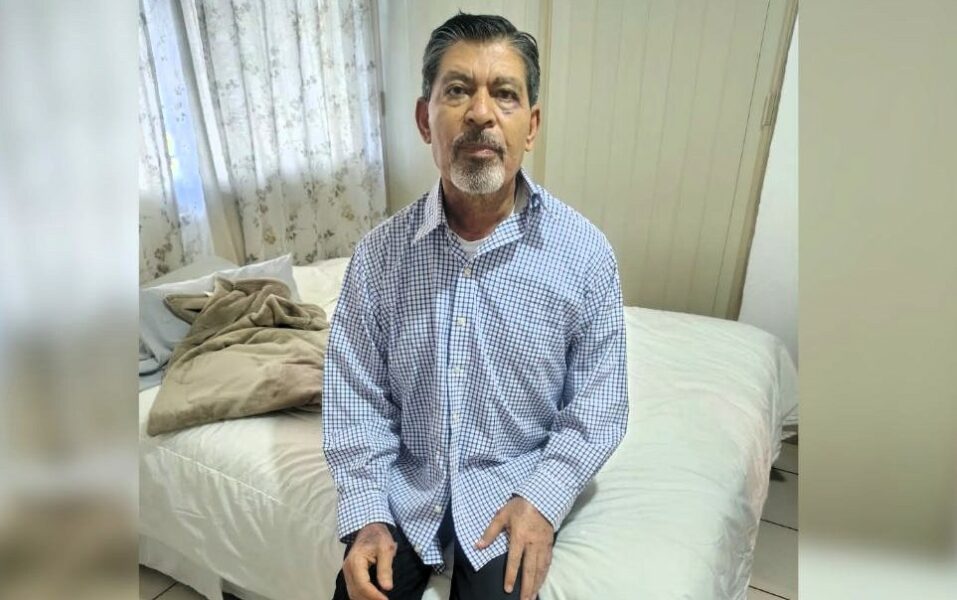
On November 1, 2026, on the Solemnity of All Saints, the Diocese of Culiacán published a circular letter signed by Bishop Jesús José Herrera Quiñónez updating the situation of Father Clemente Morales Topete, pastor of Cristo Resucitado, and issuing an explicit call for justice and peace amid the violence afflicting Sinaloa. The same communiqué was shared on the social media channels of the Mexican Episcopal Conference.
The sequence of events unfolded just days earlier when the priest was reported missing since the afternoon of Saturday, October 24. The diocese made the available information public, joined the search bulletin issued by the Government of Sinaloa, and notified the Mexican Episcopal Conference, which invited prayer and collaboration. On Tuesday, October 27, Clemente Morales returned on his own, driving his pickup truck to the parish house; although his health condition was not immediately apparent, this circular letter revealed that the priest arrived in a “lamentable” state, showing clear signs of the violence he had endured. He was promptly attended to by members of his community, fellow priests, a physician, and authorities.
After his return, he was transferred to a clinic for specialized medical care. He presented multiple bruises and burns on various parts of his body. Although the injuries did not pose an immediate threat to his life, they required treatment and follow-up. The experience also left psychological and emotional effects stemming from the threats he received. He remains under medical observation; his progress is favorable, yet recovery will demand time, care, and comprehensive support. The diocese emphasizes that the recovery of anyone who has suffered violence requires respect, understanding, closeness, and an environment that allows them to regain tranquility and trust.
Regarding the circumstances of the events, the circular confirms, with responsibility and without preempting conclusions that could compromise ongoing investigations, that the priest “was abducted by a group of unknown individuals and taken to an undisclosed location, was beaten and even suffered severe burns on his body, was asked for information he did not possess and therefore could not provide, was held for three days during which he repeatedly received death threats, until he was released last Tuesday.”
The letter expresses gratitude for the solidarity, prayers, and accompaniment of communities, institutions, and the media. At the same time, it places Father Clemente’s suffering within that of so many families awaiting news of missing loved ones. “As a Church, we are part of the Body of Christ. Therefore, the pain of those who suffer is not foreign to us.” It reproves, rejects, and condemns actions that violate life and physical and moral integrity, including physical and psychological torture and arbitrary detentions, citing the pastoral constitution Gaudium et spes (n. 27). No circumstance justifies mistreatment, threats, aggression, or the disappearance of a human being.
The bishop issues a firm call to those who generate violence: “out of compassion, stop! No human life is disposable. No family deserves to live under threat, fear, or uncertainty.” He recalls that divine mercy does not mean indifference to evil nor does it eliminate responsibility for one’s own actions. Prayers are offered for the conversion of those who do evil, but such prayer does not imply approval or justification of their actions.
Municipal, state, and federal authorities are thanked for their efforts to ensure the priest’s safe return, and the call continues for coordinated work to clarify the facts, identify those responsible, and ensure they answer to justice. However, concern is expressed that, after more than two years of this situation—with families suffering, disappearances, unlawful detentions, violent deaths, and, in recent months, feminicides—what has been done has not been enough to restore peace. “Speeches and statistical data are not enough when families continue to suffer and people still live in fear.” It urges strengthening prevention, security, the search for the missing, the administration of justice, and comprehensive care for victims. Peace is a shared responsibility, but authorities bear a particular and inalienable duty.
Sinaloan society is asked to maintain solidarity and respect toward victims and their families. There is concern that, in addition to physical suffering, some also face accusations, mockery, and hasty judgments on social media. Prudence is invited: a personal opinion does not by itself constitute truth, and before sharing information one should ask whether it is true, whether it helps clarify the facts, and whether it respects the dignity of persons. The Gospel calls us to recognize the other as a brother, not as an object of suspicion or condemnation.
Finally, the bishop reiterates that society cannot resign itself to living in fear or allow violence to dictate relationships. “We want peace and must seek it together.” He recalls the words of Pope Francis, cited by Apostolic Nuncio Mons. Joseph Spiteri during his pastoral visit: “social peace is a craft, an artisan’s work.” He invites families, educational institutions, civil organizations, business leaders, the media, religious communities, and people of goodwill to build paths of encounter, reconciliation, and respect for life. He places trust in Jesus Christ, “our peace,” and asks for the intercession of Our Lady of the Rosary, patroness of the cathedral and the diocesan Church, for Culiacán and all of Sinaloa, especially for families searching for their loved ones and for the conversion of those who have chosen the path of violence.
The document concludes with a concrete commitment to work for truth, justice, and peace and with the request for grace to be “artisans of peace and witnesses of hope.”
The circular letter from the Bishop of Culiacán can be downloaded at the following link: