


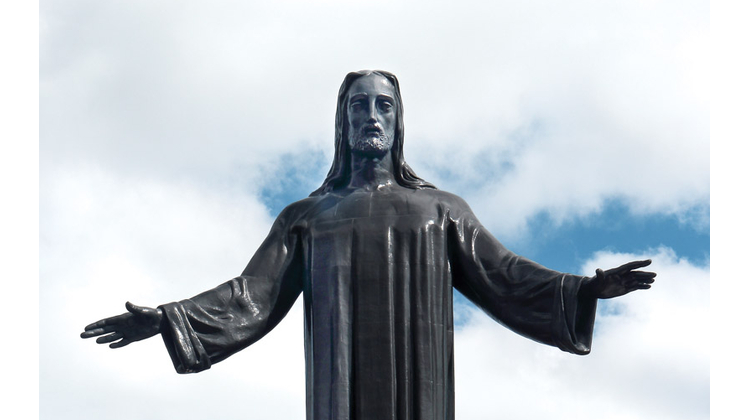
Fr. José Juan Sánchez Jácome / ACN.- As the 100th anniversary of the start of the Cristero War is marked, on July 31, the Mexican Episcopal Conference issued a call to transform those events into a renewed commitment to religious freedom, reconciliation, and the building of peace.
For the Christian community, it is an occasion to return to our origins in the faith and to value the unconditional dedication of so many brothers and sisters who remained steadfast, who defended the faith, and who did not hesitate to give their lives crying out: “Long live Christ the King!”
A reflection by Tertullian regarding the Christians persecuted and killed by the Roman Empire applies well to the Mexican martyrs, especially to highlight the flourishing of faith in the places where their blessed and innocent blood was shed, like that of Christ: “The blood of the martyrs is the seed of Christians” (Apol., 50, 13).
The Mexican martyrs, like Father Miguel Agustín Pro, paradoxically died crying out “Long live Christ the King!” They die because the King is alive. They die shouting that the King may live.
This title applied to Jesus Christ is paradoxical for a secular gaze based on the parameters of the power wielded by the mighty image of a king. Where is the power of a king who cannot triumph over his persecutors? On what is his might based if he cannot deliver his servants from the scaffold? In what exactly does his kingdom consist if he cannot preserve his disciples? Why is he called king if some have dominion over him, as seen on Calvary and in the death of his followers?
Ultimately, these questions relate to the challenge Jesus Christ endured—perhaps needing to add nothing more to all the sufferings he had borne—when the chief priests, scribes, and elders, enraged, taunted him: “If he is truly the King of Israel, let him come down now from the cross, and we will believe in him” (Mt 27:42).
It remains paradoxical for the secular mindset to speak of a king who does not govern, who does not prevail, who does not subdue his adversaries, and who does not triumph over his opponents. That, being an omnipotent God, he appears rather as an impotent God.
Yet the greatest paradox lies in the fact that he is king because he did not come down from the cross. Countless men and women, throughout the centuries, continue to believe in him, remain in his following, and are capable of giving their lives for him, whether bloodily or bloodlessly, because he did not come down from the cross, because he is not impotent, but reigns from the cross.
On the cross he continues to inspire and point the way to overcome hatred, sin, and violence. People of our time also continue to be captivated by the mystery of love and forgiveness of the Crucified, like the centurion and his companions who, when Jesus died on the cross, exclaimed: “Truly this was the Son of God” (Mt 27:54), or like the thief who finally renounces his wickedness, his belonging to the kingdom of evil, to ask Jesus to be admitted into his kingdom: “Jesus, remember me when you come into your kingdom” (Lk 23:42).
Jesus continues to reign and will not cease to reign, even when the paradox weighs heavily and it seems to us that sin triumphs and evil has the last word. As on Calvary, evil is threatening, pours out all its contempt, shows no pity to anyone, seduces people, awakens base passions, and makes fear and terror reign.
But despite this noise, good is not destroyed, love never yields, and it remains fundamentally the only possible way out in the face of violence and evil. Good continues to spread through the love and forgiveness that sustains Jesus’ disciples in critical situations and in the most tragic moments.
Imitating the King nailed to the cross, who forgave his executioners, Stephen forgave those who stoned him to death; Father Pro forgave and blessed the soldiers who shot him; the boy José Sánchez del Río forgave those who killed him in a heartless manner; Saint Cristóbal Magallanes declared himself innocent and forgave the authors of his death; Saint Josemaría Robles Hurtado forgave those who executed him.
The Virgin Mary, without shedding her blood, was torn in her heart at the crucifixion of her Son, and into her torn heart we all enter, even those who “do not know what they are doing” and continue to cause much harm to others.
This is how Fr. José Luis Martín Descalzo highlights it in his Stabat Mater: “No, I have no right to steal from men even a single splinter of your death. Although you also die for me. I too need his blood. You redeem me with the blood I lent you. And now? Is it not too much, my son, what you are asking of me? Having been your mother, how could I also be the mother of your murderers? But if I was once a slave, I will remain one. Let them enter, let them enter into my womb. It has been torn so much in this hour that there is room for all.”
Jesus continues to reign in the hearts of so many men and women who respond to hatred with love and who do not cease to bear witness to the Gospel, even when their own lives are at risk.
Saint Toribio Romo, martyr of Christ the King, patron of our migrant brothers and sisters, said: “Lord, forgive me if I am bold, but I beg you to grant me this favor; do not let a single day of my life pass without saying Mass, without embracing you in Communion and if, as punishment for my enormous sins, for my sins as a priest, I must feel your punishment of not attaining this favor one day, give me instead a great hunger for you, a thirst to receive you, that will not cease to torment me on the day I have not drunk from that water you give, which springs from the blessed rock of your wounded side. […] My Good Jesus! ‘Say Mass and die,’ I beg you: ‘Die without ceasing to say a Mass.’”
An anonymous poem, found in the archives of the National League for the Defense of Religious Freedom, refers to the Life, Work, and Death of Father Pedro Maldonado:
Complaints of a Persecuted Priest
The nights of infinite anguish passed;
the days of torment with hunger and dread;
Calles’ dogs with unheard-of hunger
searched my house, looking for the little priest,
sating their fury and rage on my kin.
What was my crime? Wearing the cassock,
bearing the crown, wearing trousers;
one had to use arrows, feathers, and a club,
sell one’s conscience and Christian soul,
and, in short, prostitute oneself to the thieving government.
I prefer death: I am a priest.
I prefer exile: I am not so vile a being.
Better the guard of the tiger or coyote,
better martyrdom than being an Iscariot,
better a hermit than an infamous servant…”
Jesus reigns not like the kings of the world, not like the kings of the moment who, sick with power, oppress, persecute, and despise. His kingship is not related to any kind of power, but to the omnipotent power of love. As John Paul II said: “Love always wins! As Christ has won! Love has won! Even if at times, in the face of concrete events and situations, it may seem powerless to us. Christ seemed powerless on the Cross. God can always do more!”
His only power is love, the love that gives itself to give life, eternal life; the love that knows how to draw good from evil, to soften a hardened heart, to bring peace to the most violent conflict, and to kindle hope in the densest darkness.
In June 1848, the celebrated writer Chateaubriand, author of “The Genius of Christianity,” was dying in Paris. A few friends prayed in silence beside his bed. Suddenly the boom of a cannon was heard announcing the imminent fall of the monarchy of Louis Philippe and the advent of the republic. The dying man opened his eyes and with a thread of a voice asked:
– What is happening?
– The head of government is changing, he was told.
– Really? —said the sick man—. Give me my Crucifix. He took it in his hands and exclaimed: “Wretches, every moment they change government… They do not want to understand that only Jesus can save them. Behold my King! It was sweet for me to live for Him; it will be my glory to die with Him!”
Celebrating the martyrs of the Church and the Mexican martyrs, on this centenary of the beginning of the religious persecution, let us not cease to cry out with our voice and our witness: “Long live Christ the King and Holy Mary of Guadalupe!”