


The Pope is not in Rome, he is still in Africa, in the Eternal City the anniversary of Pope Francis was celebrated without pain or glory. Many memories in friendly media, those of the regime and the addicts. Between Trump and the anniversary of Pope Francis, rather its repercussion in the official press, the Africa thing has been overshadowed. We start another day…
The Pope in Malabo.
The topics that Pope Leo XIV addressed during a brief meeting with journalists on board the plane that took him from Luanda to Malabo: the first anniversary of his death: the collaboration between the Church and the State in health and education in Angola. The perspective—not immediately evident—of the creation of a new Angolan cardinal and the possibility of new dioceses in a country where faith is growing. Leo XIV wanted to remember his predecessor first, Pope Francis, on the first anniversary of his death. «He left and gave so much to the Church with his life, his witness, his words and his actions,» said the Holy Father, emphasizing the «closeness to the poorest, the smallest, the sick, children and the elderly.» The Pope highlighted two legacies in particular: universal fraternity—»which seeks to promote authentic respect for all men and women»—and the message of mercy. Leo XIV specifically recalled the homily of March 17, 2013, even before the inauguration of his pontificate, when Francis preached on the Gospel story of the woman caught in adultery, «how he spoke from the heart of God’s mercy, how he spoke from the heart of this great love, of forgiveness.»
«It has not yet been decided when new cardinals will be appointed. We must analyze the issue on a global level.» Without setting a deadline, Leo XIV offered a ray of hope: «We hope that for Africa, and perhaps even for Angola, in the future—I will not say in the near future, but a little further away—we can consider the appointment, the creation of a new cardinal for Angola as well.»
Prevost in the Communist Party archives.
A recently discovered photograph, taken in Rome in 1983, shows a young Robert Francis Prevost participating in a demonstration against the deployment of NATO missiles. Luca Casarini, a well-known left-wing Italian activist for his role in the «no-global» movement and, more recently, for his work in migrant rescue operations in the Mediterranean, posted on his Facebook profile an image of the young Father Robert Prevost during a peace march: “You have come a long way, brother Robert. But you have not changed course.” The image, which was unearthed, was first published a decade later, in 1993, in the Italian magazine Mosaico di pace , within a report dedicated to Christian commitment to non-violence. En November 2025, Archbishop Giovanni Ricchiuti, national president of Pax Christi, presented a copy of the image to Pope Leo XIV during an official meeting. The photograph also appears among the images preserved in the historical archive of the Italian Communist Party. Luca Casarini was personally invited by Pope Francis to participate in the Synod on Synodality.
Saints before their time?
The task of Catholic journalism is not to write the lives of saints before their time. It is to look the Church in the eyes, as it is, listen to its labored breathing, record its wounds. The pontificate of Pope Francis polarized the Church like few others in recent history, creating a fracture that the pontificate of Leo XIV seeks to remedy with Augustinian patience.
Pope Francis longed for «a poor Church for the poor» and resided in Santa Marta, not in the Apostolic Palace: a choice presented as a sign of humility, but which in a few years became an instrument of personal and opaque government, far from the institutional filters that the Curia, for better or worse, had guaranteed for centuries. The door of Santa Marta opened to whom the Pope wanted and closed to whom he did not: not the promised transparency, but a new form of court, less controllable. Not to mention the costs. Evangelii Gaudium advocated for a Church «bruised, hurt and dirty from having been in the streets.» But in the twelve years that followed, it was above all priests, religious and bishops who found themselves hurt and stained: not for having followed his precepts, but for having been overwhelmed by canon law transformed into a punitive instrument, modified by motu proprio that have stratified a vexatious, complicated and often contradictory system. During Francis’s pontificate, the gap between official discourse and practice sometimes became abysmal.
Mercy was preached, and priests were suspended even before the veracity of the accusations was verified, just to provide the media with a culprit to expose. Synodality was celebrated, and those who dared to raise legitimate questions about incomprehensible texts like In Ecclesiarum Communione were expelled without mercy . Poverty was preached and huge sums were spent on whims of a new image: wardrobes were redone to look more humble, the Apostolic Palace was abandoned in favor of a Santa Marta renovated to measure, the Castel Gandolfo Palace was abandoned and then reopened as a museum attraction; and meanwhile, the Dicastery for Communication was allowed to turn the Pope’s face into merchandise. Welcome was celebrated for those who had made mistakes and were «distant,» and the «close» were punished with commissioners and suspensions bearing the seal of a hardness devoid of paternalism. Clericalism was railed against and personal friends like Rupnik were protected, while alleged victims waited for justice. Women were welcomed and it was argued, behind closed doors, that «gossip is women’s business,» only to then stigmatize—with a lexical choice that speaks for itself—»homosexualism» in seminaries.
When Benedict XVI died in December 2022, it was Francis himself who orchestrated a scandal to ensure that the funeral would not be celebrated «as if it were a Pope.» The rite was halved, the Pontiff was taken at night, like a thief, to the Basilica in a minibus, the funeral liturgy was simplified, the protocol was rewritten to emphasize a difference that no one had asked for. And when Francis went up to the altar for the homily, the name of Joseph Ratzinger was mentioned only once. Only once. A brevity that was not sobriety: it was deliberate. And that desire to leave the square even before the coffin was carried away. Un year later, those same people who enthusiastically welcomed the unusual protocol discover themselves as scrupulous guardians of Francis’s memory. Everything about that pontificate must be remembered: the gestures, the words, even the silences, nothing must be forgotten.
Zuppi: No fear of changing things.
The last words he received from Francis were for Cardinal Matteo Zuppi a legacy and a mission. What united the Pope who came «almost from the ends of the earth» and Zuppi was precisely the Church of the poor. What connected it to Bergoglio? «Above all, a passion for the Gospel in its two indifferent dimensions: that of building the Church through the communication of the Gospel and that of fraternal love, concrete and physical, for and with the poor. His limits were the golden harvest. The Church does not live for itself. It would betray its foundation. It lives in the world and is not afraid to dialogue with everyone because it has the love of Jesus, compassion for that field hospital to which the world has been reduced. And today there are so many wounded who do not even have a field hospital. Even those are being destroyed. The Pope helped everyone to face suffering, not to be indifferent, to be Christians in life to be so also in prayer and in the spiritual dimension.»
«He knew that I had been a parish priest in the Torre Ángela neighborhood and knew my story in the Sant’Egidio community, which has always been drawn to the peripheries because of its concern for the poor and the communication of the Gospel. When Francis came to Rome, I was auxiliary bishop of the city center.» «He knew that the seed would bear fruit, but it had to be thrown to the ground. For him, a battered Church was better than a perfect Church that preserved itself. I remember the last audience; we talked about the Italian Church. He was aware of the problems, but had hope. It was encouraging and reassuring. He said not to be afraid to change things, to always put Jesus and his smallest brothers, the poor, at the center.»
Unpublished letters from Pope Francis against Milei.
One year after Francis’s death, private conversations come to light in which Francis criticized the foreign policy of the Argentine president regarding the war in Ukraine. Gustavo Vera , a left-wing activist and friend of Bergoglio from his days in Buenos Aires, has written a book titled «Friendship is not negotiated,» in which he publishes some private opinions that the late Pope expressed a year ago about the political situation in Argentina. The exchange between them reveals Francis’s undiplomatic tone in judging the policies of the Argentine government. Milei’s pro-Ukrainian foreign policy was the focus of the Pontiff’s attention. Says Vera in his book, which contains at least 600 private conversations. «The news you tell me saddens me. In a situation like this, one wonders if we will be able to overcome it.»
In 2014, for example, he criticized Cristina Kirchner, whom he accused of using his image to legitimize her government. «It seems curious to me that some people who greet me at the general audience later claim to have had a private meeting: is this an Argentine peculiarity?» wrote the Pope to Vera, commenting on the incident of a meeting with Kirchner’s Vatican delegation, which appeared before the Pope with more than 30 people. His relationship with Alberto Fernández was better , but it deteriorated in 2020 when the then president favored the legalization of abortion, which made the Pope feel betrayed. His relationship with Mauricio Macri, on the other hand, was terrible , whom the Pope accused of «defaming others» through friendly media. In 2015, he also warned Vera about the risk of «Mexicanization» that, according to him, Argentina faced under Macri’s government.
Pope Francis and the course of Leo XIV.
One year after the death of Pope Francis, the greatest risk is reducing his pontificate to a succession of unpublished images and forceful phrases: his hugs to prisoners, the poor and migrants, his words about «a fragmented Third World War» or his call for a «poor Church for the poor.» Twelve months after that April 21 what emerges most clearly is not so much his «iconographic» dimension, but the foundation of his teaching, which today has become a key criterion for understanding the course taken by his successor.
The Church of Rome is no longer perceived as a radiant center, but as a reality in constant motion, which extends, exposes itself and accepts its place in geographical and existential peripheries. It seems that Leo understood that the most challenging legacy he has received does not refer to individual reforms, but to a pastoral stance. Leo XIV moves within this grammar, adapting it to the challenges of a new era, which must face a world increasingly in crisis and transformed by innovations like artificial intelligence.
Is Benedict XIV’s resignation valid?
Diddi denied on March 30 a request sent to his office several months earlier, in which access to files related to a formal request presented by Andrea Cionci, author of the book «The Ratzinger Code,» was requested, which raised the theory that Benedict presented a deliberately encoded invalid resignation in 2013. La request was presented on March 26 by the Italian lawyer Roberto Tieghi. On March 30, Diddi stated that access could not be granted during an «investigation phase» and that his office «is conducting investigations and, at the moment, it is not possible to predict when they will conclude.» Does this really matter? The Code of Canon Law explains that if the Pope wishes to resign from his office, for it to be valid, the resignation must be made freely and duly manifested, but not accepted by anyone, pecause on earth there is no authority superior to that of the Roman Pontiff.
In the years following his pontificate, Benedict XVI repeatedly emphasized that he had resigned freely. He also stressed that he did so in Latin, the official legal language of the Church, and before the College of Cardinals, the body responsible for electing his successor. Before his death, Benedict himself frequently stated that his resignation was «a conscious decision» and that there was only one pope, Francis.
Vatican City is a sovereign jurisdiction, governed by the Apostolic See and the papal office is not defined by the law of the city-state, but solely by its function in relation to the governance of said city-state. Diddi, as chief prosecutor of the city-state, is not competent in normal circumstances to investigate what amounts to a matter of canon law. The response from Diddi, then, that the request is in the investigation phase means that not even this basic determination has been made yet.
Was Pope Benedict XIV poisoned?
And if the moment that convinced Pope Benedict XVI to resign was not simply exhaustion, but a mysterious fall that he did not even remember, leaving his handkerchief soaked in blood? La international human rights lawyer Elizabeth Yore analyzes the fact. From a private and confidential letter that Benedict XVI wrote to his long-time biographer, Peter Seewald—kept secret until after the death of Pope Benedict XVI and initially published by the German media— , we discover the chilling details of a head injury suffered during his apostolic trip to Mexico and Cuba in 2012. «I must have tripped over something in the bathroom and fallen.» He recounted that upon waking the next morning, while looking for his handkerchief as usual, he found it «completely soaked in blood.» He did not remember the fall itself. Apparently, a Vatican surgeon treated the wound discreetly so that he could continue attending public events without alarm. La sudden amnesia, combined with a serious hemorrhage resulting from what appeared to be a relatively minor incident, coincides with the symptoms of an overdose or possible interference from the strong sedatives that Benedict XVI already took for the chronic insomnia that had plagued him for years. This could indicate deliberate poisoning with the aim of destabilizing the Pope. His personal physician recommended reducing his consumption of sleeping pills and restricting his future trips.
The truth is that with Pope Francis the rehabilitation of communism accelerated. The agreement between the Vatican and China, signed for the first time by Francis in 2018 and renewed several times even under the pontificate of Leo XIV , has been disastrous for the underground Church. The authorities now tell detained clerics that «the Vatican has ordered them to join» the Patriotic Association. The agreement has become «the most effective weapon to legally destroy underground churches.» Benedict XVI was an obstacle, his unwavering defense of the faith against Marxist ideology and communist regimes made him a target of the globalists , whether through health sabotage, political pressure or both. The result was a pre-selected candidate, eager to adapt to the globalist agenda.
Emmerich and the «posterior church.»
Sodom comes back to life.
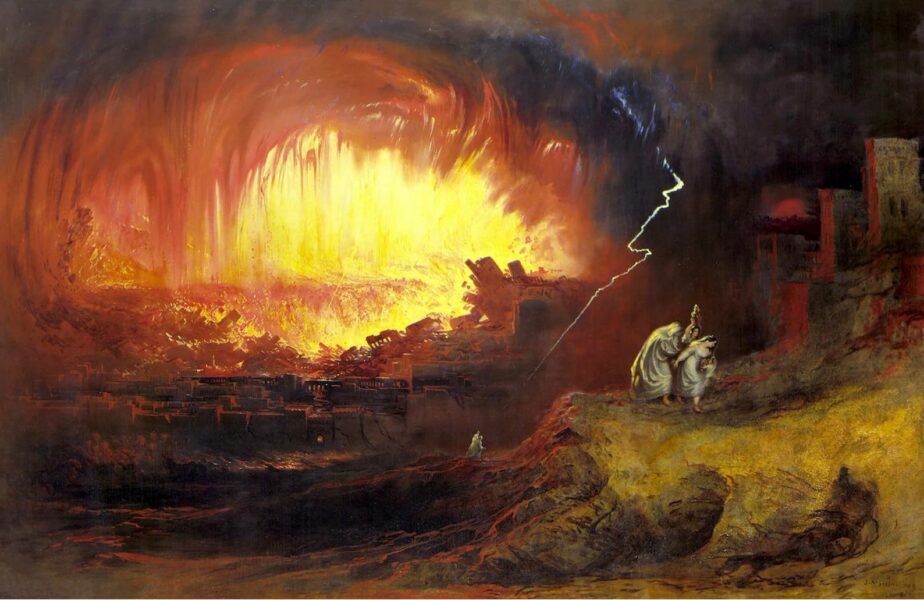
The official Israeli government account, X, announced «Pride Land,» a four-day LGBT festival to be held from June 1 to 4, 2026, at the Dead Sea, the lowest point on Earth. Presented as the largest event of its kind ever held in the Middle East, the gathering promises «uninterrupted celebration, community and connection» in a temporary «Pride City» in the Judean desert, which will feature 15 hotels, beach spaces, all-day parties and renowned artists. The Dead Sea region is biblically linked to Sodom and Gomorrah, cities destroyed by fire from heaven for, among other grave evils, the sinthat bears the name of Sodom.
Marx calls for twisted blessings.
According to a report from Die Tagespost, Marx has asked priests and full-time staff of the Archdiocese of Munich and Freising to implement the controversial guidelines «Segen gibt der Liebe Kraft,» which allow the «blessing» of homosexuals, as well as other «couples» who cannot contract sacramental marriage, such as the divorced and those «remarried» civilly, and even «couples» «of all gender identities and sexual orientations.» The cardinal ordered that the guidelines be published in the parishes and stated that the «theological meaning» of the controversial text must be explained to all those «who still have difficulties with this blessing.» The cardinal expressly emphasized that no couple should be rejected. The “Segen gibt der Liebe Kraft” guidelines were first published by the German Episcopal Conference. Las German guidelines were not approved by the Vatican because they exceed what is prescribed in Pope Francis’s controversial document on homosexual «blessings,» Fiducia Supplicans.
Operation Gladio and the Vatican Bank.
The IOR is the subject of speculation in the successful historical essay on the American system of «stay-behind» in Europe, » Operation Gladio», by Paul L. Williams. The Institute for the Works of Religion (or IOR, by its English acronym) was created on June 27, 1942, by Pope Pius XII (1876-1958) and Bernardino Nogara (1870-1958) with the aim of safeguarding and administering the assets of the Holy See intended for religious and charitable works. The Vatican bank, being headquartered in a sovereign country, is not obliged to remedy any violation of international law nor to reveal the origin of its deposits.
According to Williams, Nogara, who became its first president, ran the business with the habit of systematically destroying transaction documents without leaving a trace. Even in the annual reports, which consisted of long and exhaustive lists of credits and debits, no mail related to the IOR was mentioned, which constantly led possible investigators to a dead end. El Vatican became the perfect place to discreetly link American objectives with those of the Holy See. Cardinal Francis Spellman (1889-1967), from the United States, commented that the fate of Italy would depend on the upcoming 1948 elections and the conflict between communism and Christianity, between freedom and slavery.
According to Williams, in the months prior to the historic Italian elections, the CIA channeled up to sixty-five million dollars in illicit funds to the Vatican bank. Supposedly, the money was delivered in cash, in large suitcases, by members of Lucky Luciano’s (1897-1962) organization. Operation Gladio claims that the source of the money was still the heroin supplied by a well-known Turin pharmaceutical company . Subsequently, distributed through devices like chocolates or fruits filled with the refined opiate, it was sent to the United States via Cuban ports, controlled by the Italo-American criminal organization of Santo Trafficante, which controlled customs.
One year after the 1948 Italian elections, Joseph Stalin (1878-1953) created the Council for Mutual Economic Assistance, an organization tasked with overseeing the economic union between the Soviet Union, Bulgaria, Czechoslovakia, Hungary, Poland and Romania. In response, the CIA opted to support anti-communist political forces and the Stay Behind network, clandestinely flooding the system with millions of dollars from drug trafficking, deposited by members of the mafia clan led by Don Calò, Calogero Vizzini (1887-1954), in Catholic banks, including the Banco Ambrosiano.
In 1949, Pius XII issued a solemn decree declaring that he would excommunicate not only members of the Church who participated in or supported the Communist Party, but also any Catholic who committed the offense of reading or distributing material that praised communism. According to Williams, the Vatican continued to strengthen its ties with the CIA to the point of receiving 20 million dollars annually in financial aid. In return, it was asked to maintain a Vatican roundtable presided over by James Jesus Angleton (1917-1987), the future satrap of American counterintelligence.
Williams recounts how many members of American intelligence from those years became members of the Sovereign Military Order of Malta. Among them were Angleton, William Casey (1913-1987), William Colby (1920-1996) and John McCone (1902-1991), all future CIA directors. General Vernon Walters (1917-2002), CIA deputy director under George H.W. Bush (1924-2018), Alexander Haig (1924-2010), NATO general and future Secretary of State under Ronald Reagan (1911-2004), the aforementioned father of American secret services, William «Wild Bill» Donovan, and the former Nazi super-spy Reinhard Gehlen (1902-1979).