


We start the week with the hangover from some very intense days in terms of information. Our job is to report what we see; we try to be thorough. Not everything published pleases us, but hiding it makes no sense. The expensive and little-read official media are no longer any channel of communication between the bishops and their faithful. One day they will tell us what the faithful really pay for—bishops do not put in a cent—for so many useless publications. There is a good summary of the situation in Who Pays for the Media Party of Ecclesial Progressivism? by Francisco José Delgado. It is unacceptable that free media outlets—those that do not receive a cent from the tangle of official Church institutions—should be the usual and reliable source of information even for bishops and cardinals. Pope Leo knows he learns far more from this humble Specola than from the enormous Vatican media outlets, which waste more than fifty million euros of the faithful’s money every year for nothing. Making decisions can be costly; one must be willing to blush from time to time. The risk is living one’s whole life yellow, and that seems to be where we are.
The “We’ll See” Pontificate
Aldo Maria Valli reproduces another article from Infovaticana; the growth in readers and influence is noticeable. The cited piece is Il pontificato del “vedremo”, which reviews some of the issues that Pope Leo XIV seems unwilling or unable to resolve and which he keeps kicking down the road. “The most pressing matters remain exactly where Francis left them, with that provideatur of 9 May 2025, which has become the unofficial strategy of the pontificate. What then seemed prudence during the transition is now a system: betting that problems will prescribe before he has to solve them.” “… Fernández did not touch it: he left it where it was, which is the cheapest way to confirm it.” “Germany is a paradigmatic example. (…) When asked about the matter during his first trip, the pope dismissed it with a ‘we’ll see’…” “With the Opus Dei, the wait is no longer measured in months but in pontificates…” “‘Traditionis custodes’ is another example of how inaction can explode: the SSPX, needing to secure its spiritual sustenance, has set off a time bomb.” “… ecclesial problems do not disappear on their own; they explode. ‘We’ll see,’ the Pope said. ‘We are seeing it.’”
With the Vatican Families
“Stop the Destruction!”
During the Angelus, the Pope spoke with deep sadness about the “violent attacks that have recently struck several cities and civilian infrastructures in Ukraine, causing the death of innocent people.” “I stand in solidarity with the suffering of the people, who have lived in anguish and fear for years. A new appeal for an end to the violence, for the destruction to stop, and for hearts to open to dialogue and peace!” These words come at an especially delicate moment. Steve Witkoff and Jared Kushner, envoys of Donald Trump, arrived in Kiev on 6 September to meet with Zelensky after having been received by Putin in the Kremlin the previous day. The talks, which lasted three hours, were described by the Russian side as “substantial” and “constructive,” but so far no concrete progress has been achieved. From the beginning of his pontificate, Leo XIV has insisted on the need for an “authentic, just and lasting” peace and has offered the Holy See’s willingness to foster dialogue. The Vatican lacks the means to force a negotiation and does not hide the distance that separates the parties.
Enzo Bianchi in the Vatican Media
Enzo Bianchi died on Tuesday, 1 September, at the Molinette Hospital in Turin. He was 83. That same day, L’Osservatore Romano, whose editor-in-chief is Andrea Monda, published a brief biographical note on page 5 under the headline “Enzo Bianchi Has Died.” The newspaper recalled the founding of Bose, his resignation as prior, and the appointments he received from Benedict XVI and Francis. It also stated that the community had become “a point of reference not only for Catholics but also for ecumenical and interreligious dialogue.” A single line to dismiss what had occupied decades of Bianchi’s life and had made Bose known throughout the world.
Not a word about Bianchi’s publishing house, Qiqajon, and its contribution to the rediscovery of the great Fathers of the Church, the Desert Fathers, and a spiritual tradition that for decades made accessible. Qiqajon published texts of exceptional spiritual, patristic, biblical, and monastic depth, contributing to the formation of generations of readers, both religious and lay.
The official information softens the measure by which, “by a decree of 13 May 2020,” the Holy See had ordered Bianchi to leave the community. Not a word about the reasons for that measure, how it was adopted, and above all at whose instigation; what internal struggles within the community had preceded and accompanied that document; and what subsequently emerged from the investigation and the documents published in later years by those who had read, studied, and finally made public the decree in its entirety.
Ravasi was one of the three cardinals—together with Matteo Zuppi and Giuseppe Versaldi—who approached Secretary of State Pietro Parolin to seek a fairer and more dignified solution for the founder of the community. The proposal was to allow Bianchi to retire to Cellole, the fraternity he founded in Tuscany, where several monks who had decided to accompany him could also live with him. The consequence is that today Bose is a monastery sui iuris, directly subject to the Holy See, and little remains of the ecumenical distinction that marked its birth and history.
Ravasi knew this. He had known Bianchi for forty years, knew Bose, knew the ecclesial and human weight of that measure, and had even sought a behind-the-scenes solution. It is well known that Ravasi’s narcissism is unprecedented and walks hand in hand with anyone who matters, as long as every relationship helps to inflate his ego slightly. As long as Enzo Bianchi was the standard-bearer of Catholic progressivism, ecumenism, and dialogue, everything was fine. But when Bianchi became a nuisance, when he became embroiled in the internal struggles of the community he himself had created, the atmosphere changed.
On 6 September, almost a week after his death, L’Osservatore Romano published an extensive article by Sergio Valzania on the XXXII International Ecumenical Conference on Orthodox Spirituality, to be held in Bose. It recounts the history of Pachomian monasticism, the program, the speakers, the ecumenical dimension of the conference, and the presence of scholars from Australia, Estonia, Canada, Greece, and Poland. Enzo Bianchi does not appear once, without mentioning the man who conceived and promoted it.
Enzo Bianchi dedicated one of his last books to fraternity. In the opening pages he writes that “fraternity is resistance to the cruelty of the world” and describes it as a choice that must be continually renewed: rejecting exclusion, seeking reconciliation, preserving a human communion capable of resisting rivalry and violence.
Between the Laudato Si’ Borgo and the Landfill
Reality is very cruel, and while Pope Leo XIV celebrates at the Laudato Si’ Center in Castel Gandolfo the day that promotes care for our common home through environmental protection and local development, the City Council of Rome is building a mega-incinerator nearby whose emissions will compromise the effectiveness of the biological experiments at the Laudato Si’ Center. The citizens of the Castelli Romani signed a letter sent on 18 August to the Vatican and the Laudato Si’ Advanced Training Center requesting their intervention to protect the Castelli Romani area, threatened by the project of a large incinerator that Roma Capitale intends to build in Santa Palomba, a few meters from the border with Albano. The plant, designed to dispose of approximately 600,000 tons of waste per year, would be located a short distance from the Pontifical Villas of Castel Gandolfo and Borgo Laudato Si’.
The letter also cites Article 7 of the Lateran Treaty, which obliges the Italian State to protect the goods of the Holy See—including the Pontifical Villas of Castel Gandolfo—and two international conventions (Geneva 1979, Espoo 1991) that establish the principle of prior consultation between neighboring territories for projects with possible transboundary repercussions, such as a large-scale incinerator. These are laws binding on Italy, but which apparently have not been respected.
The Torreciudad Mess Does Not Subside
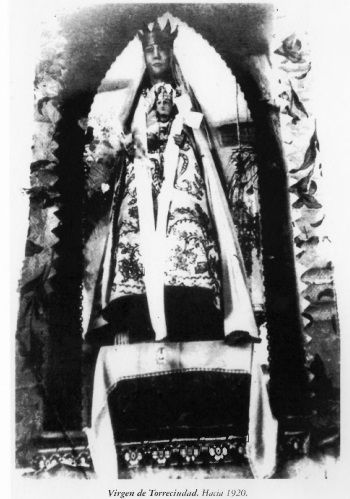
We continue with articles that keep the peculiar bishop of Barbastro in the spotlight. His illusions now focus on the Image of Our Lady of Torreciudad and demand its return to its original location, and he retrieves two letters from the late Pope in which “Mafia intrigues” are mentioned. The prelature sets out the agreements of the time and states that legal differences cannot “be turned into an offensive and unfounded accusation.”
The bishop of Barbastro appeals to the authority of the late Pontiff, Pope Francis, who “was personally aware of the problem,” as he expressed to him during his ad limina visit in December 2021. “Later, in a handwritten note dated 13 July 2023, he wrote to me in his own hand: ‘Do not give in!’ And on 18 September 2024, when I met him in St. Peter’s Square, he asked me directly again: ‘Ángel, have they already taken the Virgin out?’” A few weeks later, in another handwritten note dated 13 October 2024, he expressly warned me of the “Mafia intrigues underway” surrounding this matter, just as I had done in my homily in our cathedral exactly one year earlier.
The Extinction of Christians in the Holy Land
“Christians live this with great difficulty, especially in the West Bank. An economy that previously depended 75% on religious tourism, as in Bethlehem, now sees hundreds of families in misery. It is an emergency situation. Christians are worried about the future of their people, their homes, and their lands. But even those who live in Israel experience uncertainty and difficulties. In northern Israel, organized crime makes life extremely difficult, and many there are also considering the possibility of emigrating to build a better future for their children elsewhere.” “When Pope Leo met with humanitarian workers in the Holy Land, he spoke to us of a true hemorrhage. This hemorrhage is real and concerns us, but there will always be a small presence there, and we will always remain here alongside those who stay.”
The Annulment of Baptismal Records
The Commission of the Bishops’ Conferences of the European Union defends the integrity of baptismal registers before its upcoming decision on the case of a Belgian apostate who requests the removal of his data from the Diocese of Ghent. The Diocese of Ghent decided to make a marginal annotation in the register, indicating the decision of this person, baptized in infancy, to leave the Catholic Church. The bishops maintain that “a baptismal register is not a ‘membership list’ of the Church, but a record of historical facts” that documents the baptisms celebrated and that, by its nature, “cannot in any way be equated with the concept of ‘membership’ applicable, for example, to associations under Civil Law.” Cites several cases in France, Italy, and Malta that support this interpretation of the registers. It also recalls that, according to canon 535 of the Code of Canon Law, “each parish is obliged to keep such registers and to guard them carefully” and that they constitute “a fundamental instrument of proof” in the internal life of the Church. “The rights of a person who no longer wishes to be identified as Catholic cannot go so far as to require the Church to adapt the way in which it itself regards baptismal registers to his or her feelings or opinions.” This does not prevent “the person concerned from exercising his or her freedom of conscience or clearly declaring that he or she no longer wishes to be considered a practicing or believing Catholic.”
“Sufficient for the day is its own trouble.”
Good reading.