


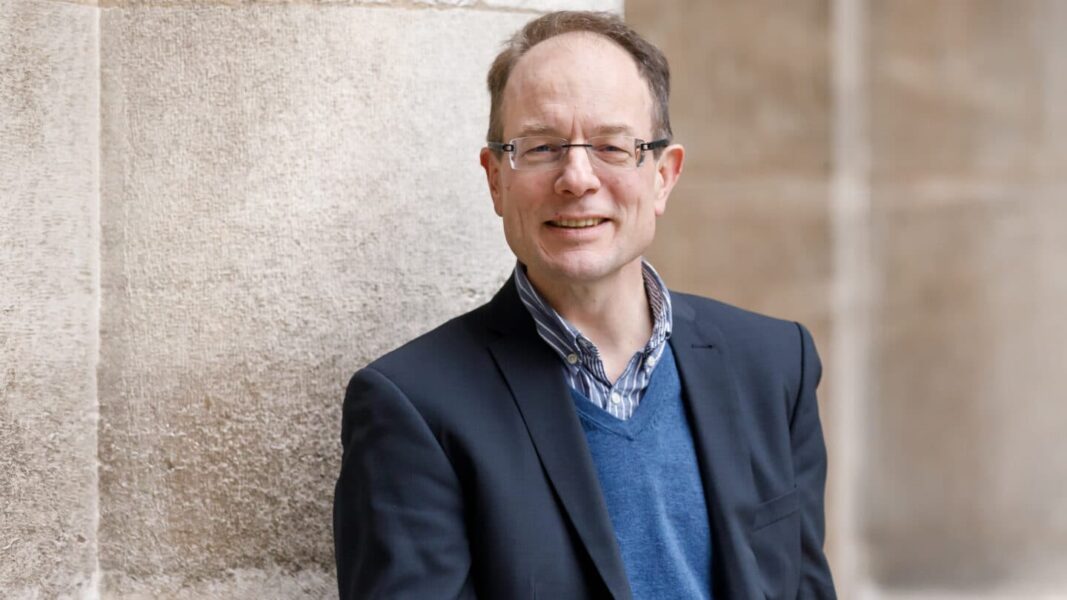
The Viennese theologian Jan-Heiner Tück, a member of the International Theological Commission since October, has responded to the criticism published by the Priestly Fraternity of Saint Pius X against his book Ausverkauf des Konzils and has defended a serious dialogue with the Fraternity that also addresses the legitimate questions about liturgical dignity. His reply, published in the journal Communio, was reported this Friday by the portal katholisch.de.
Tück, a layman and professor of Dogmatics in Vienna, published the book, whose title can be translated as “Liquidation of the Council,” last summer, shortly before the unauthorized episcopal consecrations of the FSSPX. On November 9, Father Matthias Gaudron, professor of Dogmatics at the Zaitzkofen seminary and considered the Fraternity’s principal theologian, responded on the Fraternity’s official website with an extensive text titled The New Faith of a Post-Conciliar Theologian.
Gaudron accuses Tück of not understanding the Fraternity’s internal life and of distorting episodes such as the doctrinal discussions with Rome. He maintains that the Pope’s authority is at the service of the received faith and bound to it, citing Vatican I, Ratzinger himself, and the case of Pope Honorius. He rejects the hermeneutic of reform, which he considers scarcely credible as continuity with tradition, and reproaches Tück for treating the Council as an untouchable super-dogma while relativizing earlier teachings. In ecumenism, in relations with Judaism, in religious freedom, and in the liturgy, the FSSPX priest asserts that post-conciliar positions contradict previous doctrine, and he sees in the new Mass “a striking departure from the Catholic theology of the Holy Mass”. He concludes that the post-conciliar Church is experiencing a profound crisis and presents the consecrations as necessary.
In his response, Tück thanks Gaudron for engaging with his arguments and considers it a welcome sign at a time when doctrinal conversations with the Dicastery for the Doctrine of the Faith have not resumed. But he disputes the core of the Lefebvrian thesis. “It is a particular reading of tradition, marked by history”, he writes about the Fraternity’s position, which in his view does not identify with tradition as a whole. In contrast, Tück defines tradition as a living process of transmitting the faith and not as a deposit of immutable formulas. The disputed issues, he notes, are the papacy, the relationship between tradition and reform, and the Second Vatican Council, particularly religious freedom, non-Christian religions, and the liturgy.
The exchange comes at a moment of maximum distance between Rome and the Fraternity. As katholisch.de recalls, the Prefect of the Doctrine of the Faith, Cardinal Víctor Manuel Fernández, offered a dialogue on the condition that the planned consecrations be renounced, and the FSSPX rejected the offer. In May, before the consecrations, the Fraternity had presented a declaration of faith as an offer of dialogue to the Holy See, in which it opposed several post-conciliar teachings. On July 2, the decree of excommunication was published.
Tück’s position carries its own weight. Critical of Traditionis custodes, which he reproached in 2021 for endangering papal authority, he went so far as to say in May that a schism of the FSSPX could also be good for clarifying positions. Now, already on the Theological Commission, he calls for the rupture to be addressed through a dialogue that does not sidestep the liturgy.
Tück calls for a serious dialogue with the FSSPX that includes the dignity of the liturgy.
Read also
- “Peter, the rock, begins to roll”: a layman highly critical of Traditionis Custodes joins the Theological Commission
- Fernández resists correcting the legal ambiguities of the excommunication decree against the FSSPX
- Bishop Schneider calls for integrating the FSSPX after the excommunications: “They should be accepted as they are”