


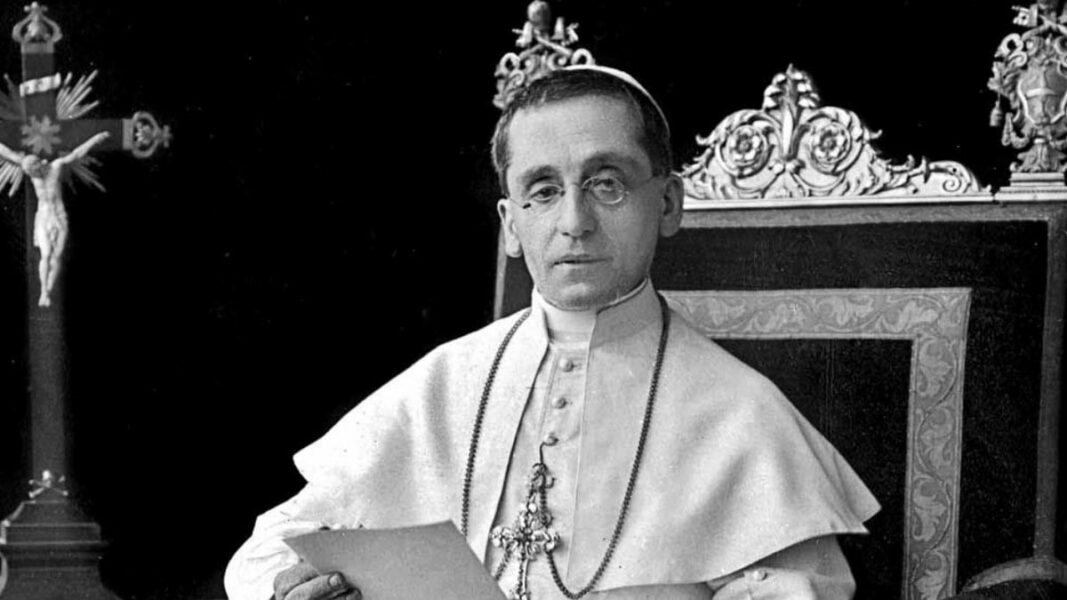
Every November 2, during the commemoration of All the Faithful Departed, priests of the Latin Church have the faculty to celebrate three Masses. This provision, which allows the Eucharistic sacrifice to be offered in a special way for those who have died, was extended to the entire Latin Church by Benedict XV in 1915, in the midst of the First World War.
The measure responds to an ancient Catholic teaching: the efficacy of the sacrifice of the Mass as suffrage for the souls in purgatory.
A tradition consolidated during the First World War
On August 10, 1915, Benedict XV promulgated the apostolic constitution Incruentum altaris.
Europe was then immersed in the First World War, which caused the death of thousands of people and immense suffering among families.
The Pontiff wished to extend to all priests of the Latin Church a faculty that already existed in certain territories, especially in Spain and Portugal.
The new provision allowed each priest to celebrate three Masses on the day of the commemoration of the faithful departed.
Benedict XV explained that this practice responded to the desire to increase the suffrages offered for the souls in purgatory.
Why are three Masses celebrated?
The discipline established by Benedict XV contemplates three distinct intentions.
The first Mass may be offered for an intention chosen by the priest, in accordance with liturgical norms.
The second must be celebrated for all the faithful departed.
The third is offered for the intentions of the Roman Pontiff.
This faculty does not oblige all priests to celebrate three Masses, but allows them to do so on a date especially dedicated to prayer for those who have died.
The practice continues to form part of the liturgical discipline of the Latin Church.
The Mass and the souls in purgatory
Catholic doctrine teaches that the Eucharistic sacrifice has a singular value as suffrage for the departed.
In the Catechism of the Catholic Church, numbers 1030 to 1032, it is explained that those who die in grace and friendship with God, but still need purification, are assured of their eternal salvation.
The Church recommends offering prayers, almsgiving, works of penance, and especially the sacrifice of the Mass for them.
This practice is based on the communion of saints, by which the members of the Church can help one another spiritually through prayer and suffrages.
The meaning of November 2
The commemoration of All the Faithful Departed developed especially during the Middle Ages, promoted by the monastic tradition of Cluny.
Since then, the Church dedicates this day to remembering the deceased, visiting cemeteries, and offering prayers for their eternal rest.
The concession of Benedict XV reinforced the Eucharistic character of this commemoration, by facilitating the offering of more Masses for the souls in purgatory.
More than a century after its promulgation, the provision continues to express Catholic teaching on the efficacy of suffrages and the importance of prayer for the departed.