


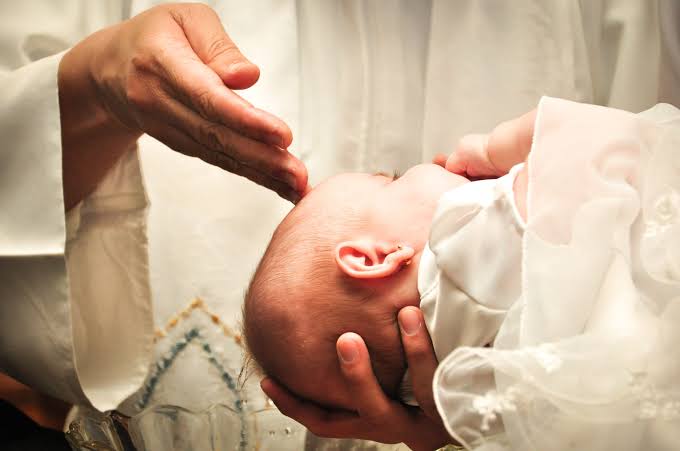
The Cistercian priest Isaak Maria Käfferlein, from the monastic community of Neuzelle in Germany, has issued a warning about reducing Christian life to the reception of sacraments at certain moments in life, without a true personal relationship with Jesus Christ.
In an intervention published by the Maria Friedenshort monastery and reported by Kath.net, the religious questions the fact that many Catholics approach the Church only to celebrate baptisms, first communions, confirmations, marriages or funerals, without these events necessarily leading to a life of faith.
The sacraments require a response from man
Käfferlein begins by clarifying that his reflection does not intend to diminish the importance of the sacraments or question their efficacy.
«And I do not want you to misunderstand me: the sacraments are important. Yes, God himself acts in the sacraments, but a response from man is needed», the religious affirms.
The Cistercian relates this response to following Christ and the condition of disciple, two aspects he considers fundamental to understanding Christian life.
His concern is directed especially at a pastoral practice in which the reception of the sacraments can become a social act, detached from personal conversion and regular participation in the life of the Church.
In this context, the priest resorts to the evangelical expression of not casting pearls before swine, although he clarifies that he does not intend to discriminate against or despise anyone. His intention, he explains, is to draw attention to a situation that he considers necessary to address within the Church.
A Church reduced to providing religious services
The religious describes a reality known in numerous European countries: the Church turned, for certain people, into an institution to which one turns on the great occasions of life.
«We all know» this situation, he points out, before listing the main moments in which many families maintain contact with the parish: birth and baptism, first communion, confirmation, religious marriage and, finally, the funeral.
However, Käfferlein poses a question he considers decisive: «Has this person known God, Jesus Christ, as the living God? Has that happened?»
The question shifts attention from the mere fulfillment of a religious custom to the effective relationship of the baptized person with Christ.
Baptism and Christian life
The Cistercian’s words recall a fundamental distinction of Catholic doctrine: baptism truly incorporates one into the Church and confers sacramental grace, but the Christian is called to develop that new life through faith, conversion and perseverance.
The Catechism of the Catholic Church teaches that baptism constitutes the foundation of all Christian life and the gateway to the other sacraments. It also recalls that baptismal grace is called to grow throughout one’s entire existence.
Father Käfferlein’s reflection does not question the objective value of the sacraments, but warns against receiving them as mere family or social events. His intervention thus raises one of the main pastoral challenges of the Church in historically Catholic but increasingly secularized societies: moving from an inherited religious belonging to a lived and practiced faith.