


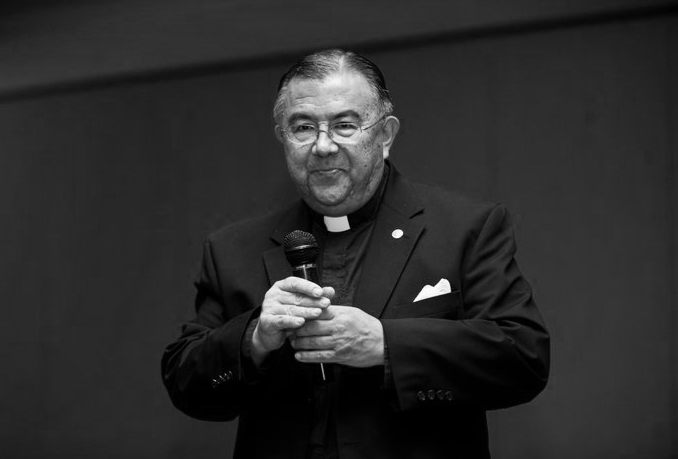
Georgetown University, a Jesuit institution in Washington, is under scrutiny following the publication of an investigation into Father Álvaro Ribeiro, accused of inappropriate sexual conduct toward at least four students during his time as a professor. The priest had been removed from his duties in 1998 after an initial complaint, but returned to campus two years later and was again accused of harassment.
The investigation published on October 16 by the university newspaper The Hoya reconstructs the allegations against Ribeiro, an English professor since 1992, and questions the communication mechanisms between the Society of Jesus and the universities where its priests work.
The case has regained attention after Georgetown updated its institutional page on clerical abuse to include the priest, who died in 2013, although it does not include all the complaints documented by the newspaper.
A Jesuit removed in 1998 who returned two years later
Ribeiro was removed from his duties in 1998 after a student reported having suffered sexual harassment. However, in the spring of 2000 he returned to Georgetown, where he continued his academic work.
According to The Hoya, in 2001 he began a relationship with another student, identified under the pseudonym “James,” who later reported having suffered inappropriate conduct by the priest.
The allegations continued for years. In March 2010, Ribeiro resigned after an internal investigation concluded that he had touched students without their consent.
The university newspaper has collected testimonies and documentation relating to four students who reported inappropriate sexual conduct by the Jesuit over approximately eighteen years.
The investigation also raises questions about the information Georgetown authorities received when Ribeiro returned to campus. It has not been possible to clearly establish whether the university was aware of the complaints prior to 2010.
Deficiencies in the communication of complaints against Jesuits
One of the central aspects of the report is the functioning of the Society of Jesus’s internal mechanisms for handling allegations against its members.
According to the investigation, complaints can be processed within the religious order without there necessarily being an obligation to communicate their results to the university institutions where the priests work.
Colt Anderson, a professor at Fordham University consulted by The Hoya, questioned the lack of transparency in this system. “Everything that is reported goes into a black hole,” he stated.
The newspaper also notes that the public list of Jesuits accused of abuse released by the former Maryland Province focused on cases involving minors. For that reason, Ribeiro did not appear on it, despite the complaints from adult university students.
Survivors and experts interviewed warn that this distinction may leave adult individuals who are also in situations of vulnerability or dependence on their professors and superiors outside public information mechanisms.
The investigation also revealed that Georgetown and the corresponding Jesuit province adopted new protocols in April 2026 to communicate complaints against clergy to the university.
However, according to The Hoya, the institution did not publicly announce the adoption of these measures or inform the survivors interviewed about them. Nor did it provide the newspaper with sufficient details about their implementation and oversight.
James expressed doubts about the effectiveness of the new provisions and stated that he had no reason to trust that they would have served to protect him.
For its part, Georgetown stated that its officials condemn in the strongest terms any abuse committed by members of the clergy and assured that it continues to work to strengthen its policies for the protection and care of victims. The university did not make its senior officials available to the newspaper for an interview, while the Jesuit province did not respond to requests for comment.
Georgetown updates its abuse page following the investigation
The publication of the report had an immediate consequence on the institutional information provided by Georgetown.
According to a second investigation published by The Hoya on October 23, the university modified its page dedicated to clerical abuse to include a reference to Álvaro Ribeiro.
However, the update is limited to mentioning the 2010 investigation and does not include the other complaints that the newspaper had documented through testimonies from former students.
The journalistic follow-up also questions the activity of the working group on clerical abuse created by Georgetown in 2020. This body became a subcommittee in 2021, but does not appear identified in the public list of commissions of the university’s board of directors.
The editorial board of The Hoya criticized the institutional response and described it as “superficial, at best,” considering the changes introduced after the complaints became public to be insufficient.
The university has not offered a detailed public explanation about the additional allegations collected by the newspaper or about the reasons why Ribeiro was able to return to his duties after having been removed in 1998.