


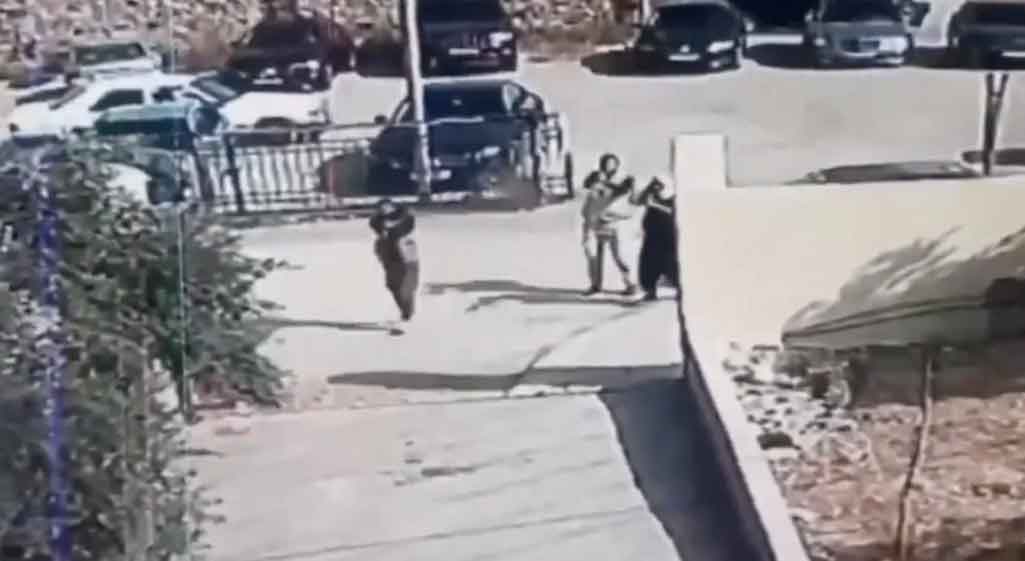
The attack on the Greek Orthodox Church of Saint George in Hammoud, in the Jordanian governorate of Karak, has left nine dead, according to the latest tally from authorities reported by Al Jazeera and Asharq Al-Awsat: eight people died on Friday, October 23, when several armed men opened fire during a funeral, and one more succumbed to injuries on Saturday. Security forces were still searching for the perpetrators, no arrests had been announced, and the Prosecutor’s Office has banned the release of any details of the investigation, according to EWTN News. On Sunday the 25th, Leo XIV joined in the Angelus the grief for the victims of what he called a terrorist attack and expressed his closeness to the community.
No organization has been officially linked to the attack. Interior Minister Mazen al Faraya attributed it to a group of extremists, and Prime Minister Jafar Hassan wrote on the social network X that it is “the result of a terrorist ideology and blind extremism” and that the Government will not allow society to take that path. The authorities consider it premature to determine whether the attackers had links to known groups inside or outside the country, according to Al Jazeera, and media citing Jordanian sources speak of a takfiri ideology. The U.S. portal LifeSiteNews headlined on Saturday that the Islamic State had claimed the attack, but it relies on a message posted on X, attributed to the attackers, stating they had punished the Christians of Karak in revenge for Islam and the Islamic State. Neither the Jordanian authorities nor the major agencies have confirmed that claim.
Accounts of the perpetrators also differ. The first survivors spoke of two men, one of them hooded, and Jordanian sources cited by the press raise the number of attackers to three, who reportedly arrived in a pickup truck. The number of wounded varies by source: Al Jazeera speaks of about forty and Asharq Al-Awsat of twenty-five.
King Abdullah II, who visited Karak hours after the attack, ordered security forces to respond firmly and promised to punish those responsible “with an iron hand.” Jordan declared three days of national mourning, according to the official agency Petra cited by Al Jazeera, and the U.S. Embassy in Amman reported that security has been tightened at shopping centers, embassies and other sensitive locations.
The Churches have closed ranks around the unity of the country. The Greek Orthodox Patriarch of Jerusalem, Theophilos III, said that such an atrocious and bloody act would not break national unity, according to Vatican News, and his patriarchate stated that Christians are children of that land and will remain there. The Latin Patriarchate of Jerusalem condemned the attack in the strongest terms and maintained that Jordan’s national unity is a safeguard against terrorism and extremism. The patriarchs and heads of the Churches of Jerusalem described the attack as a “grave crime against God and against humanity” and called for the bells to ring at noon on Saturday, as happened in Jordan and Palestine. The Jordanian Council of Churches denounced that the attack was against social peace and coexistence and rejected any attempt to sow religious division, and Ecumenical Patriarch Bartholomew telephoned Theophilos III.
Attacks against Christians are exceptional in Jordan, where some 300,000 faithful of various denominations live. Karak itself suffered in December 2016 an attack claimed by the Islamic State against its castle and the police, in which ten people died.
Two days after the massacre, Jordan counts nine dead and still has no name for those who fired on a Christian funeral.
Read also