


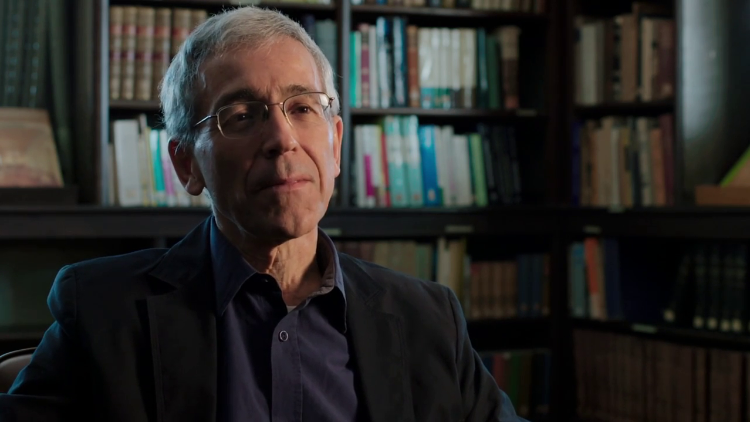
Colombian justice has archived the investigation against Jesuit priest Francisco de Roux, accused of allegedly covering up sexual abuse committed against minors by another religious of the Society of Jesus. The 64th Criminal Court of the Circuit with Knowledge Function of Bogotá decreed the preclusion of the process after concluding that there were no elements to attribute to him conduct constituting a crime.
The decision, adopted on October 16 and made public on Tuesday the 20th, responded to a request from the Attorney General’s Office. According to the Colombian magazine Semana, the judge considered that «there is no evidence of non-compliance with a functional, religious, or institutional duty» on the part of the priest, who had acted in accordance with the procedures established by canon law.
A complaint for abuses committed in the 1970s
The investigation was opened in November 2024, after Luis Fernando Llano Narváez publicly denounced that Fr. De Roux, then provincial superior of the Jesuits in Colombia, had not reported to civil authorities the abuses committed by priest Darío Chavarriaga.
According to the complainant, in 2014 he informed the provincial of the sexual abuses that he and his seven sisters had suffered between 1976 and 1979, when they were minors.
After learning of the facts, De Roux initiated a canonical investigation that culminated in the imposition of ecclesiastical sanctions on Chavarriaga, including the prohibition of publicly exercising priestly ministry and his confinement in a residence of the Society of Jesus. The religious died in September 2015.
However, the case was not referred to the Attorney General’s Office. De Roux later explained that the canon law in force at the time did not impose that obligation on him and that, after consulting with lawyers, he had received the opinion that the crimes were time-barred under Colombian legislation at that time.
The judge rules out criminal liability
During the investigation, the Attorney General’s Office examined the actions carried out by De Roux and concluded that there were no grounds to keep the criminal proceedings open.
The judge accepted this position, considering that the priest had activated the institutional mechanisms provided by the Church to investigate the complaints and adopt the corresponding disciplinary measures.
The resolution establishes that criminal responsibility could not be attributed to the Jesuit for not having promoted an investigation before the civil justice system. The court concluded that his conduct did not meet the necessary elements to configure the crime of favoritism under investigation.
The preclusion puts an end to the proceedings against De Roux, without altering the facts of abuse that gave rise to the complaint. The decision became final after the victims present at the hearing did not file appeals.
Francisco de Roux thanks the judicial decision
After the resolution became known, the priest published a statement in the Colombian magazine Cambio, in which he expressed his solidarity with those who suffered sexual abuse during their childhood at the hands of priests, as well as with members of the Church who have been unjustly accused.
De Roux also expressed his respect for the victims and journalists who publicly questioned his actions in this case. He assured that he holds no resentment toward those who doubted him and thanked the support received during the process.
The Jesuit, who presided over Colombia’s Truth Commission, also expressed his recognition of the judge for the independence and rigor with which, in his opinion, he examined the case.
«This decision allows me to close this chapter with the hope that one day justice will also embrace all victims,» the priest stated, who assured that he wishes to dedicate the years he has left to working for peace and reconciliation in Colombia.