


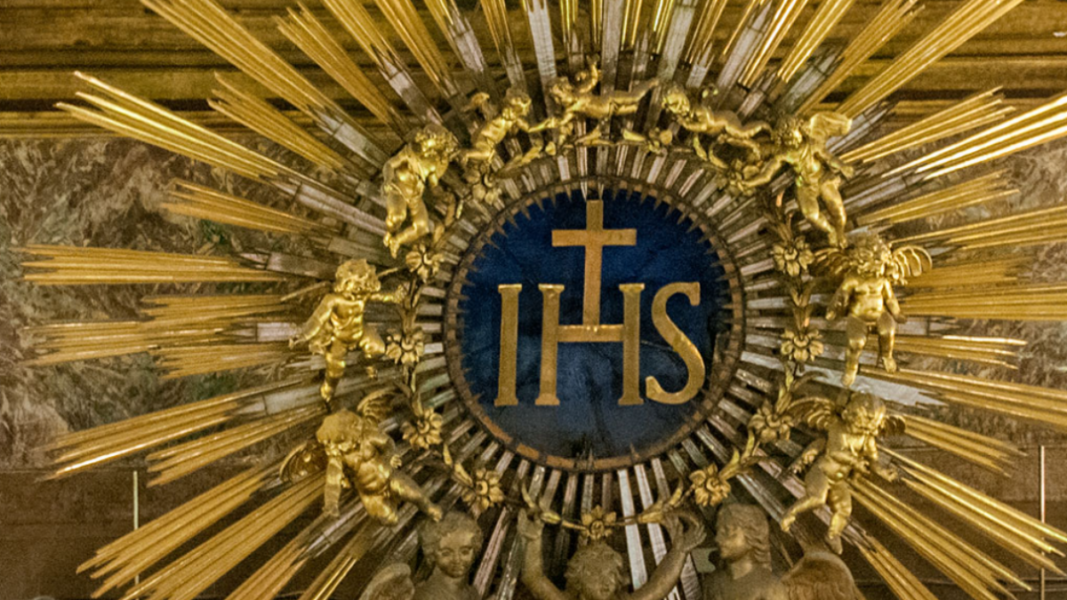
Three of the twelve organizations that on Tuesday, September 29 demanded that the Government withdraw the decree to speed up expulsions from Ceuta are leaving the Society of Jesus: the Jesuit Migrant Service, Entreculturas and Oxfam Intermón, founded in 1956 as the Secretariat of Missions and Propaganda of the Jesuits. The names of those who govern them appear on their own websites. The highest-ranking is that of the Jesuit provincial in Spain, Enric Puiggròs, who chairs the board of trustees of Entreculturas.
The draft royal decree-law, which the Executive planned to take to the Council of Ministers that same Tuesday and which it has left under review with the State Attorney’s Office due to doubts about its constitutional and international fit, sought to speed up the return to Morocco of those who have remained in the city since the mass entry on July 30 and 31. It provided for rejecting asylum applications submitted more than seven days after notification of the return order, set five calendar days to appeal, eliminated the right to remain in Spain during the procedure for those considered a risk to security or public order or who chained applications to halt their expulsion, and applied retroactively to applications submitted since July 30 that remained unresolved. The twelve entities call it an “exception regime” and warn of “fatal consequences.”
Minister Ángel Víctor Torres, heading the single command in Ceuta, counts 7,794 returns; according to El Español, more than ten thousand people remain in the city. The president of the High Court of Justice of Andalusia, Lorenzo del Río, puts the rise in crime in the city since August at 60% compared to the same period in 2025, and the chief prosecutor of Andalusia, Ceuta and Melilla, Ana Tárrago, describes the situation as “unbearable” and calls on the Government for urgent measures. The Parques de Ceuta Neighbors Association is asking for exactly what the NGOs reject: a decree that speeds up expulsions, “always within the legal framework and with all legal guarantees.”
The Jesuit Migrant Service is not a typical NGO. It presents itself as a network of entities of the Society of Jesus integrated into its Social Sector, with a technical office in Madrid and a legal office in Melilla. It is coordinated by sociologist María del Carmen de la Fuente, who also sits on the board of trustees of Entreculturas. The Social Sector of the province has Luis Arancibia as delegate, who was executive director of Entreculturas between 2000 and 2016 and president of the NGO Coordinator, is part of the council of the Jesuit Refugee Service in Europe and is vice-president of the board of trustees of Entreculturas.
Entreculturas, the development NGO promoted by the Jesuits, has had Martín Iriberri SJ as general director since September 2023, born in Pamplona in 1969, who also directs Alboan, another Jesuit cooperation NGO. Its board of trustees is chaired by Puiggròs, born in Barcelona in 1974, provincial since June 2023 and promoter of the musical project Jesuitas Acústico.
Also on that board are the rector of Comillas, Antonio Allende SJ; José Ignacio García Jiménez SJ, social delegate of the Jesuit provincials of Europe; novelist Julia Navarro; religious María Luisa Berzosa, of the Daughters of Jesus, facilitator in the two assemblies of the Synod on Synodality and, according to the foundation’s own profile, trainer and companion of sexual diversity groups; and Eva Castillo Sanz, former president and managing director of Telefónica Europa, former director of Bankia and CaixaBank and member since August 2020, by appointment of Francis, of the Council for the Economy of the Holy See.
Oxfam Intermón has just turned seventy. It was born in Barcelona in 1956 as the Secretariat of Missions and Propaganda of the Society of Jesus, at the service of the missionaries sent to Bolivia, Paraguay and India; it acquired a lay character in the seventies, was constituted as a foundation in 1986 and joined the Oxfam confederation in 1997. Its 2021-2022 corporate governance report identifies the Society of Jesus as founder, and Jesuit Lluís Magriñà, later provincial of Catalonia, directed it for fourteen years. Today it is directed by Franc Cortada, global director of programs at Oxfam between 2012 and 2020, and its board of trustees is chaired by Sylvia Koniecki, who previously held management positions at Granada Acoge and Andalucía Acoge.
The Jesuit who has spoken most about Ceuta does not sign the communiqué. Alberto Ares SJ, of the province of Spain, former director of the institute of migration studies at Comillas and now director of the Jesuit Refugee Service in Europe, explained on COPE four days after the invasion that migrations had become geopolitical currency and that it was impossible to gather tens of thousands of people in Castillejos without the Moroccan Government knowing. In the same interview he defended that migrants arrive in Europe every year because it needs them. The highest Jesuit official for refugees in Europe takes for granted that Rabat was aware; the Jesuit works in Spain now ask that the rule designed to speed up returns not be approved.
CEAR, first signatory of the list, has been chaired since 2011 by economist Carlos Berzosa, rector of the Complutense between 2003 and 2011, and has two general directors, Mónica López and Mauricio Valiente. Valiente was a deputy for Izquierda Unida in the Madrid Assembly and third deputy mayor with Manuela Carmena. As councilor president of Chamartín he proposed naming the Plaza del Sagrado Corazón de Jesús after Rafael Sánchez Ferlosio, and the district board approved it on April 9, 2019; the Almeida government later announced that it would keep the name.
CEAR’s treasurer, Francisco José Pérez, is responsible for international policy at Izquierda Unida, and on its executive committee sits Pablo Martínez, responsible for research and advocacy at Oxfam Intermón since 2022. The PSOE, IU and PP, CCOO, UGT and USO, the Muslim Association of Spain and Cáritas Española, which occupies its position with Ana Abril, have representatives in the entity’s assembly. Among the honorary members are former socialist deputy Delia Blanco, former Secretary of State Diego López Garrido and communist leader Enrique Santiago.
Movimiento por la Paz was founded and presided over until 2022 by Francisca Sauquillo, now its honorary president and, since February 2025, president of the PSOE in Madrid. Between 2016 and 2018 she presided over the Historical Memory Commission of Carmena, in the same city council where Valiente directed the Office of Human Rights and Memory. Completing the list are the Association for Human Rights of Andalusia, chaired by Diego Boza; the Barcelona-based entity Irídia; Red Acoge; the Federación Sur Acoge; the Coordinadora CIE No Cádiz; the Red de Apoyo a Inmigrante Dimbali, and the Red de Acogida de El Puerto de Santa María, an association of families that welcomes migrant boys in their homes.
The diocese of Cádiz and Ceuta, governed as apostolic administrator by Ramón Valdivia, made its reception resources available from the first day, and Cáritas Ceuta attends to the newly arrived with the diocesan secretariat for migrations. Neither of the two signs the communiqué. The neighbors who are asking for the decree can now put a face to those who are asking that it not be issued. It was enough to read their websites.
Read also