


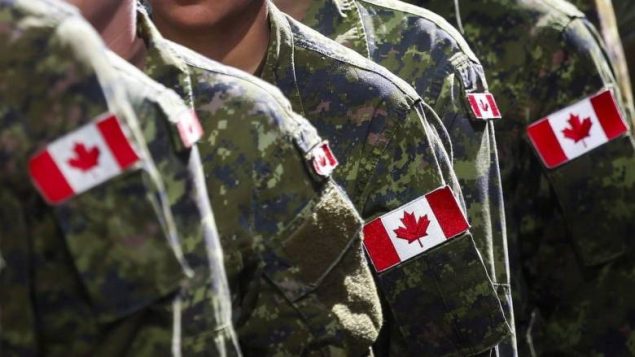
The Canadian Armed Forces approved on July 29 a new regulation that prevents its chaplains from praying or using expressly religious references—including the mention of God—in the “spiritual reflections” delivered during certain official events where military attendance is mandatory or expected.
The measure, which the Armed Forces justify on the principle of the State’s “religious and spiritual neutrality,” has provoked opposition from the bishop of the Catholic Military Ordinariate of Canada, Scott McCaig, later backed by the Canadian Conference of Catholic Bishops. Evangelical organizations have joined the criticism in recent weeks and have formally asked the Government to withdraw the regulation.
July 29: a new regulation for chaplains’ interventions
The instruction CAFMPI 03/26, Spiritual Reflections in Military Settings was promulgated on July 29 and replaced guidelines on chaplains’ public interventions that had been in force since October 2023.
The official text establishes that commanders, chaplains and other members of the Armed Forces have a “moral, ethical and legal” obligation to represent the religious neutrality of the State when delivering a spiritual reflection in the exercise of their public duties.
The regulation specifically affects events related to official Government activities—such as military or commemorative ceremonies—when Armed Forces members are required or expected to attend. When a prayer or religious observance has been requested in those contexts, the chaplain must replace it with a “spiritual reflection.”
These interventions may not contain words, gestures or symbols belonging to a specific religious tradition. The regulation includes among the excluded expressions references to God.
The Armed Forces present the reform as an adaptation of the chaplaincy service to a religiously and spiritually diverse institution. To justify it, they also refer to the 2015 Supreme Court of Canada ruling in the case Mouvement laïque québécois v. Saguenay, which led to a review of how state institutions should address public religious expressions.
The prohibition does not extend to all chaplain activities
The measure does not constitute a general ban on praying or mentioning God within the Armed Forces.
Chaplains may continue to celebrate voluntary religious services, administer the rites of their denominations, provide pastoral care and use religious language in contexts specifically intended for worship. Military funerals are also exempt from the general restriction and may include prayers according to the circumstances and wishes of the families.
The novelty affects the chaplain’s public role in certain official events where military personnel have not freely chosen to participate. Among the examples cited during the controversy are graduations, changes of command, honor ceremonies, military dinners and Remembrance Day commemorations.
August: the military bishop denounces a false “neutrality”
Bishop Scott McCaig, head of the Catholic Military Ordinariate of Canada, publicly reacted against the regulation and questioned precisely the concept of neutrality on which it is built.
For McCaig, the instruction rests on a “false premise”: considering that the absence of references to God constitutes a neutral position simply because there are belief systems that deny God’s existence.
The bishop argued that atheistic worldviews also contain convictions about God—including God’s non-existence—about the world, values and the meaning of life. He also recalled that secular humanists have representatives within the Canadian chaplaincy system itself.
His conclusion was that the new provisions “are neither neutral nor inclusive.”
On August 18, the Canadian Conference of Catholic Bishops publicly expressed its support for McCaig. The bishops noted that, for many believers, issues such as “meaning, purpose and spiritual well-being” cannot be separated from God and announced that they would study the application of the new policy, particularly its consequences for freedom of conscience, religious freedom and the public expression of religion within the Armed Forces.
The disagreement also extends to the drafting process
McCaig also questioned the consultation carried out before approving the new instructions. According to him, several religious leaders were concerned about not having been sufficiently heard.
The Department of National Defence offers a different version. In statements released in early August, it asserted that consultations had been held with internal and external actors, including chaplains and members of the Interfaith Committee on Canadian Military Chaplaincy, and that there had been various opportunities to submit observations during the preparation of the policy.
The discrepancy therefore concerns both the content of the regulation and the degree of participation that religious denominations had during its drafting.
Evangelicals ask the Government to withdraw the regulation
Opposition later spread beyond the Catholic sphere.
The Evangelical Fellowship of Canada (EFC) has called on the Canadian Government to cancel the policy and replace it with one that, in its view, better represents the country’s religious diversity.
The organization believes that preventing a chaplain from praying or even mentioning God during these public interventions does not produce genuine inclusion of believers and non-believers. As an alternative, it advocates a model in which prayers and spiritual reflections can coexist, after first recognizing the diversity of convictions among those present.
On September 18, the EFC publicly reiterated its request. According to the organization, the restrictions apply to chaplains’ interventions in Government-sponsored events and in ceremonies where the presence of military personnel is expected, including certain Remembrance Day commemorations.
The debate on what religious neutrality means
The controversy has also generated responses in favor of the policy. Humanist Canada, for example, maintains that the instruction does not prohibit the religious life of military personnel or the denominational ministry of chaplains, but rather distinguishes between their religious activity and their status as officers performing a public function in state events with mandatory attendance.
The disagreement thus centers on a deeper question: what should be understood by the religious neutrality of the State.
For the Canadian Armed Forces, in official events where attendance is not voluntary, that neutrality requires replacing prayer with a reflection that does not identify the State with any religious tradition. For McCaig and the Christian organizations that have questioned the measure, excluding any reference to God from those interventions does not create a neutral space, but rather turns a secular conception of spirituality into the only admissible one.
Two months after its promulgation, CAFMPI 03/26 remains the regulation published by the Armed Forces to govern these interventions, while Catholics and evangelicals maintain their objections and call for a formula that protects pluralism without requiring the chaplain to forgo the religious language proper to his ministry.