


Everywhere one encounters the heretical proposition that the received Tradition, which contains the integrity of the faith, can and does undergo change according to time, circumstance, peoples, and other factors typical of any given age in history. This premise, condemned by the Church, is not new; we can find it in various authors of the last century. Authors, prelates of great influence, recognized figures in the history of the Church have elaborated the noxious notion that the faith is molded according to the fluctuations of current thought and the personal tastes of the Roman Pontiff.
The damage caused by this pernicious error, which strikes at the very core of the faith, has reached such a level of brazenness that it is now publicly admitted. It is the standard, the habitual practice, the status quo of the heretical conception of the constant evolution of religion; this can be verified by reading various declarations that have marked the established existence of this principle infiltrated within the ecclesial body.
“You know, the theology of the Church has changed,” stated Cardinal Arthur Roche on March 19, 2023, on BBC Radio 4; Cardinal Carlo Maria Martini, in Corriere della Sera on September 1, 2012, without any scruple, said: “The Church is two hundred years behind”; Walter Cardinal Kasper, in a conference on the harmful document Amoris Laetitia, concluded in the following terms: “Tradition is not stagnant water, but a spring that flows.” This foreign element, forcibly embedded within the hermeneutics of the faith, has permeated the agendas of the post-conciliar pontiffs; in particular, this is revealed in what Pope Francis has said throughout his pontificate: “A Church that does not develop its thinking in an ecclesial sense is a Church that is going backwards.” He said this in the press conference on the return flight from Canada, July 30, 2022. Ironically, it was the same occasion on which he referred to traditionalists as indiestrists, a grand pejorative hurled at the faithful who uphold the integrity of the faith against the revolutionary assaults of the high hierarchy.
One cannot turn a blind eye to a reality that affects every one of the faithful worldwide and for years to come. When something so fundamental to the faith is changed—and in this case it is precisely that, that the faith can change with time and the policies of the moment—this generates a profound effect, a notable result, a new creation distant from what came before. It is like taking a gasoline car to the workshop to convert its engine to electric. A single part has been replaced by another, but we see the significant impact caused on the car, which is no longer the same and will not function the same way. What this heresy produces transcends, goes beyond dogma or doctrine; it leads to a different treatment of the faith itself, the way of approaching religion, the core or reason for its existence, the way of considering oneself a practitioner of it, and countless other aspects touching on the daily life of the ordinary faithful.
The magisterial contrast is absolute, simple, and above all, clear. “Fourth: I sincerely accept the doctrine of the faith as transmitted to us from the Apostles through the orthodox Fathers always in the same sense and in the same meaning; and therefore, I utterly reject the heretical invention of the evolution of dogmas, which would pass from one meaning to another different from that which the Church first held; likewise, I condemn every error whereby, in place of the divine deposit handed over to the Spouse of Christ and to be faithfully guarded by her, there is substituted a philosophical invention or a creation of the human conscience, slowly formed by the efforts of men and destined to be perfected by indefinite progress.” This formulation comes from the Anti-Modernist Oath ordered by Pope Saint Pius X as obligatory for all who hold any position of Christian teaching, all types of clerics, and high prelates. In light of this point of the oath, the absolute rejection of this heretical innovation—yes, the Holy Church has judged this to be heretical—of the evolution, change, morphing, transformation, or supposed renewal of the faith according to fashions, trends, tastes, scientific discoveries, or any wind of thought of the moment, is crystal clear.
Paul VI, in his disordered love for novelty and faithful loyalty to humanism, suppressed the oath consecrated by his holy predecessor to be replaced by the Formula of Profession of Faith, which completely loses sight of the precision proclaimed in the oath. Nevertheless, what was promulgated by Saint Pius X carries the force of law and in itself contains precisely this point under discussion regarding the immutability of Tradition, which is nothing other than the Catholic, Apostolic, and Roman faith.
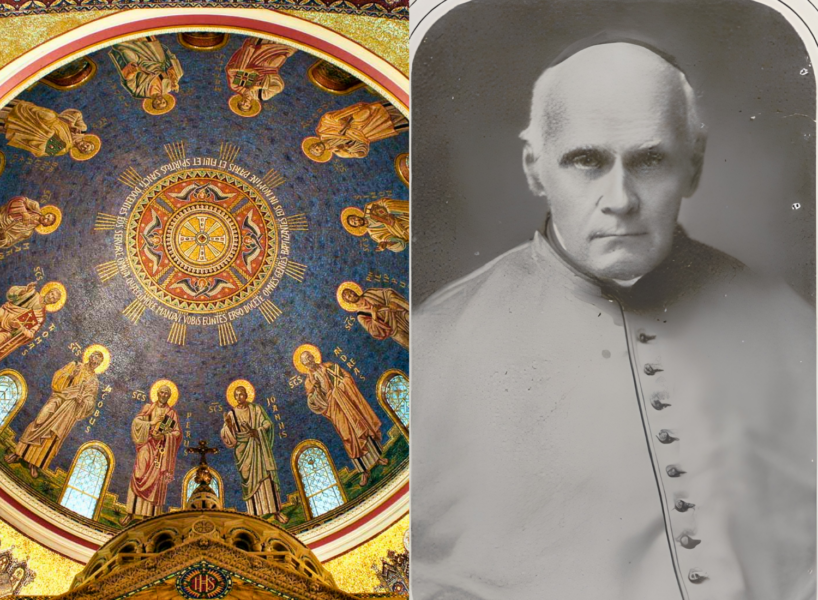
A gallant and wise cardinal of the twentieth century, Louis Billot, wrote an unparalleled essay in which he academically addresses why it is a grave error to hold that the faith can be adapted to the changing circumstances of each age. The distinguished shepherd of souls, in his work entitled The Immutability of Tradition against the Modern Evolutionary Heresy, dismantles point by point what is upheld in the vast majority of parishes worldwide, from first Communion classes to Confirmation courses. It is an essay of some density; it sets forth the concept of apostolic Tradition, how it stands in contrast to the errors of our times, in particular the present issue, the philosophical problem of the evolution of doctrine, among other valuable points. What deserves to be highlighted, to conclude, is the emphasis placed by Cardinal Billot on the fact that the bimillennial Tradition is the regula fidei (the rule of faith) from which every judgment proceeds to determine whether something is or is not in conformity with the Catholic faith. Below are some relevant excerpts from the writing. It is highly recommended to read the entire text for better understanding.
Excerpts from the essay The Immutability of Tradition against the Modern Evolutionary Heresy. By Cardinal Louis Billot.
“A new school now arises, following the path begun by Günther at the end of the last century, which affirms the Kantian and openly rationalist evolution of our religion; which establishes the mutation of dogma from form to form and from meaning to meaning, according to the different conditions of the milieu and the successive states of intellectual culture.”
“It must be acknowledged in it [Tradition], without doubt, some progress through the course of the centuries: but a progress such that in no way contradicts the immutability of dogma, that takes away absolutely nothing from the nature of the deposit, in which it is not lawful to change, subtract, or add anything.”
“What the organ of Tradition declares as dogma is not only infallibly certain as a truth revealed by God, but immutably presented to the faith of all subsequent centuries in the same sense in which it was preached from the beginning.”
“The historical method carried to the extreme of using, under the deceitful pretext of abstraction from higher rules, the same independence in its hypotheses… contains at its base a heresy more pernicious because it opens a freer path for the destruction of all revealed dogmas.”
“O blood shed in vain, O life not esteemed according to its true value, if it is only a matter of human formulas that are in fashion today and will be changed tomorrow!”
“There do not exist two notions of truth: one that holds with respect to religion, another in everything else. If someone denies this, debate with him is useless, because either he is dreaming, or he himself knows that he shamelessly calls truth what is not truth.”
“From the fact that our dogmas preserve the modality and structure of human conceptions, it is not lawful to deduce what the new teachers want.”
“And if tradition were shaped by the human spirit alone, nothing would certainly stand in the way a priori of admitting the possibility of a mutation carried out in the meaning and understanding of the dogmas.”
“If, under the pretext of a precision arising from higher rules, you attempt to examine the documents of Sacred Scripture or of Tradition with the same freedom and independence permitted in profane matters, you will not only not avoid heretical malice but will also add that of the most artful fallacy.”
“It contains at its base a heresy more pernicious because it opens a freer path for the destruction of all revealed dogmas.”
“Thus [opines] the new school now consolidating itself, and nothing seems to trouble it about the anathema launched by the Fathers of Vatican I, session 3, can. 3, on faith and reason against those who affirm that it may happen that, once dogmas have been proposed by the Church, some day according to the progress of knowledge a different sense must be attributed to them from that which the Church understood and understands.”
“This doctrine of the living faith gathers within itself all the errors that have arisen until now from rationalism, and under the false name of revelation it conceals as much as possible the radical negation of all the other dogmas of the Christian faith, without exception.”
Note: The articles published as Tribuna express the opinion of their authors and do not necessarily represent the editorial line of Infovaticana, which offers this space as a forum for reflection and dialogue.